

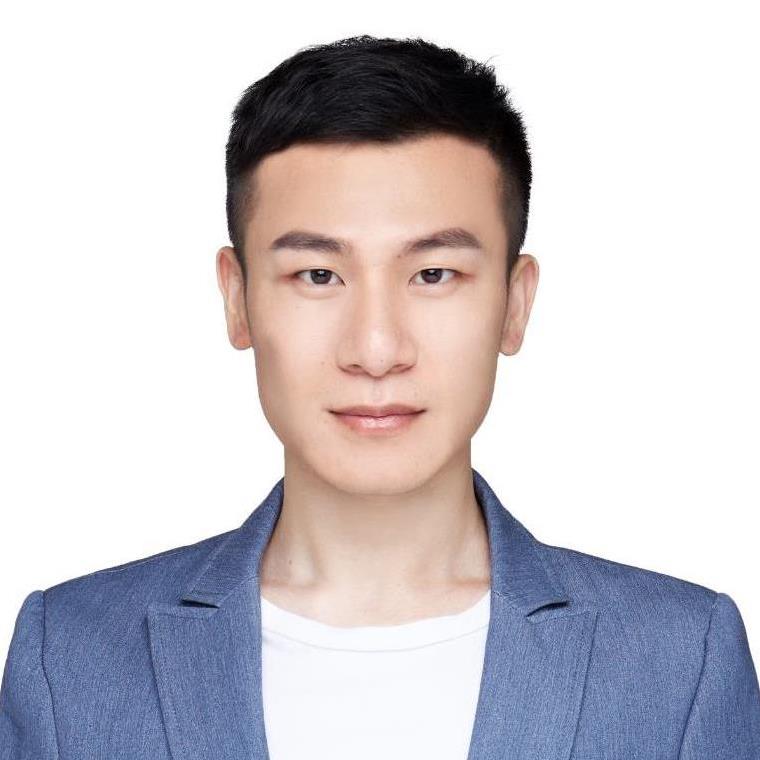
 Baosong Yang
3 previous affiliations
- Alibaba Group (China)2019–2025
- Researcher · 2019–2025
- University of Macau2015–2019
- PhD student · 2015–2019
- Waseda University2013–2015
- MS student · 2013–2015
Research Overview
Baosong Yang focuses on natural language processing, machine translation, and the multilingual capabilities of large language models. His early work explored architectural improvements for neural machine translation, including self-attention mechanisms and quality estimation. Recently, his research centers on scaling large language models, mitigating catastrophic forgetting, and developing mechanistic interpretability tools for both autoregressive and diffusion-based architectures.
Research Trajectory
His early research concentrated on architectural enhancements for neural machine translation (NMT), particularly focusing on how models process hierarchical and local context. In Towards Bidirectional Hierarchical Representations for Attention-based Neural Machine Translation, he introduced a bidirectional tree-based encoder to capture both local and global semantic information, alleviating out-of-vocabulary issues. This interest in structural inductive biases extended into the broader research directions of Local and Hierarchical Constraints for Self-Attention and Locality Bias in Self-Attention Networks. Contributing to these areas, he developed Modeling Localness for Self-Attention Networks, which incorporated a learnable Gaussian bias to help lower layers of self-attention networks better capture short-range dependencies. He further explored these architectural variations in Convolutional Self-Attention Networks.
By 2022, his focus expanded to address the reliability, efficiency, and evaluation of translation systems. A major theme of this period was enabling models to assess their own outputs. In Competency-Aware Neural Machine Translation: Can Machine Translation Know its Own Translation Quality?, he presented a method for models to estimate translation quality by reconstructing the source sentence from internal states, removing the need for human-labeled data. He also contributed to the area of The Semantic Evaluation Gap in Machine Translation and the broader direction of Simulating Realistic Errors for Text Correction and Evaluation through his participation in UniTE: Unified Translation Evaluation, which proposed a unified framework for evaluating translations across different data availability scenarios. Alongside evaluation, he addressed generation diversity in Bridging the Gap between Training and Inference: Multi-Candidate Optimization for Diverse Neural Machine Translation, utilizing reinforcement learning to encourage distinct, high-quality translation candidates. His work during this time also tackled efficiency and ambiguity; he developed an unsupervised method to disambiguate "false friends" using historical user patterns in Unsupervised Preference-Aware Language Identification, and helped design a highly efficient, multiplierless architecture in Attention Mechanism with Energy-Friendly Operations to significantly reduce the energy footprint of Transformers.
Transitioning toward large-scale foundation models and domain adaptation, he investigated methods to specialize models without extensive retraining. In Bridging the Domain Gaps in Context Representations for k-Nearest Neighbor Neural Machine Translation, he addressed the challenge of adapting general-domain NMT systems to highly specific domains. He continued to refine translation architectures in MoNMT: Modularly Leveraging Monolingual and Bilingual Knowledge for Neural Machine Translation, proposing a modular strategy to integrate self-supervised monolingual knowledge with bilingual transfer learning while avoiding catastrophic forgetting. During this period, as a researcher at Alibaba Tongyi Lab, he became heavily involved in the development of the Qwen large language models. He was a key contributor to the Qwen2 Technical Report, detailing a suite of dense and Mixture-of-Experts (MoE) models designed to close the performance gap with proprietary systems, and subsequently the Qwen2.5 Technical Report, which scaled training to 18 trillion tokens. Concurrently, he guided research on mitigating linguistic disparities in these large-scale models; in MoE-CT: A Novel Approach For Large Language Models Training With Resistance To Catastrophic Forgetting, his team addressed the performance drop-off in low-resource languages by leveraging MoE architectures.
Most recently, his trajectory has shifted toward mechanistic interpretability and the internal dynamics of language models. He has extensively utilized Sparse Autoencoders (SAEs) to decode model behavior. With collaborators, he explored the internal representation of multilingualism in Unveiling Language-Specific Features in Large Language Models via Sparse Autoencoders, identifying language-specific features that allow for precise causal steering. This interpretability work continued with SASFT: Sparse Autoencoder-guided Supervised Finetuning to Mitigate Unexpected Code-Switching in LLMs, which applied SAEs to control unwanted language mixing. Expanding beyond autoregressive models, he participated in developing the first SAE-based interpretability framework for diffusion language models in DLM-Scope: Mechanistic Interpretability of Diffusion Language Models via Sparse Autoencoders. Alongside interpretability and work in the area of Cross-Lingual Chain of Thought Reasoning, he has advanced the research direction of Controlling Language Models Through Latent Space Interventions. This is exemplified by his participation in Latent Space Chain-of-Embedding Enables Output-free LLM Self-Evaluation, which introduced a training-free method for models to evaluate their own uncertainty in real-time by analyzing the geometric trajectory of their internal states.
Yang has also returned to advanced translation and cultural reasoning in large-scale models. In CRESiST: Self-Enhancing Explorative Policy Learning for Simultaneous Speech Translation, Yang co-developed an interleaved read-write architecture with an Actor-Critic self-enhancement framework to achieve segmentation-free streaming translation and improve quality-latency trade-offs. Additionally, Yang contributed to Qwen-MT-Lumen at WMT2026: Instruction-Specialized Translation via Quality-Aware Training and On-Policy Distillation, developing an instruction-specialized translation system utilizing online preference optimization and on-policy distillation, and participated in CultureForest: Understanding and Evaluating Cultural Norm Grounded Reasoning in LLMs to examine cultural norm-grounded reasoning in language models.
Current Directions
Recent work investigates the mechanistic interpretability of both autoregressive and diffusion-based large language models. A primary focus is the use of Sparse Autoencoders (SAEs) to extract human-interpretable features from internal model states. This includes identifying language-specific features to understand how multilingual models process different languages, as well as applying SAE-guided interventions to mitigate unexpected code-switching. Additionally, current research explores training-free self-evaluation methods, leveraging the latent geometric trajectories of a model's internal activations to detect uncertainty and hallucinations in real-time.
Profile updated
Loading new papers…
Other researchers whose papers cluster into the same research directions — a proxy for overlapping technical interests and shared intellectual neighborhoods.
See something wrong? Report a mistake