

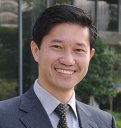
 Baoquan Chen
· 8 previous affiliations
- Peking UniversitySince 2018
- Professor and Executive Director of the Center on Frontiers of Computing Study · Since 2018
- Current
- Shandong University2013–2018
- Full Professor · 2013–2018
- Full Professor · 2008–2013
- Chinese Academy of Sciences2008–2013
- Professor · 2008–2013
- AJM 3D Solutions LLC2000–2008
- President and CEO · 2006–2008
- McKnight-Land Grant Professorship · 2004–2006
- Assistant Professor · 2000–2006
- Stony Brook University1995–1999
- PhD, Computer Science · 1995–1999
- Naval Research Laboratory1998
- PhD Intern · 1998
- Tsinghua University1991–1994
- M.E., Electronic Engineering · 1991–1994
1 other author named Baoquan Chen: Baoquan Chen (1 paper)
Research Overview
Baoquan Chen focuses on 3D computer vision, geometric deep learning, and the automated synthesis of high-fidelity 3D environments. His trajectory spans early work in architectural and urban reconstruction from sparse point clouds to foundational neural architectures for processing irregular 3D data. Currently, his research investigates advanced neural rendering techniques, including physics-integrated Gaussian splatting, and the integration of 2D foundation models for robust 3D scene understanding.
Research Trajectory
Chen’s early work addressed the fundamental challenges of navigating and reconstructing environments from incomplete visual and spatial data. In the late 1990s, he explored techniques for Navigating through sparse views. As 3D scanning technology advanced, he co-developed pipelines for Architectural Modeling from Sparsely Scanned Range Data, extracting planar regions and polyhedral geometry from incomplete outdoor laser scans. This focus on sparse and noisy data extended to broader urban environments with Non-local scan consolidation for 3D urban scenes. Concurrently, he investigated the complex geometry of natural structures, introducing methods for the Automatic reconstruction of tree skeletal structures from point clouds and later Analyzing growing plants from 4D point cloud data.
As deep learning began to transform computer vision, Chen’s group developed foundational architectures for irregular 3D data. He led the development of PointCNN: Convolution On X-Transformed Points, which introduced an X-transformation to weight and permute input points into a canonical order, enabling traditional convolutions on unordered point clouds. Around this time, he also explored motion and structural generation. He introduced Skeleton-aware networks for deep motion retargeting, which utilized novel skeletal pooling operators to transfer motion between homeomorphic graphs without explicit pairing. He also participated in designing PQ-NET: A Generative Part Seq2Seq Network for 3D Shapes, a sequence-to-sequence autoencoder that represents and generates 3D objects through sequential part assembly.
A significant theme in his subsequent research is the area of Probabilistic 3D Orientation via Manifold Distributions. To address the challenge of estimating 3D rotation from single RGB images with limited labeled data, his lab proposed FisherMatch: Semi-Supervised Rotation Regression via Entropy-based Filtering, utilizing a teacher-student framework with pseudo-label filtering. Continuing this trajectory, he introduced A Laplace-inspired Distribution on SO(3) for Probabilistic Rotation Estimation, which models uncertainty robustly against outliers by applying multivariate Laplace principles to rotation matrices. In parallel, he investigated efficient computational displays, leading a framework for Joint Neural Phase Retrieval And Compression For Energy- And Computation-Efficient Holography On The Edge to enable high-quality phase-only holograms on lightweight wearable devices.
More recently, Chen has integrated foundation models and advanced neural rendering into 3D vision. Contributing to the domain of Geometric Superpoints for 3D Scene Understanding, his group developed SAI3D: Segment any Instance in 3D Scenes, a zero-shot method that merges 3D geometric primitives with semantic cues from 2D segmentation models. This aligns with his broader interest in the direction of Lifting 2D Foundation Models for 3D Scene Understanding, which is further exemplified by One-shot 3D Object Canonicalization based on Geometric and Semantic Consistency. This framework leverages large language and vision-language models to align arbitrary 3D shapes into standard orientations using only a single reference model.
In the realm of neural rendering and the area of Joint Optimization of Camera Poses and Neural Geometry, he introduced DOF-GS: Adjustable Depth-of-Field 3D Gaussian Splatting for Post-Capture Refocusing, Defocus Rendering and Blur Removal. This work extends Gaussian splatting with a finite-aperture camera model to support explicit defocus rendering and dynamic depth-of-field adjustments. His recent work also tackles physical simulation and large-scale reconstruction, including Robust Differentiable Collision Detection for General Objects, which uses distance-based smoothing for complex concave objects, and From Orbit to Ground: Generative City Photogrammetry from Extreme Off-Nadir Satellite Images, a two-stage framework bridging orbital views and ground-level photorealism.
Pushing the boundaries of generative 3D, Chen's latest research focuses on the broader area of Generative Simulation for Scaling Embodied AI. His lab developed FieryGS: In-the-Wild Fire Synthesis with Physics-Integrated Gaussian Splatting, integrating physically accurate combustion simulations into 3D scenes by using language models to infer material properties. Additionally, he has challenged traditional reliance on handcrafted representations and camera poses with The Less You Depend, The More You Learn: Synthesizing Novel Views from Sparse, Unposed Images without Any 3D Knowledge, demonstrating that models can synthesize high-fidelity novel views directly from unposed 2D images by stripping away restrictive 3D priors. Moving toward unifying reconstruction with generative models, Chen's group presented From Feed-Forward to Flow: Unifying Reconstruction and Generation Is Easier Than You Think, introducing a flow-based framework where a single clean-target predictor delivers direct feed-forward reconstruction in one step and unfolds multi-step conditional generation to resolve ambiguity across both appearance and geometry tasks.
Current Directions
The most recent papers in the evidence indicate a strong focus on advancing neural rendering and generative 3D synthesis. Recent work investigates the integration of physical simulations into 3D Gaussian Splatting, enabling realistic, user-controllable effects like combustion and dynamic depth-of-field adjustments directly within reconstructed scenes. Additionally, his group is exploring pose-free novel view synthesis, demonstrating that high-fidelity 3D views can be generated from sparse, unposed 2D images without relying on traditional 3D priors or ground-truth camera poses. Another active direction involves bridging 2D foundation models with 3D geometry to solve complex canonicalization and instance segmentation tasks in a zero-shot or one-shot manner, alongside improving differentiable collision detection for complex object manipulation.
Profile updated
Loading new papers…
Other researchers whose papers cluster into the same research directions — a proxy for overlapping technical interests and shared intellectual neighborhoods.
See something wrong? Report a mistake