

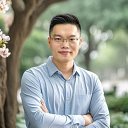
 Baoliang Chen
· 3 previous affiliations
- Nanyang Technological UniversitySince 2026
- Postdoc · Since 2026
- South China Normal University2024–2026
- Associate Professor · 2024–2026
- City University of Hong Kong2019–2024
- Postdoc · 2022–2024
- PhD student · 2019–2022
Research Overview
Baoliang Chen focuses on visual quality assessment, image restoration, and domain generalization, with a particular emphasis on no-reference evaluation methods. His trajectory spans the development of perceptual metrics for natural and screen content images, as well as generalized feature learning for video assessment and face anti-spoofing. Recently, his work investigates the intersection of perceptual quality evaluation and low-light image enhancement using advanced generative priors.
Research Trajectory
Baoliang Chen’s research trajectory is fundamentally anchored in the challenge of evaluating and improving visual media without relying on pristine reference data. His early work addressed the complexities of video quality assessment, particularly the domain gaps caused by varying resolutions, frame rates, and content types. In 2020, he developed a novel framework detailed in Learning Generalized Spatial-Temporal Deep Feature Representation for No-Reference Video Quality Assessment. By regularizing deep spatial features into a learnable Gaussian distribution via adversarial learning, this approach minimized domain discrepancies. This work contributed to the research area of Asymmetric Temporal Pooling for Perceptual Quality Assessment.
In 2021, Chen expanded his focus to image quality assessment (IQA) and domain generalization across diverse visual tasks. He proposed a method to evaluate distorted images by generating pseudo-references, as presented in No-Reference Image Quality Assessment by Hallucinating Pristine Features. This approach leveraged mutual learning to extract perceptually meaningful features, aligning with the broader area of Perceptual Quality Assessment with Large Multimodal Models. Concurrently, he applied domain generalization techniques to security domains, specifically face anti-spoofing. He explored the fusion of high- and low-frequency facial features to bridge the gap between training environments and unseen practical scenarios in Generalized Face Antispoofing by Learning to Fuse Features From High- and Low-Frequency Domains. He further refined this by isolating camera-invariant spoofing features in the high-frequency domain, detailed in Camera Invariant Feature Learning for Generalized Face Anti-spoofing, ensuring models remained adaptive across different acquisition devices.
A significant portion of Chen's 2021 and 2022 research addressed the unique statistical properties of screen content images (SCIs)—computer-generated visuals that lack traditional natural scene statistics. He introduced an unsupervised domain adaptation method to transfer quality prediction models from natural images to SCIs in No-Reference Screen Content Image Quality Assessment With Unsupervised Domain Adaptation. This effort intersected with work in Pairwise Evaluation Arenas for Generative Models. He formalized the theoretical underpinnings of SCI evaluation by mapping deep feature statistics, initially shared in the preprint Deep Feature Statistics Mapping for Generalized Screen Content Image Quality Assessment.
During this period, Chen also formalized several of his earlier frameworks for journal publication. He published the definitive version of his pseudo-reference hallucination model in No-Reference Image Quality Assessment by Hallucinating Pristine Features, and expanded his spatial-temporal feature representations for video in Learning Generalized Spatial-Temporal Deep Feature Representation for No-Reference Video Quality Assessment, contributing to the area of Aligning Video Quality Metrics with Human Visual Perception. Furthermore, he began investigating the intersection of image enhancement and quality assessment. In The Loop Game: Quality Assessment and Optimization for Low-Light Image Enhancement, he introduced an iterative framework where enhancement and assessment algorithms mutually improve one another, advancing the research direction of No Reference Image Quality Assessment.
By 2024, Chen's work heavily emphasized the optimization of low-light image enhancement through advanced priors and perceptual metrics. With collaborators, he developed a transformer-based approach that leverages high-quality priors from a pre-trained VQGAN, detailed in CodedBGT: Code Bank-Guided Transformer for Low-Light Image Enhancement. He also consolidated his iterative enhancement research into a comprehensive gap-closing framework in Gap-Closing Matters: Perceptual Quality Evaluation and Optimization of Low-Light Image Enhancement, which introduced a large-scale dataset for subjective quality assessment of reconstructed low-light images. Alongside these advancements in image restoration, he published the final journal version of his SCI statistical mapping research in Deep Feature Statistics Mapping for Generalized Screen Content Image Quality Assessment, demonstrating that the statistical deviations of computer-generated images can be effectively learned for accurate quality prediction.
Current Directions
The most recent papers in the evidence, published in 2024, indicate a strong focus on the intersection of image restoration and perceptual quality evaluation, particularly in challenging illumination scenarios. Recent work investigates low-light image enhancement by integrating high-quality visual priors extracted from generative models, such as pre-trained VQGANs, to guide transformer-based reconstruction. Additionally, there is an ongoing emphasis on closing the gap between algorithmic enhancement and human visual perception through the creation of specialized datasets and systematic subjective quality assessments. This aligns with a broader, sustained interest in developing generalized, no-reference quality metrics that can adapt to diverse and synthetic visual domains, including screen content images.
Profile updated
Loading new papers…
Other researchers whose papers cluster into the same research directions — a proxy for overlapping technical interests and shared intellectual neighborhoods.
See something wrong? Report a mistake