

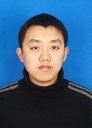
 Baojie Fan
1 previous affiliation
- Full Professor · 2021–2026
- Associate Professor · 2015–2021
- Lecturer · 2012–2015
Research Overview
Baojie Fan focuses on visual tracking, multi-modal sensor fusion, and underwater computer vision. His trajectory spans from early algorithmic improvements in template tracking to recent architectures for integrating heterogeneous data like RGB-thermal and LiDAR-camera inputs. Currently, his work addresses robust perception in degraded conditions, including low-light environments and complex physical mediums.
Research Trajectory
Fan’s early research concentrated on improving the stability and accuracy of visual tracking algorithms, particularly addressing the challenge of template drift. In 2012, he introduced the Active drift correction template tracking algorithm, which incorporated an active drift correction term into the inverse compositional affine image alignment process. By minimizing a combined energy function, this approach prevented or mitigated drift during long sequential tracking while reducing computational overhead. He subsequently expanded this focus to multi-task learning frameworks, presenting Discriminative multi-task objects tracking with active feature selection and drift correction in 2014. To better capture the intrinsic geometric structures among target candidates, he developed the Consistent multi-layer subtask tracker via hyper-graph regularization (2017) and the Dual-Graph Regularized Discriminative Multitask Tracker (2018). The latter integrated discriminative subspace learning with dual-graph regulations constructed from two views of multi-task observation, exploiting relationships among tracking tasks while preserving local structures.
Moving into the 2020s, Fan continued to refine subtask tracking methodologies while expanding into deep learning architectures and specialized visual domains. He proposed the Reliable Multi-Kernel Subtask Graph Correlation Tracker (2020) to improve locating accuracy through multi-kernel multi-subtask learning, and later formalized the Dynamic and reliable subtask tracker with general schatten p-norm regularization (2021). Concurrently, he addressed task-misalignment in anchor-free tracking by developing the Dual Aligned Siamese Dense Regression Tracker (2022). This architecture aligned features and tasks between dense local regression—using RepPoint representation—and global multi-classifier fusion branches.
During this period, Fan also established a significant research presence in underwater computer vision, addressing the unique optical challenges of aquatic environments such as blur, color shift, and complex refraction. He introduced the Dual Refinement Underwater Object Detection Network (2020), which utilized a composite connection backbone and receptive field augmentation to exploit multi-scale contextual features. This work contributed to the research direction of Hierarchical Multi-Scale Feature Fusion for Dense Prediction and advanced the broader area of Physical Priors for Underwater Image Restoration. Building on this domain expertise, his research group developed MedUCC: Medium-Driven Underwater Camera Calibration for Refractive 3-D Reconstruction (2022), an efficient calibration method designed to handle multi-layer transparent refractions with unknown layer orientations.
In recent years, Fan has increasingly collaborated on multi-modal sensor fusion and robust perception in degraded environments. He contributed to QueryTrack: Joint-Modality Query Fusion Network for RGBT Tracking (2024), which coupled intra-modal feature extraction with inter-modal fusion via joint-modality queries to adapt to modal quality fluctuations. In the domain of 3D object detection, he participated in the design of GAFusion: Adaptive Fusing LiDAR and Camera with Multiple Guidance for 3D Object Detection (2024). This architecture utilized sparse depth and LiDAR occupancy guidance to enhance Bird's-Eye-View representations, aligning with ongoing work in Bridging Geometric and Semantic Gaps in Multi-Sensor Fusion and the area of Transformer Architectures for Heterogeneous Multimodal Fusion.
Fan's collaborative research has also extended to complex surveillance and identification tasks. He contributed to All-Day Multi-Camera Multi-Target Tracking (2025), which incorporated infrared modalities to maintain tracking performance in nighttime conditions. This research intersects with the direction of Robust Visual Tracking in Low-Light and Nighttime Environments and the broader field of Mitigating View Specific Bias in Person Re-Identification. Further addressing identification challenges, he co-authored Distribution-aware Forgetting Compensation for Exemplar-Free Lifelong Person Re-identification (2025), proposing a model that explores cross-domain shared representation learning and domain-specific distribution integration to preserve old knowledge without relying on rehearsal data. Most recently, he contributed to DuRP: Dual-Stage Physics-Embedded Learning for Joint Radiance and Polarization Restoration (2026), a framework that restores clear scene radiance and polarization from hazy images by representing polarization as complex phasors.
Current Directions
The most recent papers in the evidence indicate a strong focus on robust perception systems capable of operating in physically degraded or information-sparse environments. A primary theme is the integration of physics-embedded learning with deep neural networks to restore visibility and extract accurate geometric information from challenging conditions, such as haze or complex refractive mediums. Additionally, recent collaborative work investigates multi-modal fusion—particularly combining visible light with thermal or LiDAR data—to ensure reliable object detection and tracking across varying lighting conditions, including nighttime scenarios. Finally, Fan is exploring lifelong learning paradigms in computer vision, specifically developing exemplar-free methods for person re-identification that mitigate catastrophic forgetting while adapting to new domain distributions.
Profile updated
Loading new papers…
Other researchers whose papers cluster into the same research directions — a proxy for overlapping technical interests and shared intellectual neighborhoods.
See something wrong? Report a mistake