

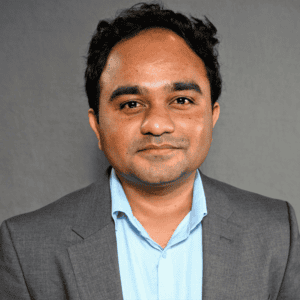
 Balu Bhasuran
· 6 previous affiliations
- Florida State UniversitySince 2023
- Research Faculty I · Since 2025
- Assistant Professor · Since 2024
- Visiting Assistant Professor · 2024–2025
- Postdoctoral Researcher · 2023–2024
- Clinical and Experimental MedicineSince 2025
- Associate Editor · Since 2025
- BioMed Central (United Kingdom)Since 2025
- Editorial Board Member · Since 2025
- Discover Artificial IntelligenceSince 2026
- Editorial Board Member · Since 2026
- Postdoc · 2022–2024
- Postdoctoral Researcher · 2021–2023
- Research Affiliate · 2021
- University of California, Berkeley2022–2024
- Postdoc · 2022–2024
Research Overview
Balu Bhasuran focuses on the application of large language models in clinical medicine, specifically evaluating their diagnostic capabilities. Recent work investigates how the integration of structured clinical data, such as laboratory test results, influences the accuracy of AI-generated differential diagnoses. This research aims to establish evidence-based guidelines for deploying generative artificial intelligence in healthcare settings.
Research Trajectory
Bhasuran's published work in the available corpus begins in 2024, centering on the intersection of generative artificial intelligence and clinical decision support. A primary focus of this research is the systematic evaluation of large language models (LLMs) in generating differential diagnoses (DDx). As the lead author on Evaluating the Impact of Lab Test Results on Large Language Models Generated Differential Diagnoses from Clinical Case Vignettes, Bhasuran investigated how the inclusion of laboratory test data affects the diagnostic accuracy of several prominent LLMs, including GPT-4, Claude-2, and Llama-2. By constructing clinical vignettes from PubMed Central case reports, the study provided a comparative analysis of model performance with and without structured lab results, utilizing a multi-faceted evaluation approach involving knowledge graphs and clinician review.
During the same period, Bhasuran contributed to broader collaborative efforts to establish best practices for AI in healthcare. As a co-author on Demystifying Large Language Models for Medicine: A Primer, Bhasuran participated in developing actionable guidelines designed to help healthcare professionals navigate the integration of LLMs into clinical workflows. This work outlined structured phases for task formulation, model selection, and prompting strategies, reflecting an interest in the practical and safe deployment of AI tools in medical environments.
In 2025, Bhasuran continued to advance the empirical evaluation of diagnostic language models. Leading the study Preliminary analysis of the impact of lab results on large language model generated differential diagnoses, Bhasuran formalized the earlier findings regarding lab data integration. This research demonstrated that incorporating laboratory results into clinical vignettes could enhance the diagnostic accuracy of LLMs by up to 30%, with GPT-4 achieving the highest performance metrics. This trajectory highlights a consistent methodological focus on benchmarking AI systems against complex, real-world clinical reasoning tasks.
Current Directions
Based on the most recent publications in the evidence, Bhasuran's current research investigates the empirical performance of large language models in clinical diagnostic scenarios. A central open problem in this work is quantifying how specific modalities of patient data—particularly structured laboratory results—alter the reasoning and accuracy of AI-generated differential diagnoses. By systematically benchmarking state-of-the-art models against curated clinical vignettes, this research direction seeks to define the capabilities and limitations of generative AI as a supportive tool for healthcare providers.
Profile updated
Loading new papers…
Loading research neighbors…
See something wrong? Report a mistake