

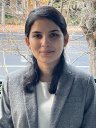
 Avantika Lal
· 7 previous affiliations
- GenentechSince 2023
- Principal ML Scientist II / Principal Scientist · Since 2024
- Principal Researcher · 2023–2024
- insitro, inc. (United States)2021–2023
- Senior Data Scientist · 2021–2023
- Inistro Inc.2021–2023
- Researcher · 2021–2023
- Nvidia (United States)2018–2021
- Senior Deep Learning Genomics Scientist / Sr systems software engineer · 2020–2021
- Researcher · 2019–2021
- Deep Learning Genomics Scientist / Sr systems software engineer · 2018–2020
- Stanford University2017–2018
- Postdoctoral Fellow · 2017–2018
- National Centre for Biological Sciences2010–2016
- Postdoctoral Fellow · 2016
- Graduate Student · 2010–2016
- Doctor of Philosophy (PhD) · 2010–2016
Research Overview
Avantika Lal focuses on the development and application of computational frameworks for biological sequence analysis and design. her work spans the fields of cancer genomics, where she has developed methods for identifying mutational processes, and generative machine learning, where she focuses on the design of synthetic DNA and protein sequences. Her research trajectory reflects a transition from descriptive modeling of genomic variation to the prescriptive engineering of functional biological elements using autoregressive models and diffusion-based optimization.
Research Trajectory
The early stage of Lal’s research was characterized by a focus on cancer genomics and the characterization of somatic mutations. In this period, her work addressed the challenge of mutational signature discovery—the process of identifying the specific patterns of DNA damage and repair that contribute to tumor development. By treating the mutational profile of a tumor as a mixture of different biological processes, her research sought to disentangle these signals to better understand the etiology of various cancers. This work emphasized the importance of sparsity in computational models to ensure that the discovered signatures were biologically interpretable and not artifacts of overfitting.
Beginning in 2023, Lal’s focus shifted toward the design of cis-regulatory elements (CREs) using deep generative models. This transition marked a move from analyzing existing genomic data to synthesizing new sequences with specific functional properties. Her work in this area utilized autoregressive language models, which treat DNA sequences as a form of biological language. By training these models on large datasets of human and yeast regulatory DNA, she developed methods to generate synthetic promoters and enhancers that mimic the complexity of natural sequences while achieving targeted levels of activity. This research integrated sequence-to-function models to guide the generative process, allowing for the design of cell-type-specific regulatory elements.
Most recently, Lal has participated in collaborative research efforts focused on the optimization of generative models for biological design. This work addresses the limitations of standard generative models, which may produce realistic sequences but do not necessarily optimize for specific downstream rewards, such as protein stability or high enzymatic activity. Her contributions in this area involve the development of fine-tuning frameworks for discrete diffusion models. These frameworks utilize reinforcement learning and differentiable optimization techniques to navigate the trade-off between generating "natural-looking" sequences and achieving high-performance functional objectives. This recent work extends the application of generative AI from DNA design to broader problems in protein engineering and model-based optimization.
Current Directions
Lal’s current research is centered on the refinement of generative frameworks to ensure they are both biologically valid and functionally optimized. A primary area of interest is the "conservative" fine-tuning of models, which aims to prevent the problem of overoptimization—where a model generates sequences that score highly on a reward function but are biologically non-functional or reside in "invalid" regions of the sequence space. By penalizing uncertainty and maintaining proximity to pre-trained distributions, her collaborative work seeks to bridge the gap between generative modeling and model-based optimization.
Another significant direction involves the application of discrete diffusion models to biological sequences. Unlike continuous data such as images, biological sequences are discrete, requiring specialized techniques like the Gumbel-Softmax trick to enable gradient-based optimization. Lal’s participation in developing these methods suggests a focus on creating more flexible and robust tools for the inverse design of proteins and regulatory DNA, where the goal is to map desired functional traits back to the underlying sequence.
Representative Work
In De novo mutational signature discovery in tumor genomes using SparseSignatures, Lal developed a computational method to identify the underlying mutagenic processes active in cancer. Mutational signatures are characteristic patterns of somatic mutations caused by factors such as UV radiation, tobacco smoke, or defective DNA repair mechanisms. The SparseSignatures framework introduced a sparse modeling approach to signature discovery, which addresses the tendency of previous methods to identify redundant or biologically implausible signatures. By enforcing sparsity, the method ensures that each identified signature represents a distinct and parsimonious biological process, improving the accuracy of signature attribution in tumor genomes.
Lal’s work on regLM: Designing Realistic Regulatory DNA with Autoregressive Language Models represents a significant contribution to the field of synthetic biology. The regLM framework utilizes autoregressive models—similar to those used in natural language processing—to design synthetic cis-regulatory elements (CREs). The challenge in CRE design is that regulatory DNA must follow a complex "code" of transcription factor binding sites and structural motifs to function correctly. By combining these generative models with supervised sequence-to-function models, Lal demonstrated the ability to design yeast promoters with specific strengths and human enhancers with cell-type-specific activity. The study showed that the synthetic sequences generated by regLM were not only functional but also maintained the biological features found in naturally occurring regulatory DNA.
In the collaborative project Bridging Model-Based Optimization and Generative Modeling via Conservative Fine-Tuning of Diffusion Models, Lal contributed to the development of the BRAID (douBly conseRvAtive fIne-tuning diffusIon moDels) framework. This research addresses the problem of designing biological sequences that extrapolate beyond the best examples in a training dataset. Standard generative models are often limited by the range of their training data, while optimization-based methods can lead to "adversarial" designs that exploit flaws in reward models. BRAID introduces a "double conservatism" approach that penalizes reward uncertainty and enforces proximity to a pre-trained "valid" space. This allows the model to design high-performing sequences, such as optimized DNA or protein structures, while ensuring they remain within the realm of biological feasibility.
Lal also participated in the development of Fine-Tuning Discrete Diffusion Models via Reward Optimization with Applications to DNA and Protein Design, which introduced the DRAKES algorithm. This work focuses on the technical challenge of fine-tuning diffusion models that operate on discrete data, such as the amino acid sequences of proteins or the nucleotide sequences of DNA. Because discrete sequences are not naturally differentiable, traditional backpropagation is difficult to apply. The DRAKES framework utilizes the Gumbel-Softmax trick to make the generation trajectories of discrete diffusion models differentiable, allowing for direct reward optimization. This enables the fine-tuning of pre-trained models to maximize specific objectives—such as protein stability or regulatory activity—while preserving the "naturalness" of the generated sequences.
Profile updated
Loading new papers…
Other researchers whose papers cluster into the same research directions — a proxy for overlapping technical interests and shared intellectual neighborhoods.
See something wrong? Report a mistake