

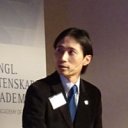
 Atsuto Maki
· 3 previous affiliations
- KTH Royal Institute of TechnologySince 2013
- Full Professor · Since 2013
- Toshiba Research Europe2008–2013
- Principal Researcher · 2008–2013
- Kyoto University2003–2008
- Associate Professor · 2003–2008
Research Overview
Atsuto Maki focuses on computer vision, representation learning, and 3D scene understanding. His early research explored stereo disparity and 3D surface reconstruction from motion, gradually evolving into foundational work on subspace analysis and deep learning regularization. Currently, his work addresses semi-supervised learning, sim-to-real domain adaptation, and training-free neural network optimization.
Research Trajectory
Maki's early research investigated stereo vision and active perception. He explored the area of Temporal Consistency in Video Depth Estimation and Depth Guided Foreground Isolation for Robust Scene Understanding in Disparity Selection in Binocular Pursuit. He subsequently analyzed local Fourier phase recovery for stereo disparity localization in Local Fourir Phase and Disparity Estimates: An Analytical Study. Building on psychophysical models of attention, particularly feature integration theory, he integrated preattentive depth and motion cues for active computer vision in Attentional Scene Segmentation: Integrating Depth and Motion.
Moving into 3D modeling in the early 2000s, he contributed to automatic 3D model acquisition and tracking using "hyperpatches" to capture orientation and intensity variations of roughly planar surfaces under motion in Hyperpatches for 3D Model Acquisition and Tracking. He also introduced the "geotensity" constraint, combining structure from motion and linear intensity subspaces to automatically reconstruct 3D Lambertian surfaces under varying point light illumination in Geotensity: Combining Motion and Lighting for 3D Surface Reconstruction.
As deep learning and advanced subspace methods became prominent, Maki's focus expanded to representation learning and classification robustness. He formalized the geometric concept of the difference subspace to analyze local shape variations for image set-based object recognition in Difference Subspace and Its Generalization for Subspace-Based Methods. He later extended this work to demonstrate its capacity for discriminant feature extraction, akin to Fisher discriminant analysis, in Discriminant Feature Extraction by Generalized Difference Subspace. In the realm of deep neural networks, he participated in evaluating the transferability of convolutional features across various visual recognition tasks in From generic to specific deep representations for visual recognition. He also conducted comprehensive evaluations of how convolutional networks handle imbalanced data across benchmark datasets in A systematic study of the class imbalance problem in convolutional neural networks and investigated network regularization techniques in Toward principled regularization of deep networks - From weight decay to feature contraction.
His recent trajectory includes significant contributions to semi-supervised learning and domain adaptation. To address the challenge of training models without expensive real-world labeling, he guided research in the broader area of 3D Simulation for Robust Synthetic Training Data and Bridging the Domain Gap for Synthetic Training Data. This is exemplified by Towards Sim-to-Real Industrial Parts Classification with Synthetic Dataset, which demonstrated the necessity of domain randomization—touching upon the direction of Dynamics Randomization for Robust Robotic Control—to deploy models trained purely on CAD data into actual factory environments. For dense prediction tasks, his lab developed Dense FixMatch: a simple semi-supervised learning method for pixel-wise prediction tasks, adapting pseudo-labeling and consistency regularization via strong data augmentation for semantic segmentation. Additionally, he explored vision-based aerial localization over forests by adapting 3D descriptors for point cloud registration in 3D Point Cloud Registration for GNSS-denied Aerial Localization over Forests, leveraging the shape and relative arrangement of trees.
Current Directions
The most recent papers in the evidence address fundamental optimization challenges in neural networks alongside applied spatial and temporal modeling. In the domain of network architecture, recent work investigates the area of Training-Free Neural Architecture Search and Width Independent Generalization in Overparameterized Neural Networks. Specifically, Training-Free Determination of Network Width via Neural Tangent Kernel introduces a method to identify the optimal "cardinal width" of a network at initialization by analyzing the smallest eigenvalue of the Neural Tangent Kernel, connecting to the broader study of Transitions from Lazy to Rich Training Dynamics.
Parallel efforts focus on refining loss functions and evaluation metrics for complex geometries. Research in the direction of Optimal Thresholding for Non-Decomposable Metrics and Robust Skeletonization for Complex Geometric Structures is highlighted by The Impact Label Noise and Choice of Threshold has on Cross-Entropy and Soft-Dice in Image Segmentation, which mathematically demonstrates how alternative thresholding allows Cross-Entropy to match or exceed Soft-Dice performance under label noise.
Finally, Maki's current work extends to advanced human motion understanding in sports analytics. By integrating 3D player skeletons into expected goals (xG) estimation, Skor-xG: SKeleton-ORiented Expected Goal Estimation in Soccer utilizes graph neural networks to capture the physical difficulty of shots. This contributes to active research directions such as Spatio-Temporal Graph Convolutions for Human Motion Understanding, Dynamic Graph Attention for Adaptive Feature Aggregation, and Integrating Visual Context into Skeleton Based Action Recognition.
Profile updated
Loading new papers…
Other researchers whose papers cluster into the same research directions — a proxy for overlapping technical interests and shared intellectual neighborhoods.
See something wrong? Report a mistake