

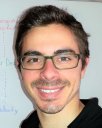
 Athanasios Nikolakopoulos
· 2 previous affiliations
- Amazon (United States)Since 2021
- Researcher · Since 2021
- University of Minnesota2017–2021
- Researcher · 2017–2021
Research Overview
Athanasios Nikolakopoulos focuses on graph-based machine learning, recommender systems, and scalable algorithms for network analysis. His trajectory spans the development of adaptive diffusion methods and random walk techniques for semi-supervised learning, extending into personalized recommendation frameworks. Most recently, his work investigates scaling laws and efficient architectures for large-scale language models in biological domains.
Research Trajectory
Early research explored graph structures and signal processing, beginning with collaborative work on Semi-parametric graph kernel-based reconstruction. Building on this foundation, he investigated semi-supervised classification over graph nodes, focusing on how random walks can model relationships among nodal features. This led to the development of Random Walks with Restarts for Graph-Based Classification: Teleportation Tuning and Sampling Design, which introduced methods to automatically adjust parameters to specific graph and label distributions, improving both accuracy and robustness. In parallel, he contributed to decentralized optimization frameworks, co-developing Hybrid ADMM: a unifying and fast approach to decentralized optimization. This framework unified centralized and decentralized consensus approaches, leveraging underlying graph topologies to balance node-to-node communication overhead with convergence rates.
A central theme of his subsequent work involved refining diffusion-based classifiers, such as those relying on Personalized PageRank and heat kernels. Recognizing that standard diffusions often fail to capture the unknown, class-specific label propagation mechanisms of complex networks, he introduced data-efficient approaches to learn these functions. This research was presented in AdaDIF: Adaptive Diffusions for Efficient Semi-supervised Learning over Graphs and expanded in the journal article Adaptive Diffusions for Scalable Learning Over Graphs. By leveraging the landing probabilities of class-specific random walks, this work advanced several broader research areas, including Scaling Graph Algorithms with Truncated Local Diffusions, Structural Label Enrichment and Subspace Multi-label Learning, and the study of Overcoming the Homophily Assumption in Graph Neural Networks.
Applying these graph-theoretic insights to collaborative filtering, he developed novel approaches for recommender systems. He introduced PerDif in Personalized diffusions for top-n recommendation, a framework that learns the teleportation probabilities of time-inhomogeneous random walks over item-to-item graphs to capture user-specific exploration processes. He further expanded on these concepts in RecWalk: Nearly Uncoupled Random Walks for Top-N Recommendation, which addressed a common limitation of random walks in recommendation: their tendency to rapidly concentrate on central nodes. By leveraging spectral properties to create nearly uncoupled random walks, the method improved itemspace coverage and recommendation diversity. To contextualize the broader landscape of collaborative filtering, he also authored Trust Your Neighbors: A Comprehensive Survey of Neighborhood-Based Methods for Recommender Systems, detailing the design choices and practical implementations of k-nearest neighbors and advanced matrix-based approaches.
Beyond graph diffusions, his research has addressed the computational challenges of evolving datasets. He contributed to Projection techniques to update the truncated SVD of evolving matrices with applications, which utilized projection subspaces and matrix-free solvers to efficiently update singular value decompositions as matrices grow. This methodology contributed to the area of Incremental Matrix Sketching and Decomposition and supported applications in the broader field of Scaling Singular Value Decomposition for High-Dimensional Neural Architectures.
Most recently, his focus has expanded to the architecture and scaling of large machine learning models. This is evidenced by his participation in Investigation of Scaling Laws for Encoder-Decoder Protein Language Models, which examined the compute efficiency and training stability of asymmetric architectures in biological AI.
Current Directions
The most recent papers in the evidence indicate a shift toward the efficient scaling of large language models, particularly in specialized domains such as computational biology. Recent work investigates the scaling laws governing encoder-decoder protein language models, exploring how Mixture-of-Experts (MoE) architectures can optimize compute efficiency compared to traditional dense models. This direction involves balancing training stability with computational performance in asymmetric designs, aiming to establish rigorous guidelines for training large-scale biological AI systems.
Profile updated
| Paper | Venue | Year |
|---|---|---|
| RecWalk: Nearly Uncoupled Random Walks for Top-N RecommendationGitHubnikolakopoulos/ | Unknown | 2023 |
Loading new papers…
Other researchers whose papers cluster into the same research directions — a proxy for overlapping technical interests and shared intellectual neighborhoods.
See something wrong? Report a mistake