

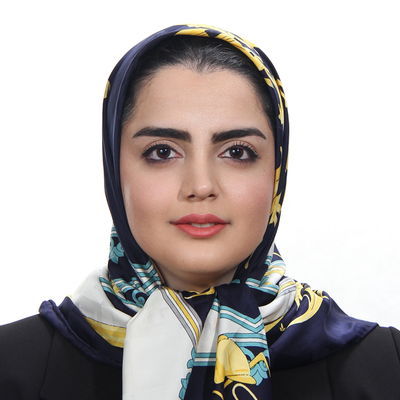
 Asal Mehradfar
· 2 previous affiliations
- University of Southern CaliforniaSince 2023
- Research Assistant · Since 2023
- Master of Science - MS, Electrical Engineering · 2023–2025
- Doctor of Philosophy - PhD, Electrical Engineering · 2023
- PhD student · From 2023
- Sharif University of Technology2017–2022
- Undergrad student · 2019–2022
- Undergrad student · 2017–2022
Research Overview
Asal Mehradfar focuses on applying machine learning to scientific discovery, with specific emphasis on automated analog circuit design and predictive modeling for drug delivery systems. Her trajectory spans the development of foundational datasets for electronic design automation to frameworks for lipid nanoparticle transfection. Recently, her work has expanded to include uncertainty estimation for large language model routing and time-series forecasting.
Research Trajectory
Mehradfar’s research trajectory began with a strong focus on automating electronic design automation (EDA) through machine learning. In 2024, she introduced AICircuit: A Multi-Level Dataset and Benchmark for AI-Driven Analog Integrated Circuit Design. This open-source dataset provides high-quality simulation data for both basic circuit blocks and complex heterogeneous systems, serving as a rigorous testing ground for automating circuit sizing. This work established a critical resource for the broader area of Foundation Models for Integrated Circuit Design.
Building on this foundational data, her 2025 research advanced the predictive modeling of circuit parameters. She presented a comprehensive benchmark in Supervised Learning for Analog and RF Circuit Design: Benchmarks and Comparative Insights. By predicting circuit parameters directly from desired performance specifications, this research demonstrated that machine learning can effectively bypass manual parameter sweeps, particularly for linear circuits, while highlighting the need for dense data scaling in complex multi-block systems. This contributed significantly to the research direction of Layout-Aware Optimization for Integrated Circuit Design. She further expanded on these concepts with FALCON: An ML Framework for Fully Automated Layout-Constrained Analog Circuit Design. Utilizing a massive dataset of simulations and a differentiable optimization pipeline, FALCON automates the entire analog circuit design process from topology selection to component sizing. This framework represents a major step forward in the area of Simultaneous Optimization of Physical Layout and System Topology, generating high-performance, layout-ready designs in under a second.
Parallel to her work in electronic design, Mehradfar has applied machine learning to biological and chemical sciences. She developed LANTERN: A Machine Learning Framework for Lipid Nanoparticle Transfection Efficiency Prediction, which significantly improves the prediction of how efficiently lipid nanoparticles deliver RNA into cells. By refining historical data and engineering specific chemical features, this framework outperformed more complex graph neural networks. This research intersects with broader efforts in the area of Bridging the Molecular Geometric Representation Gap and the challenging domain of Generalizing Beyond Known Scaffolds in Molecular Graphs.
In addition to her primary focus on AI for scientific discovery, Mehradfar has collaborated on applying advanced architectures to time-series forecasting and language model deployment. She contributed to CryptoMamba: Leveraging State Space Models for Accurate Bitcoin Price Prediction, which utilizes a Mamba-based State Space Model to capture long-range dependencies and regime shifts in highly volatile financial markets. She also participated in the development of the Confidence-Driven LLM Router, detailed in Leveraging Uncertainty Estimation for Efficient LLM Routing. This framework optimizes the deployment of large language models in edge-cloud environments by using uncertainty estimation to balance system cost with human-preference response quality.
Current Directions
The most recent papers in the evidence indicate a dual focus on scaling machine learning for physical sciences and optimizing the deployment of modern AI architectures. In the physical sciences, ongoing work addresses the full automation of hardware design pipelines and the predictive modeling of biochemical delivery systems. Simultaneously, recent collaborative efforts investigate the efficiency of large language models—specifically through uncertainty estimation for routing—and the application of state space models to complex, non-linear time-series forecasting.
Profile updated
Loading new papers…
Other researchers whose papers cluster into the same research directions — a proxy for overlapping technical interests and shared intellectual neighborhoods.
See something wrong? Report a mistake