

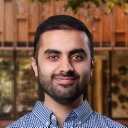
 Asad Aali
· 3 previous affiliations
- Stanford UniversitySince 2026
- PhD · Since 2026
- The University of Texas at Austin2022–2024
- MS · 2022–2024
- BS · 2015–2019
Research Overview
Asad Aali focuses on artificial intelligence and biomedicine, with an emphasis on clinical language models, automated medical text validation, and generative methods for medical imaging. His trajectory spans from foundational work in solving inverse problems with diffusion models to developing robust evaluation frameworks for clinical AI. His current research investigates neuro-symbolic reasoning and agentic tool calling for complex scientific tasks.
Research Trajectory
Aali’s early work explored generative methods and model specialization. In 2023, he contributed to Solving Inverse Problems with Score-Based Generative Priors learned from Noisy Data, while also engaging with the research direction of Why Generalist Models Outperform Domain Specialists.
In 2024, his focus on applied clinical AI deepened. He collaborated on Detecting Underdiagnosed Medical Conditions with Deep Learning-Based Opportunistic CT Imaging, a study showing that deep learning could identify unreported conditions like sarcopenia and fatty liver from routine scans. This work advanced several areas, including the research direction of Opportunistic Screening of Routine Medical Imaging and Data, the area of Addressing Label Noise in Administrative Health Records, and work in Mitigating Alert Fatigue in Clinical Decision Support Systems, as well as the broader challenge of Cross-Institutional Generalization in Medical Deep Learning. Concurrently, he explored clinical natural language processing, participating in research demonstrating that fine-tuned models could alleviate clinician burden in Adapted large language models can outperform medical experts in clinical text summarization.
In 2025, Aali led significant efforts to ensure the reliability of AI-generated medical text. He introduced MedVAL: Toward Expert-Level Medical Text Validation with Language Models, a method leveraging synthetic data and self-supervised distillation to train language models to detect factual inconsistencies without requiring physician-labeled data. Continuing this focus on factual grounding, he contributed to MedFactEval and MedAgentBrief: A Framework and Workflow for Generating and Evaluating Factual Clinical Summaries, which proposed an "LLM Jury" to assess clinical facts with expert-level agreement. He also collaborated on A dataset and benchmark for hospital course summarization with adapted large language models, introducing the MIMIC-IV-BHC dataset to evaluate summarization quality and highlighting the gap between automated linguistic metrics and clinician preferences. This work intersected with the area of Quantized Low Rank Adaptation for Efficient Model Specialization.
Alongside clinical text, Aali investigated systematic prompt optimization to enhance model performance. He participated in Structured Prompting Enables More Robust Evaluation of Language Models, which combined the DSPy and HELM frameworks to show that structured prompting improves evaluation robustness and alters benchmark rankings. Applying similar optimization techniques to multimodal tasks, he co-developed Prompt Triage: Structured Optimization Enhances Vision-Language Model Performance on Medical Imaging Benchmarks, demonstrating that automated prompt tuning allows smaller open-source vision-language models to achieve significant performance gains without weight updates.
Returning to inverse problems and imaging in 2025, Aali led the development of novel diffusion-based reconstruction methods. He introduced Patch-Based Diffusion for Data-Efficient, Radiologist-Preferred MRI Reconstruction, adapting diffusion models to reconstruct high-quality MRIs from highly undersampled data using minimal training images by focusing on local anatomical motifs. He also developed Ambient Diffusion Posterior Sampling: Solving Inverse Problems with Diffusion Models Trained on Corrupted Data, a framework enabling models trained exclusively on corrupted data to solve inverse problems, often outperforming models trained on clean data under severe inference-time noise.
In 2026, his work expanded into comprehensive evaluation and advanced reasoning architectures. He contributed to Holistic evaluation of large language models for medical tasks with MedHELM, further solidifying his focus on rigorous clinical benchmarking. As a principal investigator, he guided research into structured inductive biases with Compositional Neuro-Symbolic Reasoning, developing a pipeline that separates visual perception from rule induction to significantly improve performance on the Abstraction and Reasoning Corpus. He also oversaw the development of MAVEN: Improving Generalization in Agentic Tool Calling, introducing a reasoning scaffold that breaks down and verifies intermediate results to enhance the accuracy of open-weight models on complex, multi-step scientific tasks.
Current Directions
The most recent papers in the evidence address advanced reasoning architectures and the rigorous evaluation of medical AI. Aali's current work investigates neuro-symbolic approaches that integrate structured inductive biases—such as domain-specific languages for pattern recognition—to improve abstract reasoning capabilities beyond standard model scaling. Additionally, his research explores agentic frameworks that utilize reasoning scaffolds to verify intermediate steps in complex tool-calling tasks. Alongside these architectural advancements, he continues to focus on the systematic, holistic evaluation of large language models in clinical environments to ensure their safety and factual reliability.
Profile updated
Loading new papers…
Other researchers whose papers cluster into the same research directions — a proxy for overlapping technical interests and shared intellectual neighborhoods.
See something wrong? Report a mistake