

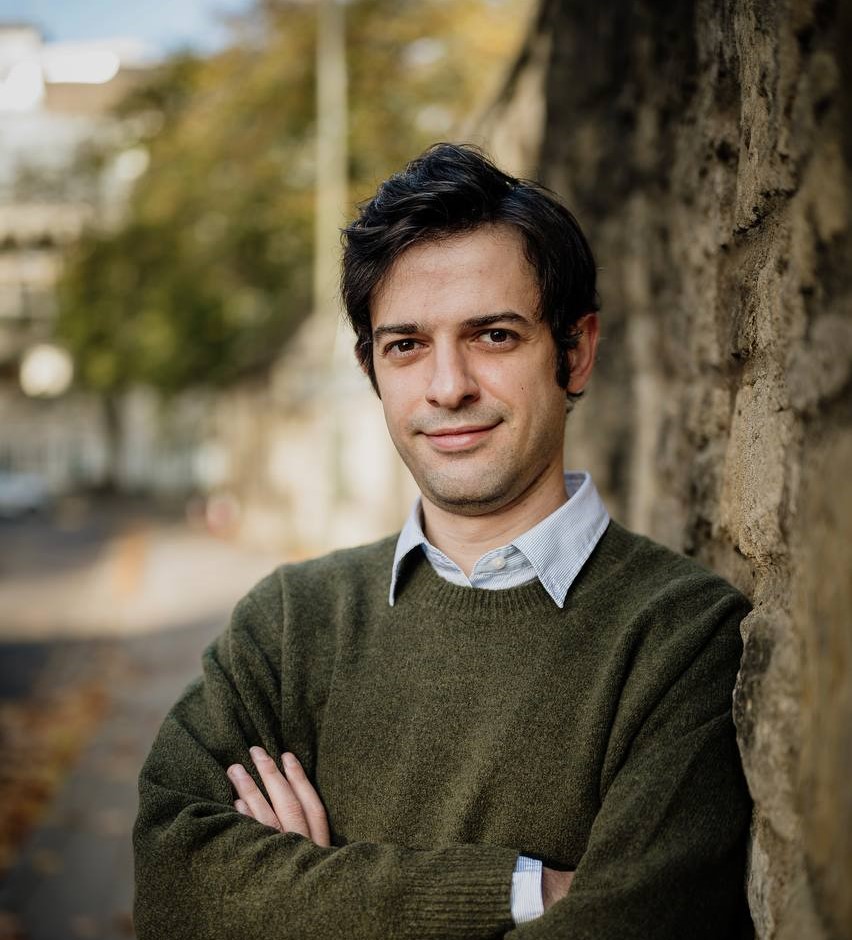
 Arya Akhavan
· 4 previous affiliations
- University of OxfordSince 2024
- Postdoc · Since 2024
- École PolytechniqueSince 2023
- Researcher · Since 2024
- Postdoc · 2023–2024
- Italian Institute of Technology2019–2023
- PhD student · 2019–2023
- ENSAE Paris2019–2023
- PhD student · 2019–2023
Research Overview
Arya Akhavan focuses on derivative-free optimization, online learning, and multi-armed bandits in continuous spaces. His trajectory spans the development of gradient estimators for highly smooth functions to distributed and adversarial settings in zero-order optimization. Currently, his work addresses non-stationary environments and the fundamental limits of high-dimensional gradient-free methods.
Research Trajectory
Akhavan's early research concentrated on accelerating derivative-free optimization by leveraging the structural properties of objective functions. In 2020, he explored the area of Exploiting Higher Order Regularity for Faster Convergence with the publication of Exploiting Higher Order Smoothness in Derivative-free Optimization and Continuous Bandits. This work introduced an algorithm utilizing randomized gradient estimates and smoothing kernels to achieve near-optimal convergence rates. By demonstrating how the degree of a function's differentiability can mitigate the challenges of noise and high dimensionality, this contribution advanced the broader research direction of Kernel Based Zero Order Optimization for Highly Smooth Functions and the specific methodology of Two-Point Feedback for Zeroth-Order Optimization.
Expanding on zero-order methods, Akhavan investigated decentralized settings in Distributed Zero-Order Optimization under Adversarial Noise (2021). Here, he developed a distributed zero-order projected gradient descent algorithm for strongly convex functions across a network. A key feature of this procedure was its ability to accommodate general noise models that do not require zero mean or independent errors, relying solely on local objective function values and communication between neighboring nodes. He continued to refine gradient estimation techniques in 2022 with A gradient estimator via L1-randomization for online zero-order optimization with two point feedback. This research provided an anytime, data-driven dual averaging algorithm for online zero-order optimization of convex and Lipschitz functions, contributing significantly to the area of Scaling Gradient Free Optimization with L1 Sphere Randomization.
Alongside his core optimization work, Akhavan has contributed to the intersection of sequential decision-making and algorithmic fairness. In Group Meritocratic Fairness in Linear Contextual Bandits (2022), he participated in defining a strong notion of fairness based on relative rank within sensitive groups. This approach addresses scenarios—such as hiring from diverse demographic pools—where discriminatory bias or social injustice renders absolute rewards incomparable across groups. This work aligns with the broader research direction of Group Adaptive Thresholding for Fair AI Decisions.
Returning to fundamental statistical estimation and bandit problems, his 2024 research addressed both passive and active learning paradigms. In Estimating the Minimizer and the Minimum Value of a Regression Function under Passive Design, he introduced methods for identifying the lowest point and value of an unknown regression function from noisy data, achieving optimal accuracy rates for smooth and strongly convex functions. Concurrently, he explored infinite-action spaces in Contextual Continuum Bandits: Static Versus Dynamic Regret. This work formalized decision-making frameworks where the action space is continuous, advancing the field of continuum bandits and contributing to the area of Closing the Dimensionality Gap in Linear Bandits.
In 2025, Akhavan's research addressed the theoretical boundaries of gradient-free methods and the complexities of non-stationary environments. He investigated the structural limits of high-dimensional modeling in Gradient-free stochastic optimization for additive models, demonstrating that the statistical advantages of additive models do not translate to significant speedups in gradient-free optimization. The work proves that finding a minimum without gradients scales poorly with dimension, even when the objective is a simple sum of one-dimensional functions. In the same year, he guided research on continuous-space decision-making in shifting environments with Non-stationary Bandit Convex Optimization: A Comprehensive Study. This work provides a rigorous theoretical framework for bandit convex optimization when the underlying system dynamics are constantly changing and feedback is strictly limited.
Current Directions
Recent work investigates the fundamental limits and dynamic challenges of optimization in complex, high-dimensional spaces. The most recent themes in the evidence address the theoretical boundaries of gradient-free methods, particularly examining whether structural assumptions—such as additive decompositions—can overcome the curse of dimensionality when gradient information is unavailable. Additionally, current research focuses on non-stationary bandit convex optimization, seeking to establish robust theoretical guarantees for sequential decision-making in continuous spaces where the environment evolves over time and feedback remains highly constrained.
Profile updated
Loading new papers…
Other researchers whose papers cluster into the same research directions — a proxy for overlapping technical interests and shared intellectual neighborhoods.
See something wrong? Report a mistake