

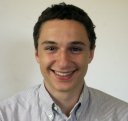
 Artidoro Pagnoni
· 6 previous affiliations
- Meta (United States)Since 2023
- Research Scientist · Since 2025
- Visiting Researcher · Since 2023
- University of Washington2021–2025
- Graduate Research Assistant · 2021–2025
- Research Intern · 2022
- Carnegie Mellon University2019–2021
- Graduate Research Assistant · 2019–2021
- Microsoft (United States)2018–2019
- Software Engineer · 2018–2019
- Harvard University2014–2018
- Undergrad student · 2014–2018
Research Overview
Artidoro Pagnoni focuses on resource-efficient deep learning, large language model scaling, and the factual reliability of generation systems. His early work addressed machine learning pipeline optimization and the evaluation of abstractive summarization models. Currently, he investigates tokenization-free architectures and quantization methods to dramatically reduce the computational overhead of training and deploying frontier models.
Research Trajectory
He began his research by addressing fundamental theoretical and security challenges in machine learning and web systems. In 2018, he established foundational proofs for domain adaptation in PAC Learning Guarantees Under Covariate Shift. This work refuted the common assumption that domain adaptation is fundamentally harder than standard machine learning, demonstrating that concept classes efficiently learnable under normal conditions remain learnable under covariate shift with only a polynomial increase in sample complexity relative to the distribution overlap. Concurrently, he directed the development of a native JavaScript WebAssembly virtual machine in Taint Tracking for WebAssembly. By introducing indirect taint tracking to detect sensitive data leaks through control flow with minimal performance overhead, this work contributed to the broader research direction of In-lined Reference Monitoring for Security Retrofitting. In the domain of natural language processing, he introduced a novel co-attention mechanism for inference networks in Conditional Variational Autoencoder for Neural Machine Translation. This approach explicitly captured interactions between source and target sentences, learning a smoother latent semantic space and mitigating the notorious problem of posterior collapse.
Moving toward system-level machine learning optimization, he explored methods to jointly optimize entire data processing workflows. He co-developed a framework to translate traditional, non-differentiable components—such as decision trees and one-hot encoding—into differentiable neural modules in Making Classical Machine Learning Pipelines Differentiable: A Neural Translation Approach. This translation enabled the joint optimization of entire pipelines using backpropagation, significantly improving accuracy over standard sequential training. He continued this line of collaborative research on end-to-end pipeline optimization in WindTunnel: Towards Differentiable ML Pipelines Beyond a Single Modele. Shifting his focus to the reliability of language generation, he addressed the critical issue of factual errors in abstractive summarization. He introduced a comprehensive benchmark for evaluating factuality metrics in Understanding Factuality in Abstractive Summarization with FRANK: A Benchmark for Factuality Metrics.
His investigation into the societal impacts and reliability of language models expanded to adversarial contexts in 2022. He analyzed vulnerabilities and defense mechanisms against machine-generated misinformation in Threat Scenarios and Best Practices to Detect Neural Fake News. To improve the controllability of generation systems, he developed Socratic Pretraining: Question-Driven Pretraining for Controllable Summarization, leveraging synthetic data augmentation to guide models toward more faithful and personalized information synthesis. Recognizing the prohibitive hardware costs of scaling large language models, he co-developed QLoRA: Efficient Finetuning of Quantized LLMs. By reducing memory requirements by a factor of fifteen, this method enabled the finetuning of massive 65-billion parameter models on a single GPU. QLoRA advanced several critical research areas, including Hierarchical Quantization of Neural Network Metadata, Low-Bit Precision Training for Large Language Models, and Numerical Stability in Fully Quantized Training.
Most recently, his research has focused on eliminating the constraints of subword tokenization to unlock new scaling dimensions for language models. He introduced the Byte Latent Transformer: Patches Scale Better Than Tokens, an architecture that learns directly from raw byte data. By dynamically segmenting bytes into patches based on next-byte entropy, the model allocates compute capacity where data complexity is highest, successfully matching the performance of token-based models at scale without relying on a fixed vocabulary. To address the slow autoregressive generation speeds typical of byte-level models, he collaborated on Fast Byte Latent Transformer. This work introduced diffusion-based and speculative decoding extensions that generate multiple bytes in parallel, slashing memory-bandwidth costs by over half while preserving the robustness of tokenizer-free models.
Current Directions
Recent work investigates tokenization-free architectures and highly efficient inference mechanisms for large language models. The most recent papers in the evidence address the computational bottlenecks of processing raw byte data, proposing dynamic patching strategies that allocate model capacity based on data entropy. This research focuses on scaling byte-level models to match traditional token-based performance while developing parallel generation techniques, such as diffusion and speculative decoding, to overcome the latency challenges inherent in fine-grained autoregressive text generation.
Profile updated
Loading new papers…
Other researchers whose papers cluster into the same research directions — a proxy for overlapping technical interests and shared intellectual neighborhoods.
See something wrong? Report a mistake