

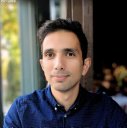
 Arman Cohan
· 3 previous affiliations
- Research Scientist · Since 2018
- Yale UniversitySince 2023
- Assistant Professor · Since 2023
- Georgetown University2013–2018
- PhD student · 2013–2018
1 other author named Arman Cohan: Arman Cohan (1 paper)
Research Overview
Arman Cohan focuses on natural language processing, representation learning, and the development of knowledge-intensive reasoning systems. His early work addressed the architectural challenges of summarizing and extracting information from long-form scientific documents. Currently, his research investigates the evaluation, interpretability, and factual reliability of large language models, particularly as autonomous agents in specialized domains like science and coding.
Research Trajectory
Arman Cohan’s early research concentrated on the unique challenges of processing and summarizing scientific literature, a domain characterized by long documents and complex discourse structures. In 2015, he developed Scientific Article Summarization Using Citation-Context and Article's Discourse Structure, which leveraged citation contexts to generate more accurate summaries of referenced articles. This work contributed to the broader research direction of Mitigating Positional Lead Bias in Long Document Summarization, moving beyond simple heuristics to capture salient information distributed throughout a text. He expanded on this with A Discourse-Aware Attention Model for Abstractive Summarization of Long Documents (2018), introducing a hierarchical encoder and an attentive decoder specifically designed to handle the discourse structure of single, longer-form research papers.
As the field transitioned toward large-scale pre-training, Cohan and his collaborators adapted these models for specialized domains. A major contribution during this period was SciBERT: A Pretrained Language Model for Scientific Text (2019), which demonstrated that pre-training on a massive corpus of scientific literature significantly improved performance on downstream scientific NLP tasks compared to general-domain models. Addressing the architectural bottleneck of processing extended texts, he helped introduce Longformer: The Long-Document Transformer (2020). By replacing the standard quadratic attention mechanism with a combination of local windowed attention and task-motivated global attention, Longformer enabled models to process documents containing thousands of tokens.
Building on these foundational models, Cohan’s work explored new tasks in scientific document understanding. He co-developed TLDR: Extreme Summarization of Scientific Documents (2020), introducing the SCITLDR dataset and a training strategy to generate extreme, single-sentence summaries of research papers. In parallel, he participated in the creation of the SCIFACT dataset in Fact or Fiction: Verifying Scientific Claims (2020), which required models to not only verify claims but also retrieve specific rationales from abstracts, highlighting the necessity of specialized domain knowledge for automated fact-checking.
Between 2021 and 2023, Cohan’s focus expanded to the rigorous evaluation of language models. He contributed to FLEX: Unifying Evaluation for Few-Shot NLP (2021), formulating principles for valid, cost-sensitive benchmark design in few-shot learning. As large language models became more ubiquitous, he investigated their vulnerabilities and evaluation flaws. In Benchmark Probing: Investigating Data Leakage in Large Language Models (2023), his research group introduced TS-Guessing, a method to detect benchmark contamination by testing a model's ability to fill in missing parts of evaluation data. This work advanced the areas of Shifting from Static Benchmarks to Dynamic Evaluation and the research direction of Auditing Large Language Models via Prefix Completion.
In recent years, Cohan’s lab at Yale University has increasingly focused on the reasoning capabilities, factual reliability, and agentic behavior of language models in complex environments. To bridge the gap between static code comprehension and runtime behavior, he collaborated on NExT: Teaching Large Language Models to Reason about Code Execution (2024). He further explored dynamic reasoning in specialized domains with ChemAgent: Self-updating Memories in Large Language Models Improves Chemical Reasoning (2025), a framework that equips models with a self-updating library of chemical knowledge, contributing to the broader area of Semantic Example Retrieval for In-Context Learning. Addressing the critical need for verifiable outputs, his group introduced the FinLFQA benchmark in FinLFQA: Evaluating Attributed Text Generation of LLMs in Financial Long-Form Question Answering (2025), which requires multi-faceted attribution for complex financial queries, directly engaging with the challenge of Factual Inaccuracy and Hallucination in Large Language Models.
Cohan’s most recent work systematically probes the internal knowledge and reliability of AI agents in scientific workflows. In Demystifying Scientific Problem-Solving in LLMs by Probing Knowledge and Reasoning (2026), his team disentangled a model's internal knowledge from its reasoning capacity, revealing that retrieval bottlenecks often hinder scientific problem-solving. They also investigated model plasticity in Can Large Language Models Truly Forget Scientific Claims? A Systematic Evaluation of Claim Level Unlearning (2026), demonstrating that current unlearning methods often achieve only surface-level suppression of falsified scientific claims. Finally, to evaluate models on end-to-end research tasks, his lab developed ResearchGym: Evaluating Language Model Agents on Real-World AI Research (2026) and Self-Adapting Agents for Automating Research Coding Workflows (2026). The latter introduced a framework for agents to learn from cross-repository execution trajectories, advancing work in the area of Autonomous Code Refinement via Execution Feedback Loops.
Current Directions
The most recent papers in the evidence indicate a strong focus on the deployment and rigorous evaluation of large language models as autonomous agents in open-ended, knowledge-intensive environments. Current work investigates how to build self-adapting systems that can execute complex scientific research and coding workflows, relying on dynamic memory and execution feedback rather than static prompting. Additionally, ongoing research addresses the interpretability and factual reliability of these models. This includes developing frameworks for multi-faceted attribution in specialized domains like finance and chemistry, as well as systematically probing the mechanisms of knowledge retention and unlearning to understand how models handle retracted or evolving scientific claims.
Profile updated
Loading new papers…
Other researchers whose papers cluster into the same research directions — a proxy for overlapping technical interests and shared intellectual neighborhoods.
See something wrong? Report a mistake