

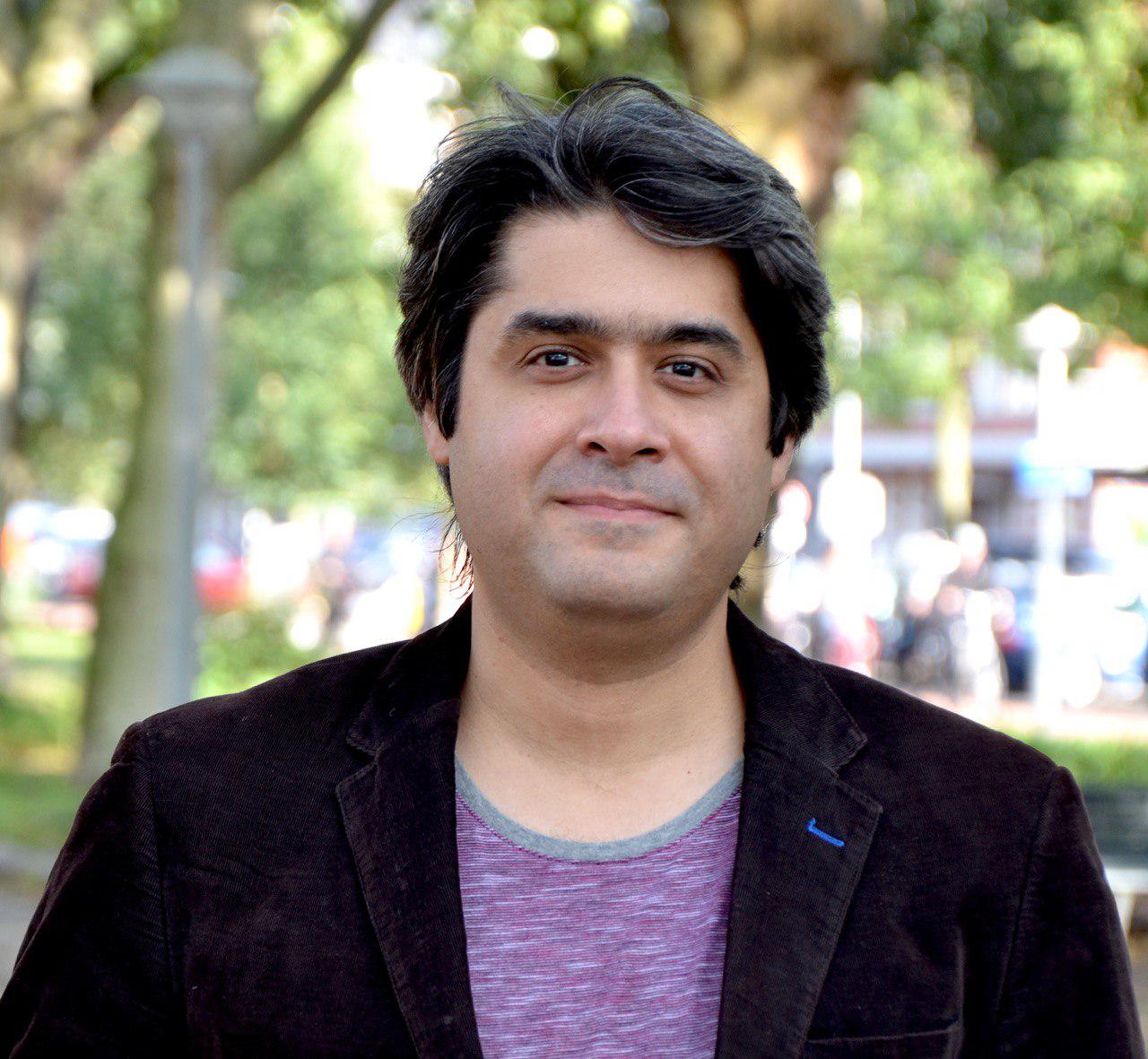
 Arash Behboodi
· 4 previous affiliations
- Qualcomm (United States)Since 2019
- Machine Learning Researcher · Since 2019
- RWTH Aachen University2015–2019
- Senior Researcher · 2015–2019
- Supélec2008–2012
- PhD student · 2008–2012
- Sharif University of Technology2001–2007
- MS student · 2005–2007
- Undergrad student · 2001–2005
Research Overview
Arash Behboodi focuses on the theoretical foundations of deep learning, geometric neural networks, and the application of machine learning to physical and communication systems. His early research addressed information theory and wireless network capacity before shifting toward generalization bounds and equivariant architectures. Currently, he investigates neural surrogates for physical simulations, foundational models for channel estimation, and efficient reasoning in large language models.
Research Trajectory
Behboodi's early research concentrated on information theory and the capacity of wireless networks. He investigated how to maximize information transmission in complex broadcast relay channels, deriving new capacity bounds in Cooperative Strategies for Simultaneous and Broadcast Relay Channels by exploring strategies for how relays process and forward information. Continuing this focus on cooperative communication, he introduced "Mixed Noisy Network Coding" and a "Selective Coding Strategy" in Mixed Noisy Network Coding and Cooperative Unicasting in Wireless Networks. These approaches allowed relays to dynamically switch between decoding messages and transmitting noisy descriptions based on channel conditions, improving achievable rates and closing gaps to theoretical limits.
Transitioning toward the theoretical foundations of machine learning, his focus shifted to understanding the generalization and robustness of neural networks. With collaborators, he examined the vulnerability of high-dimensional models to adversarial perturbations, contributing to the research direction of Dimension Independent Generalization Bounds for High Dimensional Learning through the development of sparsity-based compression techniques in Adversarial Risk Bounds through Sparsity based Compression. He subsequently provided comprehensive theoretical guarantees for sparse signal recovery architectures in Generalization Error Bounds for Iterative Recovery Algorithms Unfolded as Neural Networks. This work demonstrated that the sample complexity for these networks scales logarithmically relative to the number of layers, advancing the area of Scaling Generalization Bounds Gracefully with Network Depth and establishing foundational limits for the broader field of Deep Unfolding Networks for Inverse Problems.
Building on these theoretical insights, Behboodi began exploring geometric deep learning and the role of symmetries in data. In the context of Cryo-Electron Microscopy (Cryo-EM), he participated in research addressing the group synchronization framework to estimate the unknown poses of noisy 2D projections. This work, detailed in On the symmetries of the synchronization problem in Cryo-EM: Multi-Frequency Vector Diffusion Maps on the Projective Plane, contributed to the research direction of Resolving Geometric Symmetry Ambiguity in 3D Pose Estimation. He further formalized the relationship between equivariance and generalization error in A PAC-Bayesian Generalization Bound for Equivariant Networks. By utilizing perturbation analysis in the Fourier domain, he derived norm-based bounds that characterize how group size and irreducible representations impact model performance, providing guidelines for architectural design.
In recent years, Behboodi has extensively applied deep learning architectures to physical simulations, inverse problems, and wireless communication systems. He explored neural network applications for massive MIMO systems in Deep Learning-Based Channel Estimation for Wideband Hybrid MmWave Massive MIMO. His group also developed neural surrogates to model wireless electro-magnetic propagation in indoor environments; in WiNeRT: Towards Neural Ray Tracing for Wireless Channel Modelling and Differentiable Simulations, they introduced a differentiable, continuous representation of environments to enable end-to-end optimization for network planning. Expanding on inverse problems, he directed the development of an end-to-end reinforcement learning framework in Reinforcement Learning of Adaptive Acquisition Policies for Inverse Problems, which reformulates adaptive measurement acquisition as a partially observable Markov decision process to improve sampling in ultra-low measurement regimes.
Returning to pose synchronization, his team introduced a probabilistic approach to Multi-Reference Alignment in A Probabilistic Approach to Pose Synchronization for Multi-Reference Alignment with applications to wireless communication systems. By shifting the problem to relative poses, this method eliminates global symmetries to achieve more accurate signal reconstruction in 5G MIMO systems. He further advanced 5G channel estimation with ReQuestNet: A Foundational Learning model for Channel Estimation, a unified deep learning architecture that leverages permutation equivariance and recurrent refinement to replace hand-tuned signal processing pipelines. Additionally, he guided research into combinatorial optimization for cryptography and communications, introducing a self-supervised geometric deep learning approach to lattice reduction in Neural Lattice Reduction: A Self-Supervised Geometric Deep Learning Approach that matches the performance of classical algorithms on structured data.
Alongside his applied work in communications, Behboodi has continued to advance statistical guarantees and learning theory. He established theoretical limits for transductive conformal prediction in Fundamental bounds on efficiency-confidence trade-off for transductive conformal prediction, providing frameworks for statistical guarantees on multi-point predictions. He also revisited the sample efficiency of structured architectures in On the Sample Complexity of One Hidden Layer Networks with Equivariance, Locality and Weight Sharing, clarifying the theoretical mechanisms behind the success of convolutional and group equivariant networks. Most recently, his research has expanded into the efficiency and reasoning capabilities of large language models and agentic systems. In When Cloud Agents Meet Device Agents: Lessons from Hybrid Multi-Agent Systems, his group systematically tested architectures that combine cloud-based models with on-device small language models to optimize energy and cost without sacrificing reasoning. He also introduced the Conditional Information Bottleneck framework in Reasoning as Compression: Unifying Budget Forcing via the Conditional Information Bottleneck, treating reasoning as a form of lossy compression to significantly reduce the token footprint required for complex tasks. Extending these investigations into agent autonomy and transformer internals, Behboodi contributed to Explorer-Zero: Improving Self-Play for Long-Horizon Tasks with Decomposable Verifiable Rewards, an environment-interaction self-play framework that generates compositional tasks and intermediate verifiable checkpoints to train interactive LLM agents without human annotations. Additionally, Behboodi directed research in When do stored facts become available in looped transformers?, tracing how recurrence makes memorized facts and multi-hop entity chains readably and causally available across inference steps.
Current Directions
The most recent papers in the evidence indicate a dual focus on the theoretical efficiency of machine learning and the practical deployment of advanced language models. One major current direction involves optimizing multi-agent systems and large language models for resource-constrained environments. Recent work investigates hybrid architectures that partition reasoning tasks between cloud-based and on-device models, self-play curricula with verifiable rewards for interactive agents, and the internal factual recall mechanisms of looped transformers. Concurrently, Behboodi continues to explore the theoretical foundations of deep learning, addressing the sample complexity of equivariant networks and establishing fundamental efficiency-confidence trade-offs for transductive conformal prediction.
Profile updated
Loading new papers…
Other researchers whose papers cluster into the same research directions — a proxy for overlapping technical interests and shared intellectual neighborhoods.
See something wrong? Report a mistake