

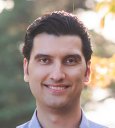
 Arash Afkanpour
· 3 previous affiliations
- Vector InstituteSince 2023
- Applied Scientist · Since 2023
- Google (United States)2013–2023
- Software Engineer · 2013–2023
- University of Alberta2006–2013
- PhD student · 2006–2013
Research Overview
Arash Afkanpour focuses on machine learning optimization, self-supervised representation learning, and federated learning systems. His early research addressed large-scale kernel methods and stochastic optimization techniques. More recently, his work investigates the continual tuning of foundation models and personalized federated learning in decentralized environments.
Research Trajectory
The trajectory begins with foundational contributions to optimization for machine learning. In 2013, he introduced A Randomized Mirror Descent Algorithm for Large Scale Multiple Kernel Learning. This work tackled the computational challenge of simultaneously learning to linearly combine a massive number of kernels while optimizing a predictor based on the resulting combination. By addressing the bottlenecks of traditional approaches, this research contributed significantly to the area of Scaling Kernel Methods for Massive Datasets and advanced theoretical understanding within the research direction of Logarithmic Generalization Bounds for Multiple Kernel Learning. Furthermore, the algorithmic innovations in this paper intersected with broader optimization methodologies, specifically in the research areas of Gradient Norm Importance Sampling for Efficient Optimization, Reducing Gradient Variance for Stable Stochastic Optimization, and Randomized Block Coordinate Methods for Large Scale Optimization.
Following this early focus on kernel optimization, his published work later expanded into modern deep learning paradigms, particularly representation learning and exploration strategies. He collaborated on Empirical analysis of representation learning and exploration in neural kernel bandits, which leveraged the efficiency of Gaussian Processes with Neural Kernels to address complex, non-linear bandit problems. This research proposed a framework to disentangle representation learning from exploration, offering deeper insights into bandit algorithm behavior and contributing to the research area of Deep Kernel Learning for High Dimensional Uncertainty Quantification. In parallel, he explored self-supervised learning techniques in Random Field Augmentations for Self-Supervised Representation Learning. This paper introduced a novel family of image transformations that allow for pixel-wise variations in standard augmentations, such as rotation and color jitter, thereby improving performance on downstream and out-of-distribution tasks.
A significant portion of his recent collaborative research addresses the challenges of decentralized data through federated learning. He participated in the study of FEDERATED TRAINING OF DUAL ENCODING MODELS ON SMALL NON-IID CLIENT DATASETS, which investigated the difficulties of maximizing agreement between pairs of encodings when data is distributed across many clients with independent and non-identically distributed (non-IID) datasets. Building on the need for robust decentralized systems, his collaborative work also addressed personalization in Federated Variational Inference: Towards Improved Personalization and Generalization. This research formalized a hierarchical generative model using Bayesian Inference and approximated the process via Variational Inference, aiming to better handle the heterogeneity in client generative distributions and predictive models in stateless cross-device setups.
Most recently, his focus has shifted toward the efficient adaptation of large-scale models. He contributed to the development of a new paradigm for continual learning, detailed initially in Continual Learning of Foundation Models with Limited Labelled Data and subsequently formalized in Consistency-Guided Asynchronous Contrastive Tuning for Few-Shot Class-Incremental Tuning of Foundation Models. This research introduced Consistency-guided Asynchronous Contrastive Tuning (CoACT), a method designed to continuously tune vision foundation models for new classes using only a few samples per class, without relying on a large initial in-distribution base session. Concurrently, he guided research into enhancing self-supervised paradigms in Can Generative Models Improve Self-Supervised Representation Learning?. This work proposed utilizing generative models to produce semantically consistent image augmentations, overcoming the limitations of simple transformations and generating richer visual representations.
Current Directions
The most recent papers in the evidence indicate a strong ongoing focus on the efficient adaptation and robustness of large-scale models in resource-constrained or dynamic environments. A primary theme is Few-Shot Class-Incremental Tuning (FSCIT), where the goal is to enable foundation models to learn new concepts continuously without catastrophic forgetting or the need for extensive retraining data.
Additionally, recent work investigates the intersection of generative AI and self-supervised learning, exploring how generative models can synthesize diverse, semantically consistent augmentations to train more robust visual encoders. Across these domains, the overarching objective remains the development of scalable, adaptable machine learning systems that perform reliably under non-ideal data conditions, such as limited labels or decentralized, non-IID distributions.
Profile updated
Loading new papers…
Other researchers whose papers cluster into the same research directions — a proxy for overlapping technical interests and shared intellectual neighborhoods.
See something wrong? Report a mistake