

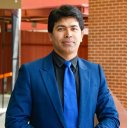
 Anwaar Ulhaq
· 7 previous affiliations
- Charles Sturt UniversitySince 2020
- Manna Institute Senior Research Fellow · Since 2022
- Senior Lecturer · 2021–2023
- Deputy Leader, Machine Vision and Digital Health Research · 2020–2023
- Chongqing UniversitySince 2023
- senior lecturer · Since 2023
- Central Queensland UniversitySince 2023
- Senior Lecturer · Since 2023
- Current
- President · Since 2025
- Vice President · 2023
- Professional Certificate Program in Machine Learning and Artificial Intelligence · 2019–2021
- Victoria University2015–2018
- Lecturer · 2015–2018
- ISILC Institute Research Fellow · 2017–2018
- Monash University2010–2014
- PhD, Artificial Intelligence · 2010–2014
Research Overview
Anwaar Ulhaq focuses on applied computer vision, generative AI architectures, and spatial computing. Early work explored computer vision applications in healthcare and agriculture, while subsequent research provided comprehensive analyses of efficient diffusion models and vision transformers. Recently, this trajectory has expanded to include spatial digital twins and unsupervised deep learning for medical image registration.
Research Trajectory
Ulhaq’s early work in the evidence centers on the practical application of computer vision to emerging global challenges. In 2020, as the primary author, Ulhaq published COVID-19 Control by Computer Vision Approaches: A Survey, which synthesized how artificial intelligence and image analysis could be deployed in healthcare settings to manage the pandemic. During this same period, collaborative work extended into agricultural applications. Ulhaq participated as a middle author in Real-time Plant Health Assessment Via Implementing Cloud-based Scalable Transfer Learning On AWS DeepLens, which investigated the deployment of machine learning models on edge devices to automate the identification of plant leaf diseases.
By 2022, Ulhaq’s focus shifted toward the foundational architectures driving modern computer vision and generative AI, specifically diffusion models and vision transformers. Leading this effort, Ulhaq authored Efficient Diffusion Models for Vision: A Survey. This work analyzed the computational bottlenecks inherent in standard denoising diffusion probabilistic models and reviewed strategies to mitigate these overheads. This analysis aligns with Ulhaq's broader engagement in the research direction of Accelerating Diffusion with Non-Markovian Sampling and the area of Generative Diffusion in Compressed Latent Spaces, both of which seek to reduce the latency of generative inference.
Simultaneously, Ulhaq led a comprehensive review of transformer architectures applied to video domains in Vision Transformers for Action Recognition: A Survey. This research evaluated how self-attention mechanisms, originally designed for natural language and static images, could be adapted to process the temporal dynamics of human action. This work reflects an interest in the broader theme of Spatiotemporal Tokenization for Video Transformers, addressing the challenge of modeling motion across frames without incurring prohibitive computational costs.
In 2023 and 2024, the trajectory diversified into specialized spatial applications and medical imaging. Ulhaq contributed as second author to Unsupervised Nonlinear Deformable Registration Network for 4D CT Lung Imaging, developing an image patch decomposition approach to handle complex nonlinear deformations between inspiration and expiration phases in radiation therapy. Concurrently, Ulhaq participated in collaborative research on spatial computing, serving as a co-author on Enabling Spatial Digital Twins: Technologies, Challenges, and Future Research Directions. This work explored the integration of geospatial data and physical modeling to create virtual replicas of complex environments.
Current Directions
Recent work investigates the application of deep learning to complex spatial and temporal domains. The most recent papers in the evidence address unsupervised nonlinear deformable registration for medical imaging, specifically focusing on 4D CT lung scans to improve image-guided radiation therapy. Additionally, ongoing collaborative research explores the development and application of urban digital twins, utilizing machine learning and spatial data integration to model urban sustainability, weather, and traffic patterns. Beyond applied spatial computing, thematic evidence indicates a continued focus on the foundational mechanics of generative AI, particularly the research direction of Accelerating Diffusion Models for Real-Time Generative Inference, reflecting an ongoing effort to optimize complex synthesis models for practical deployment.
Profile updated
Loading new papers…
Other researchers whose papers cluster into the same research directions — a proxy for overlapping technical interests and shared intellectual neighborhoods.
See something wrong? Report a mistake