

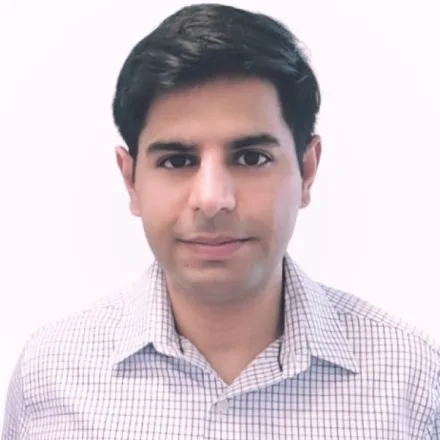
 Anurag Koul
· 7 previous affiliations
- Salesforce (United States)Since 2026
- Lead Research Scientist · Since 2026
- SalesForce.comSince 2026
- Researcher · Since 2026
- poolside2025–2026
- Member of Engineering · 2025–2026
- Amazon (United States)2024–2025
- Applied Scientist II · 2024–2025
- Microsoft (United States)2022–2024
- Postdoctoral Researcher · 2022–2024
- Postdoc · 2022
- Oregon State University2016–2022
- PhD student · 2016–2022
- Graduate Research Assistant · 2017–2022
- University of Mumbai2010–2014
- Bachelor of Engineering (BEng), Computer Science · 2010–2014
Research Overview
Anurag Koul focuses on reinforcement learning, latent state representations, and decision-time planning for intelligent agents. His early research explored the explainability of recurrent policy networks and model-based continuous control. Currently, he investigates the application of reasoning and reinforcement learning techniques to improve code generation in large language models.
Research Trajectory
During his doctoral studies, his early work investigated how deep reinforcement learning agents make decisions and how those decisions can be understood by human operators. With collaborators, he investigated the strategies agents use to maximize rewards in Visualizing and Understanding Atari Agents (2018). This work contributed to the area of Interpretable Policies for Sequential Decision Making by attempting to demystify the black-box nature of deep RL models. Continuing this focus on interpretability, he introduced Learning Finite State Representations of Recurrent Policy Networks (2019), which sought to map complex, continuous neural representations into discrete, analyzable state machines.
This methodology was further refined in Re-understanding Finite-State Representations of Recurrent Policy Networks (2021). By applying interpretable reductions and a novel functional pruning technique, this research extracted human-readable finite-state machines from recurrent neural network (RNN) policies. The analysis revealed that many high-performing Atari agents actually rely on open-loop strategies that largely ignore visual observations, contrary to what traditional saliency maps might suggest. This insight advanced the research direction of Breaking Open-Loop Memorization in Reinforcement Learning and the broader area of Explaining Model Decisions via Contrastive Feature Attribution.
Parallel to his work on interpretability, he explored how agents can plan more effectively in complex environments. In 2020, he developed Dream and Search to Control: Latent Space Planning for Continuous Control. This research integrated online search techniques—specifically Rollout and Monte-Carlo Tree Search—into the state-of-the-art Dreamer framework. By performing decision-time look-ahead planning over learned latent dynamics, the approach achieved superior sample efficiency and robust policy learning in challenging physics simulations, aligning with work in the area of Real-Time Look-Ahead Planning for Intelligent Agents.
He subsequently addressed the challenges of evaluating sequential-action policies using historical data without deploying them in the real world. He presented Offline Policy Comparison with Confidence: Benchmarks and Baselines (2022), which was later expanded in a subsequent publication, Offline Policy Comparison with Confidence: Benchmarks and Baselines (2023). This research established benchmarks for offline policy comparison (OPC) to account for statistical variance and limited data coverage, providing an empirical evaluation of the trade-off between risk and coverage for model-based evaluation tools.
Returning to the problem of latent representations for planning, he introduced PcLast: Discovering Plannable Continuous Latent States (2024). The PCLAST framework prioritizes "reachability," ensuring that states located close together in the latent space are physically reachable from one another in the actual environment. By combining multi-step inverse dynamics with a temporal contrastive objective, the approach facilitates efficient hierarchical planning and improves goal-conditioned reinforcement learning in obstacle-filled environments. This contributes to the research direction of Decoupling Representation and Classifier Learning.
Most recently, his focus has expanded to reasoning and code generation with large language models (LLMs). He developed SpecAgent: A Speculative Retrieval and Forecasting Agent for Code Completion (2025). This framework shifts the computational burden of repository-wide code retrieval from the typing phase to an indexing phase. By proactively exploring a codebase and speculating on future edits, SpecAgent provides LLMs with rich, pre-computed context that improves code completion accuracy without adding latency to the user experience.
Current Directions
The most recent papers in the evidence indicate a shift toward applying reinforcement learning and reasoning techniques to large language models, specifically in the domain of software engineering and code generation. Recent work investigates how to provide LLMs with broader repository-level context without incurring latency penalties during inference. By developing speculative retrieval frameworks that proactively index and forecast code edits, this research addresses the challenge of grounding generative models in complex, multi-file codebases. Additionally, ongoing themes in his research emphasize the construction of plannable latent spaces—structuring representations so that they inherently capture reachability and temporal dynamics, which remains a critical problem for both robotic control and hierarchical planning systems.
Profile updated
Loading new papers…
Other researchers whose papers cluster into the same research directions — a proxy for overlapping technical interests and shared intellectual neighborhoods.
See something wrong? Report a mistake