

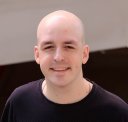
 Antonio Silveti-Falls
· 4 previous affiliations
- CentraleSupélecSince 2022
- Associate Professor · Since 2022
- Université Paris-SaclayCurrent
- Current
- Université de Caen Normandie2017–2021
- PhD student · 2017–2021
- San Diego State University2015–2017
- MS student · 2015–2017
Research Overview
Antonio Silveti-Falls focuses on nonsmooth optimization, implicit differentiation, and large-scale machine learning algorithms. His early work developed non-Euclidean splitting methods and conditional gradient frameworks for complex composite problems. More recently, his research investigates scalable optimization techniques for deep learning, including hyperparameter transfer, gradient clipping, and batch size scaling for large language models.
Research Trajectory
The trajectory begins with foundational contributions to composite optimization in infinite-dimensional spaces. In 2020, he introduced a novel algorithm in Generalized Conditional Gradient with Augmented Lagrangian for Composite Minimization, combining generalized conditional gradient techniques with an augmented Lagrangian approach. This framework handles nonsmooth functions and affine constraints without requiring strong regularity assumptions like Lipschitz continuity of gradients. He expanded on these non-Euclidean approaches in First-Order Noneuclidean Splitting Methods for Large-Scale Optimization: Deterministic and Stochastic Algorithms. (2021), replacing standard Euclidean energy with Bregman divergence to accommodate problems with more exotic geometries.
Concurrently, his research advanced the theoretical foundations of algorithmic differentiation. In Nonsmooth Implicit Differentiation for Machine-Learning and Optimization (2021), he and his collaborators established a nonsmooth implicit function theorem equipped with an operational calculus. This work justifies formal subdifferentiation—such as replacing standard derivatives with Clarke Jacobians—for definable problems, ensuring strict compatibility with backpropagation. This contribution intersects with the broader research directions of Conservative Fields for Nonsmooth Automatic Differentiation and Tame Geometry for Nonsmooth Optimization. He later extended these differentiability concepts in Differentiating Nonsmooth Solutions to Parametric Monotone Inclusion Problems (2024), providing sufficient conditions based on semialgebraicity and strong monotonicity to ensure path differentiability for monotone inclusion problems.
Returning to splitting methods and conditional gradients, he developed algorithms robust to noise and inexact computations. The 2024 paper A Stochastic Bregman Primal-Dual Splitting Algorithm for Composite Optimization introduced the SBPD method, which guarantees convergence under noisy gradient calculations and generalized smoothness conditions. Similarly, Inexact and Stochastic Generalized Conditional Gradient with Augmented Lagrangian and Proximal Step (2024) presented ICGALP, an algorithm designed to maintain optimal convergence rates and feasibility even when linear oracles or gradients are estimated imperfectly.
In recent years, his focus has shifted toward the optimization of large-scale deep learning architectures. Participating in collaborative efforts, he contributed to Training Deep Learning Models with Norm-Constrained LMOs (2025), which introduced the SCION optimization framework. By utilizing norm-constrained Linear Minimization Oracles, SCION adapts to neural network geometry and enables zero-shot hyperparameter transfer across model widths. This work aligns with research areas such as Maximal Update Parameterization for Zero-Shot Hyperparameter Transfer and Hyperparameter Transfer across Model Scales.
Further exploring deep learning optimization, Generalized Gradient Norm Clipping & Non-Euclidean $(L_0,L_1)$-Smoothness (2025) proposed a hybrid framework blending steepest descent with conditional gradient methods. Operating under a relaxed $(L_0, L_1)$-smoothness assumption, this approach stabilizes training with large stepsizes for Vision Transformers and Large Language Models, contributing to the area of Optimization Theory for Gradient Dependent Smoothness and the direction of The Computational Overhead of Non-Euclidean Deep Learning. Most recently, On the Role of Batch Size in Stochastic Conditional Gradient Methods (2026) derived a "BST scaling rule" to identify optimal batch sizes and sequence lengths for training large language models, providing a theoretical recipe for scaling hyperparameters under a fixed token budget.
Current Directions
The most recent papers in the evidence indicate a strong focus on scalable optimization techniques for training massive neural networks, particularly Large Language Models and Vision Transformers. Current work investigates how to adapt optimization algorithms to the specific geometry of neural architectures to improve stability and efficiency. A major theme is hyperparameter transfer across model scales, developing theoretical frameworks and scaling rules that allow hyperparameters tuned on small proxy models to be applied directly to production-scale runs. This includes exploring relaxed smoothness assumptions, such as $(L_0, L_1)$-smoothness, and leveraging norm-constrained Linear Minimization Oracles to unify various optimization strategies while reducing memory overhead.
Profile updated
Loading new papers…
Other researchers whose papers cluster into the same research directions — a proxy for overlapping technical interests and shared intellectual neighborhoods.
See something wrong? Report a mistake