

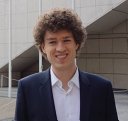
 Antoine Toisoul
· 5 previous affiliations
- Meta (United States)Since 2021
- Researcher · Since 2022
- Researcher · 2021–2022
- Meta AICurrent
- Current
- Samsung (South Korea)2019–2021
- Researcher · 2019–2021
- Imperial College London2014–2019
- PhD student · 2014–2019
- Télécom Paris2011–2014
- MS student · 2011–2014
Research Overview
Antoine Toisoul focuses on computer vision and deep learning, with specific emphasis on video action recognition, spatio-temporal modeling, and 3D generative AI. His early work addressed efficient neural network architectures and attention mechanisms for understanding human behavior in video. More recently, his research investigates controllable scene generation using diffusion models and large-scale datasets for 3D object reconstruction.
Research Trajectory
Antoine Toisoul’s research trajectory begins with a strong focus on efficient deep learning architectures and spatio-temporal modeling for video understanding. In 2020, he co-developed methods to address the computational challenges of training deep neural networks with multidimensional convolutions. This work, detailed in Factorized Higher-Order CNNs With an Application to Spatio-Temporal Emotion Estimation, introduced a tensor factorization framework that compresses network parameters for efficient higher-order convolutions, demonstrating its utility in spatio-temporal emotion estimation. Concurrently, he applied spatial-temporal attention mechanisms to complex video analysis tasks. In Egocentric Action Recognition by Video Attention and Temporal Context, he and his collaborators tackled the EPIC-Kitchens challenge by utilizing a "What-Where-When" video attention model to simultaneously predict compositional verb and noun labels in challenging real-world environments characterized by fast-moving objects and occlusions.
Throughout 2021, his work continued to advance video action modeling and affective computing. He contributed to the development of robust attention mechanisms for video analysis in Knowing What, Where and When to Look: Video Action modelling with Attention. Building on these attentive learning frameworks, he also co-developed approaches for learning from limited data, as presented in Few-shot Action Recognition with Prototype-centered Attentive Learning. Alongside his algorithmic contributions to video understanding, he participated in large-scale data collection efforts for human behavior sensing. He was part of the consortium that introduced SEWA DB: A Rich Database for Audio-Visual Emotion and Sentiment Research in the Wild, a comprehensive dataset featuring over 2,000 minutes of audio-visual data designed to train systems for naturalistic, cross-cultural emotion and sentiment recognition.
In recent years, the focus of his research has expanded into 3D computer vision, generative artificial intelligence, and scene manipulation. Overseeing research in controllable image generation, he guided the development of Move Anything with Layered Scene Diffusion. This work addresses the limitations of standard diffusion models by optimizing a layered scene representation during the sampling process, achieving spatial disentanglement that allows users to freely move, resize, clone, and edit the appearance of objects within generated scenes. Continuing his involvement in foundational dataset creation, he recently contributed to UnCommon Objects in 3D, a large-scale object-centric dataset designed for 3D deep learning and generative AI. The dataset provides high-resolution, 360-degree video coverage of diverse object categories, complete with 3D camera poses, depth maps, and 3D Gaussian Splat reconstructions.
Current Directions
The most recent papers in the evidence indicate a current focus on 3D generative AI and controllable scene synthesis. Recent work investigates how to impose spatial disentanglement and layout control onto diffusion models, enabling fine-grained editing operations like layer-wise appearance modification and object repositioning. Additionally, there is an ongoing emphasis on building high-quality, large-scale 3D datasets equipped with modern representations such as 3D Gaussian Splatting to support the next generation of object-centric 3D deep learning models.
Profile updated
Loading new papers…
Other researchers whose papers cluster into the same research directions — a proxy for overlapping technical interests and shared intellectual neighborhoods.
See something wrong? Report a mistake