

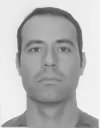
 Antoine Manzanera
· 4 previous affiliations
- Full Professor · Since 2013
- Associate Professor · 2001–2013
- Télécom Paris1997–2000
- PhD student · 1997–2000
- Lyon 1 Université1988–1993
- MS student · 1991–1993
- Undergrad student · 1988–1991
Research Overview
Antoine Manzanera focuses on computer vision, geometric deep learning, and self-supervised depth estimation. His early work established mathematical frameworks for image processing and motion detection before evolving toward complex 3D reconstruction from monocular video. Currently, his research emphasizes applying Riemannian manifold representations to multimodal medical imaging and improving robust depth perception in dynamic, real-world environments.
Research Trajectory
Manzanera’s early research concentrated on foundational mathematical models for image and signal processing. This began with the development of theoretical structures for electronic imaging, detailed in n-dimensional skeletonization: a unified mathematical framework (2002). He subsequently applied non-linear operators to computer vision problems, introducing a recursive method for background estimation in A new motion detection algorithm based on Sigma-Delta background estimation (2007). By utilizing a Sigma-Delta filter alongside spatiotemporal regularization, this work provided a computationally efficient approach to handling complex scenes with diverse motion models.
Over the following decade, his focus shifted toward the complexities of 3D reconstruction and motion analysis from video. With collaborators, he addressed the inherent scale ambiguity in unsupervised depth prediction through Learning Structure-from-Motion from Motion (2018). Rather than relying on single-image depth inference, this work proposed learning a depth map inference system from monocular videos that processes image pairs, allowing for the determination of absolute depth scaling. Expanding on the mathematical representation of dynamics, he later developed A compact and recursive Riemannian motion descriptor for untrimmed activity recognition (2021). This research modeled motion patterns by spatially pooling local trajectory kinematic cues into covariance matrices, forming a Riemannian manifold that enabled online action prediction from incomplete dynamics.
By 2023, Manzanera was deeply engaged in the research direction of Generalizing Depth Estimation to Unseen Environments. Recognizing the limitations of standard benchmarks like KITTI for diverse contexts such as UAV flight, he introduced Does it work outside this benchmark? Introducing the rigid depth constructor tool (2023). This open-source tool decoupled Lidar scanning from camera acquisition, allowing researchers to build high-quality depth validation datasets using off-the-shelf hardware. Concurrently, in the area of Depth Estimation Beyond the Static World Assumption, he proposed a cooperative training strategy in Rebalancing gradient to improve self-supervised co-training of depth, odometry and optical flow predictions (2023). The resulting CoopNet architecture dynamically rebalanced gradients based on reconstruction errors, ensuring that depth networks focused on static regions while optical flow handled moving objects, thereby mitigating the instabilities common in multi-task learning.
Recently, Manzanera has successfully translated his expertise in geometric representations and depth estimation into clinical domains. Contributing to the broader area of Multimodal Integration for Robust Clinical Decision Support, he developed A Riemannian multimodal representation to classify parkinsonism-related patterns from noninvasive observations of gait and eye movements (2024). This markerless system mapped video features of patient movements onto a Riemannian manifold, capturing complex diagnostic patterns that traditional clinical scales often miss. He also applied depth estimation techniques to gastroenterology in Leveraging a realistic synthetic database to learn Shape-from-Shading for estimating the colon depth in colonoscopy images (2024), utilizing a custom loss function and a synthetic database to optimize depth estimation around colon folds and precancerous polyps.
His work in medical imaging further advanced the research direction of Machine Learning on Curved Riemannian Manifolds. In Geometric multimodal learning to support prostate cancer diagnosis on limited and multicentric bi-parametric MRI data (2025), he introduced a framework that processes deep features as Symmetric Positive Definite (SPD) matrices on a curved manifold. This approach achieved high classification performance for clinically significant prostate cancer while remaining highly stable even when training data was drastically reduced.
Returning to core computer vision challenges, Manzanera addressed the persistent failure of self-supervised depth models in low-texture environments with Improved Monocular Depth Prediction Using Distance Transform Over Pre-semantic Contours with Self-supervised Neural Networks (2025). By jointly learning object contours and applying a distance transform, the method provided neural networks with clear geometric signals in featureless regions, significantly boosting edge sharpness. Most recently, he participated in synthesizing the shift from local CNNs to global-context architectures in Foundation models and Transformers for anomaly detection: A survey (2026), providing a comprehensive taxonomy of zero-shot and few-shot visual anomaly detection methods.
Current Directions
The most recent papers in the evidence indicate a dual focus on geometric deep learning for medical diagnostics and advanced self-supervised depth estimation. In the clinical sphere, Manzanera is investigating how non-Euclidean representations—specifically Riemannian manifolds and Symmetric Positive Definite matrices—can extract robust, complex patterns from limited or multicentric medical data. This includes multimodal approaches that integrate video observations or bi-parametric MRI to support diagnostic accuracy in conditions like Parkinson's disease and prostate cancer.
Simultaneously, his work continues to push the boundaries of monocular depth prediction in challenging, real-world environments. Recent efforts address the "textureless problem" in self-supervised learning by incorporating geometric signals like distance transforms over pre-semantic contours. Alongside these primary empirical tracks, he is also engaged in evaluating the broader impact of foundation models and transformer architectures on visual anomaly detection, exploring how large-scale pre-training facilitates zero-shot inference in industrial and structural contexts.
Profile updated
Loading new papers…
Other researchers whose papers cluster into the same research directions — a proxy for overlapping technical interests and shared intellectual neighborhoods.
See something wrong? Report a mistake