

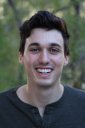
 Anthony Corso
1 previous affiliation
- Stanford University2021–2024
- Postdoc · 2021–2024
Research Overview
Anthony Corso focuses on the validation, safety, and decision-making capabilities of autonomous systems operating in uncertain environments. His trajectory spans from simulation-based stress testing for autonomous vehicles to risk-aware perception and belief-state planning for partially observable Markov decision processes. Recently, his work investigates safe planning with learned neural network surrogates and the rapid adaptation of autonomous agents to unseen tasks.
Research Trajectory
Anthony Corso’s early research addressed the critical challenge of validating autonomous vehicles through simulation. He introduced Adaptive Stress Testing with Reward Augmentation for Autonomous Vehicle Validatio, which enhanced existing adaptive stress testing methods by incorporating domain-specific knowledge into the reward function. This approach enabled the discovery of a more diverse and relevant set of failure scenarios, moving beyond repetitive failure modes or unavoidable collisions to identify complex, actionable edge cases.
Building on this foundation in system validation, his focus expanded to the safety of the perception modules that drive autonomous decision-making. He developed Risk-Driven Design of Perception Systems, formulating a risk-driven approach that accounts for how perceptual errors impact the performance of fully integrated, closed-loop systems. By quantifying the effect of specific perceptual errors on overall safety, this work contributes to broader research areas such as Probabilistic Verification for Scalable Safety Guarantees, Boundary Focused Learning for Safety Critical Control, and the direction of Risk-Aware Metrics for Safety-Critical Perception. Continuing to address environmental robustness, he collaborated on AVOIDDS: Aircraft Vision-based Intruder Detection Dataset and Simulator. This project introduced a photorealistic dataset and evaluation interface for vision-based aircraft detect-and-avoid systems, allowing models to be tested across varying lighting, weather, and geographic conditions. This benchmark supports research in the area of Planning-Centric Evaluation of Autonomous Driving Systems, as well as the directions of Automated Ground Truth Synthesis in Virtual Environments and Segmenting Camouflaged Objects via Global Context and Edge Refinement.
A major theme in his recent trajectory is solving high-dimensional, partially observable Markov decision processes (POMDPs) for real-world applications. With collaborators, he developed BetaZero: Belief-State Planning for Long-Horizon POMDPs using Learned Approximations, which combines online Monte Carlo tree search with offline neural network approximations to replace problem-specific heuristics. He further extended this paradigm to safety-constrained environments in Chance-Constrained POMDP Planning with Learned Neural Network Surrogates. This work introduced the ConstrainedZero algorithm, which learns neural network approximations of optimal values and policies alongside a failure probability estimate, guiding safe action selection during online planning in belief space.
In parallel with his work on formal planning, he has investigated the behavior of emerging AI models in strategic contexts. He participated in the study Human vs. Machine: Behavioral Differences between Expert Humans and Language Models in Wargame Simulations, which compared large language models to national security experts in high-stakes scenarios, highlighting the models' aggressive tendencies and sensitivity to scenario changes. Most recently, his research has addressed rapid adaptation in autonomous systems. He contributed to Experience Filter: Using Past Experiences on Unseen Tasks or Environments, introducing a method that uses a kernel to correlate past driving experiences with new ones, allowing autonomous vehicles to generate effective policies for unseen tasks without the need for retraining.
Current Directions
The most recent papers in the evidence indicate a dual focus on scalable, safe planning under uncertainty and the rapid adaptation of autonomous agents. A primary current direction involves solving high-dimensional, chance-constrained partially observable Markov decision processes (POMDPs) by integrating online Monte Carlo tree search with learned neural network surrogates. This allows systems to balance utility with strict safety constraints in complex environments. Additionally, recent work investigates methods for autonomous vehicles to quickly adapt to unseen tasks using experience filtering, bypassing the need for extensive retraining. Alongside these control and planning methodologies, there is an ongoing interest in evaluating the behavioral robustness and strategic decision-making capabilities of large language models in high-stakes simulation environments.
Profile updated
| Paper | Venue | Year |
|---|---|---|
| Experience Filter: Using Past Experiences on Unseen Tasks or EnvironmentsGitHubsisl/ | Openreview | 2025 |
Loading new papers…
Other researchers whose papers cluster into the same research directions — a proxy for overlapping technical interests and shared intellectual neighborhoods.
See something wrong? Report a mistake