

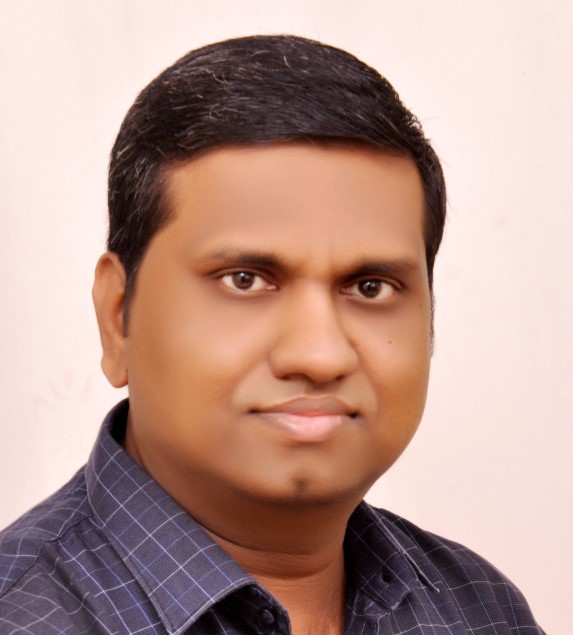
 Anoop Kunchukuttan
· 7 previous affiliations
- AI4BharatSince 2019
- Co-Founder, Co-Lead · Since 2019
- Area Chair · Since 2023
- Bodhan AISince 2026
- Vice President of Research · Since 2026
- Bodhan.aiSince 2026
- Principal Researcher · Since 2026
- Microsoft (United States)2018–2026
- Principal Researcher · 2023–2026
- Senior Applied Researcher · 2018–2023
- Adjunct Faculty · 2022–2024
- Doctor of Philosophy (Ph.D.), Natural Language Processing, Machine Translation, Indian Language NLP, Deep Learning · 2012–2018
- PhD student · 2012–2017
- M.Tech, Natural Language Processing, Information Retrieval, Machine Learning · 2006–2008
Research Overview
Anoop Kunchukuttan focuses on natural language processing for low-resource and linguistically diverse regions, with a particular emphasis on machine translation and cross-lingual transfer for Indic languages. His trajectory spans from early transliteration systems and geometric approaches for word embeddings to the development of massively multilingual foundation models. Most recently, his work addresses instruction-tuning and efficient cross-lingual adaptation for large language models in non-Roman scripts.
Research Trajectory
Beginning in 2015, he developed Brahmi-Net: A transliteration and script conversion system for languages of the Indian subcontinent, an online platform supporting transliteration across 306 Indian language pairs by mining parallel corpora. His research subsequently expanded to broader machine learning optimization and embedding spaces. He collaborated on McTorch, a manifold optimization library for deep learning, contributing to the research direction of Retraction Methods for Riemannian Manifold Optimization. This geometric perspective was also applied to cross-lingual representations in Learning Multilingual Word Embeddings in Latent Metric Space: A Geometric Approach, where he and his co-authors modeled bilingual mappings as a classification problem on smooth Riemannian manifolds to align non-isomorphic embedding spaces.
By 2021, his focus shifted heavily toward scaling Indic language resources and generation models. He participated in creating Itihasa: A large-scale corpus for Sanskrit to English translation, advancing the area of Neural Machine Translation for Low-Resource Languages. He also contributed to IndicBART: A Pre-trained Model for Natural Language Generation of Indic Languages, a sequence-to-sequence architecture leveraging orthographic similarities among 11 Indic languages to improve transfer learning. In 2022, his work on natural language inference included collaborative efforts on Bilingual Tabular Inference: A Case Study on Indic Languages and directing the evaluation framework IndicXNLI: Evaluating Multilingual Inference for Indian Languages, which expanded the broader area of Native Data for Culturally Grounded Multilingual Models.
In 2023, his research addressed advanced translation techniques and semantic parsing. He guided the development of CTQScorer: Combining Multiple Features for In-context Example Selection for Machine Translation, a framework for optimizing in-context examples for large language models. He also oversaw research on Evaluating Inter-Bilingual Semantic Parsing for Indian Languages, introducing a dataset suite to parse Indic utterances directly into English logical forms, thereby reducing latency in multilingual agents. Investigating translation between related languages, he helped develop DecoMT: Decomposed Prompting for Machine Translation Between Related Languages using Large Language Models, which leverages monotonic alignment for few-shot prompting. A significant effort during this period was his leadership on IndicTrans2: Towards High-Quality and Accessible Machine Translation Models for all 22 Scheduled Indian Languages. This comprehensive project addressed critical gaps in parallel training data and benchmarks, contributing to research areas such as Semantic Similarity Filtering for Parallel Corpora, Universal Phonetic Spaces for Cross Lingual Transfer, and Localized Pre-training for Regional Linguistic Expertise.
Moving into 2024, his work has focused on adapting large language models for non-Roman scripts and instruction tuning. He collaborated on RomanSetu: Efficiently unlocking multilingual capabilities of Large Language Models via Romanization, which uses romanized text as an intermediary to improve the efficiency of English-centric LLMs on underrepresented languages. Concurrently, he directed the release of Airavata: Introducing Hindi Instruction-tuned LLM, an instruction-tuned model designed for assistive tasks in Hindi, accompanied by the IndicInstruct dataset to facilitate further research in Indic foundation models.
Current Directions
The most recent papers in the evidence indicate a strong focus on adapting large language models for linguistically diverse and low-resource settings, particularly for Indic languages. Recent work investigates instruction-tuning pipelines for non-English languages, as seen in the development of Hindi-specific assistive models and corresponding instruction datasets. Additionally, ongoing research addresses the structural challenges of applying English-centric foundation models to non-Roman scripts, exploring techniques like romanization and decomposed prompting to improve the efficiency and accuracy of multilingual generation and machine translation.
Profile updated
Loading new papers…
Other researchers whose papers cluster into the same research directions — a proxy for overlapping technical interests and shared intellectual neighborhoods.
See something wrong? Report a mistake