

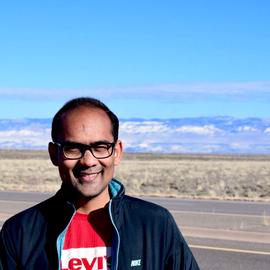
 Animesh Sinha
· 6 previous affiliations
- Meta (United States)Since 2017
- Senior Staff Researcher · Since 2026
- Researcher · Since 2018
- Staff Research Engineer & Manager · 2023–2026
- Senior Research Engineer · 2021–2023
- Software Engineering Intern · 2017
- Meta Superintelligence LabsCurrent
- Current
- Purdue University West Lafayette2016–2018
- Graduate Teaching Assistant · 2017–2018
- MS student · 2016–2018
- Housing.com2015–2016
- Software Engineer · 2015–2016
- Samsung Electronics (South Korea)2014–2015
- Software Engineer · 2014–2015
- Bachelor of Technology (B.Tech.), Computer Science · 2010–2014
Research Overview
Animesh Sinha focuses on large-scale generative AI, multimodal understanding, and computer vision. His trajectory spans early work in vision-and-language representation learning to recent advancements in high-fidelity image and video synthesis. Currently, he investigates tuning-free personalization and the scaling of diffusion transformers for complex, multi-concept media generation.
Research Trajectory
Sinha’s early research explored compositional generalization and domain-specific multimodal representation learning. In 2021, he contributed to the development of Large-Scale Attribute-Object Compositions, introducing a weakly-supervised framework designed to predict complex compound visual concepts from images. By dynamically composing linear classifier weights, this work allowed models to recognize unseen attribute-object pairs, advancing the broader research direction of Spatial Grounding for Faithful Concept Explanations. Following this, he participated in building specialized vision-and-language architectures. This included FaD-VLP: Fashion Vision-and-Language Pre-training towards Unified Retrieval and Captioning (2022), which utilized pseudo-triplets to capture fine-grained differences in apparel, and CommerceMM: Large-Scale Commerce MultiModal Representation Learning with Omni Retrieval (2022), a comprehensive model that introduced modality randomization to handle diverse e-commerce tasks.
By 2023, Sinha’s focus shifted toward the capabilities of generative models, particularly diffusion-based architectures. He explored the utility of generative priors for downstream computer vision tasks in Gen2Det: Generate to Detect, a modular pipeline that employed diffusion-based inpainting to synthesize realistic, scene-centric training data, thereby improving object detection performance in low-data regimes.
In 2024, as a researcher at Meta, Sinha's work increasingly centered on controlling and scaling latent diffusion models (LDMs) for expressive media synthesis. He introduced Context Diffusion: In-Context Aware Image Generation, a framework that decoupled layout control from visual style encoding to enable true in-context learning for image generation without relying strictly on text prompts. Concurrently, he helped develop a novel finetuning recipe in Text-to-Sticker: Style Tailoring Latent Diffusion Models for Human Expression, which separated the denoising process into structural and stylistic timesteps to balance artistic style with prompt faithfulness.
This period also marked a significant expansion into foundational video generation and large-scale transformer architectures. Sinha was part of the team behind Movie Gen: A Cast of Media Foundation Models (2024), a suite of models utilizing Flow Matching and scaled Transformer architectures to generate 1080p video with synchronized audio. He also contributed to GenTron: Diffusion Transformers for Image and Video Generation (2024), which scaled Diffusion Transformers (DiTs) to over three billion parameters and introduced motion-free guidance to improve visual quality and text alignment.
A major recurring theme in Sinha’s recent trajectory is the pursuit of tuning-free personalization—allowing models to generate specific subjects without computationally expensive retraining. He guided the development of Imagine yourself: Tuning-Free Personalized Image Generation (2024), which successfully preserved user identity and visual quality from a single reference image. Extending this to temporal media, he collaborated on Movie Weaver: Tuning-Free Multi-Concept Video Personalization with Anchored Prompts (2025). This work introduced anchored prompts and concept embeddings to handle multiple distinct identities in a single scene, making significant contributions to the area of Tuning-Free Personalization of Text-to-Image Diffusion Models and addressing key challenges in the direction of Preventing Identity Bleeding in Multi-Subject Generative Models.
Most recently, Sinha has investigated complex human motion and the foundational infrastructure required for massive generative models. In MoCha: Towards Movie-Grade Talking Character Synthesis (2025), he contributed to a DiT-based model that synthesizes full-body actions and multi-character conversations from speech and text, advancing work in the area of Multi-Person Coordination in Generative Human Motion. To support the increasing scale of these generators, he also co-authored ViTok-v2: Scaling Native Resolution Autoencoders to 5 Billion Parameters (2026), which addresses the bottleneck of compressing high-resolution images into manageable latent spaces for next-generation diffusion models.
Current Directions
Sinha’s most recent work investigates the intersection of multi-concept personalization and high-fidelity video synthesis. A primary focus is developing tuning-free architectures that can seamlessly integrate multiple distinct subjects—such as specific individuals and objects—into complex, dynamic scenes without identity bleeding or the need for user-specific retraining. Additionally, his research addresses the foundational scaling limits of generative AI, exploring how massive autoencoders can be optimized to handle native-resolution latent spaces. This infrastructure work supports increasingly expressive, movie-grade character synthesis, moving beyond isolated facial animation to coordinate full-body motion and multi-character interactions driven by multimodal inputs.
Profile updated
Loading new papers…
Other researchers whose papers cluster into the same research directions — a proxy for overlapping technical interests and shared intellectual neighborhoods.
See something wrong? Report a mistake