

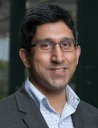
 Anil Aswani
· 1 previous affiliation
- Full Professor · Current
Research Overview
Anil Aswani focuses on data-driven control, system identification, and the intersection of machine learning with physical and biological systems. His trajectory spans the development of learning-based model predictive control for autonomous systems and energy infrastructure, alongside nonparametric methods for modeling biological networks. Recent work investigates interpretable artificial intelligence and deep reinforcement learning for complex scheduling and scientific discovery.
Research Trajectory
Aswani’s early research concentrated on the modeling and analysis of biological systems using hybrid system frameworks. He developed specialized reachability algorithms for biological piecewise-affine (PWA) hybrid systems, focusing on species interactions such as protein promotion and inhibition, in Reachability Algorithm for Biological Piecewise-Affine Hybrid Systems. He expanded on this mathematical foundation by defining monotonicity for PWA systems and applying these conditions to qualitative reference tracking in the cancer-related p53 pathway in Monotone Piecewise Affine Systems.
Concurrently, he addressed fundamental challenges in system identification. He tackled ill-posed linear regression problems in nonparametric system identification by developing estimators that exploit system sparsity for data lying on lower-dimensional manifolds in Statistics for sparse, high-dimensional, and nonparametric system identification. This statistical approach supported further biological applications, enabling the generation of ordinary differential equation models directly from spatial and temporal gene expression data without requiring prior qualitative network descriptions, as detailed in Nonparametric identification of regulatory interactions from spatial and temporal gene expression data.
Between 2012 and 2013, Aswani’s focus shifted toward the integration of machine learning with control theory, culminating in the development of Learning-Based Model Predictive Control (LBMPC). He introduced a framework that explicitly decouples safety and performance by utilizing a dual-model approach: a robust nominal model to guarantee safety and a learned model to optimize performance. This architecture was formalized in Provably safe and robust learning-based model predictive control, contributing to methods for reducing conservatism in safety-critical control. He provided rigorous theoretical guarantees for this framework by proving the convergence of statistical estimators used to learn unknown system dynamics in Statistical Results on Filtering and Epi-convergence for Learning-Based Model Predictive Control. This work advanced the research direction of Data-Driven Control without System Identification and the broader area of Certifiable Stability for Deep Neural Control Systems. Alongside this predictive control work, he explored reachability analysis as a tool for model checking and controller synthesis in hybrid systems with bounded model disturbances in Verification and control of hybrid systems using reachability analysis with machine learning.
Aswani applied these control techniques extensively to autonomous robotics, contributing to the area of Real-Time Optimal Control for High-Speed Autonomous Systems. He adapted LBMPC for real-time implementation on ultra-low-voltage processors onboard quadrotor helicopters in Extensions of learning-based model predictive control for real-time application to a quadrotor helicopter. With collaborators, he demonstrated the system's robustness to mis-learning and its practical utility in dynamic tasks, such as catching a ball with an unknown trajectory, in Learning-based model predictive control on a quadrotor: Onboard implementation and experimental results.
Beyond robotics, he deployed LBMPC to improve energy infrastructure. He built a mathematical model and physical testbed to reduce transient and steady-state electricity consumption in heating, ventilation, and air conditioning (HVAC) systems in Reducing Transient and Steady State Electricity Consumption in HVAC Using Learning-Based Model-Predictive Control. Addressing the economic and behavioral aspects of building management, he also proposed a performance-based bonus incentive scheme designed to align energy savings with occupant comfort in Incentive design for efficient building quality of service, contributing to scalable optimization for non-convex power and infrastructure networks.
In more recent years, Aswani's collaborative research has bridged biological modeling, advanced artificial intelligence, and industrial optimization. Returning to cancer biology, he participated in research investigating how targeted therapies stimulate phenotypic changes and therapeutic escape in triple-negative breast cancer populations in Modeling differentiation-state transitions linked to therapeutic escape in triple-negative breast cancer.
His work has also expanded to address the foundational methodologies of AI in scientific and industrial contexts. He contributed to outlining a vision for interpretable surrogate models that move beyond opaque pattern matching to generate testable scientific hypotheses in Learning from learning machines: a new generation of AI technology to meet the needs of science. This perspective intersects with several research directions, including Symbolic Distillation for Scientific Discovery, Extrapolating Beyond Training Data with Physics Informed Models, and Causal Interpretability for Neural Networks. Finally, he helped develop deep reinforcement learning architectures for complex scheduling, combining Deep Q-Networks with long-term planning models to optimize manufacturing dispatching in semiconductor factories in PDQN - A Deep Reinforcement Learning Method for Planning with Long Delays: Optimization of Manufacturing Dispatching.
Current Directions
The most recent papers in the evidence, spanning 2021 to 2022, address the integration of artificial intelligence with scientific discovery and complex industrial planning. Recent work investigates how machine learning can be structured to provide interpretable, mechanistic insights rather than opaque predictions, focusing on surrogate models that support hypothesis generation and extrapolation in the sciences. Concurrently, Aswani has collaborated on deep reinforcement learning methods designed to handle long delays and system uncertainties, applying these techniques to optimize dispatching and scheduling in large-scale manufacturing environments.
Profile updated
Loading new papers…
Other researchers whose papers cluster into the same research directions — a proxy for overlapping technical interests and shared intellectual neighborhoods.
See something wrong? Report a mistake