

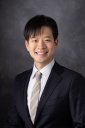
 Andrew H. Song
· 4 previous affiliations
- Assistant Professor · Since 2026
- Current
- Harvard Medical School2022–2025
- Postdoc · 2022–2025
- Brigham and Women's Hospital2022–2025
- Postdoc · 2022–2025
- PhD student · 2016–2021
Research Overview
Andrew H. Song focuses on computational pathology, multimodal foundation models, and advanced signal processing for physiological time-series. His trajectory spans from developing state-space multitaper methods for non-stationary neural data to engineering scalable deep learning architectures for gigapixel whole-slide images. His current focus centers on multimodal alignment and multiple instance learning to improve cancer survival prediction and zero-shot medical image analysis.
Research Trajectory
Song’s early research concentrated on non-stationary time-series analysis, particularly for neural data such as electroencephalography (EEG). He developed methods to estimate time-varying spectral representations, contributing to the broader area of Robust Physiological Monitoring for Clinical and Pathological Populations. In A Smoother State Space Multitaper Spectrogram, he introduced a variant of the state-space multitaper framework that imposes a smoothness-promoting model to generate refined power spectral density estimates. He expanded on this by addressing the limitations of fixed-state hidden Markov models in EEG analysis, proposing a hierarchical Dirichlet process approach in Multitaper Infinite Hidden Markov Model for EEG to discover heterogeneous neural dynamics. This line of work continued with PLSO: A generative framework for decomposing nonstationary time-series into piecewise stationary oscillatory components, which partitions data to capture slowly varying spectral content, and later with Adaptive State-Space Multitaper Spectral Estimation, which adaptively updates parameters to track rapid spectral changes and reduce noise.
Concurrently, Song investigated convolutional dictionary learning (CDL) and sparse coding. He addressed the discretization errors inherent in continuous-domain signal sampling by introducing a framework with grid refinement in Convolutional Dictionary Learning With Grid Refinement. He also collaborated on auto-encoder architectures tailored for natural exponential-family distributions in Convolutional dictionary learning based auto-encoders for natural exponential-family distributions, a project intersecting with the research direction of Activation Functions as Probabilistic Inference. To mitigate overfitting in data-scarce or low signal-to-noise ratio regimes, he proposed enforcing priors on templates using Gaussian processes in Gaussian Process Convolutional Dictionary Learning. Additionally, he contributed to accelerating high-dimensional sparse coding by avoiding explicit covariance matrix computation in Covariance-Free Sparse Bayesian Learning, utilizing numerical linear algebra innovations to obtain unbiased estimates of posterior statistics.
Around 2023, Song’s focus shifted significantly toward computational pathology and the analysis of massive histological datasets. He developed a weakly supervised deep learning framework for volumetric block analysis in Weakly Supervised AI for Efficient Analysis of 3D Pathology Samples, addressing the sampling bias inherent in standard two-dimensional microscopic evaluations by enabling patient-level clinical insights from 3D tissue morphologies. He then expanded into multimodal data integration, introducing a framework to combine massive pathology images with genomic data for cancer survival prediction in Multimodal Prototyping for cancer survival prediction.
More recently, Song has participated in large-scale efforts to build and evaluate foundation models for pathology. He collaborated on Towards a general-purpose foundation model for computational pathology, which explores self-supervised learning across diverse tissue types to overcome the challenges of large-scale annotation. His work also critically examines standard workflows in the field; in Do Multiple Instance Learning Models Transfer?, he and his co-authors investigated the transferability of slide-level aggregators across clinical datasets, contributing to the broader area of Addressing Overfitting in Few-Shot Learning. Further pushing the scale of these models, he participated in the development of Multimodal Whole Slide Foundation Model for Pathology, which aligns visual self-supervised learning with pathology reports and synthetic captions to support the research direction of Cross-Modal Alignment for Zero-Shot Medical Image Analysis.
Current Directions
The most recent papers in the evidence indicate a strong focus on scaling foundation models for computational pathology and improving the robustness of multiple instance learning (MIL). Recent work investigates the integration of vision-language alignment to handle complex clinical challenges, particularly for rare conditions where disease-specific cohorts are limited. This involves pretraining multimodal whole-slide models using hundreds of thousands of images alongside pathology reports and synthetic captions to enable zero-shot medical image analysis and versatile feature representation. Additionally, ongoing research addresses the practical limitations of current computational pathology workflows by evaluating how well MIL aggregators transfer across different clinical datasets, aiming to build more generalizable, reliable, and scalable diagnostic tools for patient-level prediction.
Profile updated
Loading new papers…
Other researchers whose papers cluster into the same research directions — a proxy for overlapping technical interests and shared intellectual neighborhoods.
See something wrong? Report a mistake