

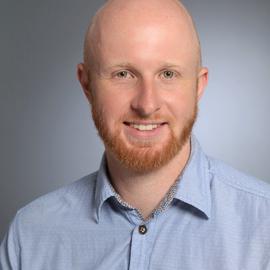
 Andreas Stephan
· 7 previous affiliations
- LDA Legal Data Analytics GmbHSince 2025
- Technical Lead · Since 2025
- Bosch2025
- Research Intern · 2025
- University of Vienna2021–2024
- Doctor of Philosophy - PhD, Computer Science · 2021–2024
- CHECK24 Vergleichsportal GmbH2020
- Data Scientist · 2020
- BMW Group (Germany)2018–2019
- Master Thesis · 2019
- Data Science Intern · 2018–2019
- Technical University of Munich2011–2019
- Master of Science - MS, Mathematics in Data Science · 2017–2019
- Undergrad student · 2014–2017
- Undergrad student · 2011–2014
- Unify2015
- Software Developer Intern · 2015
Research Overview
Andreas Stephan focuses on unsupervised learning, deep text clustering, and the evaluation of weakly supervised learning methods. His trajectory includes integrating transformer architectures with clustering algorithms to improve semantic representations of text data. More recently, his work critically examines the robustness and evaluation methodologies of models trained under label noise in low-resource settings.
Research Trajectory
The available evidence for Andreas Stephan's research trajectory is relatively sparse, consisting of two distinct collaborative projects published between 2022 and 2023. His contributions span unsupervised representation learning for natural language processing and the critical evaluation of weakly supervised learning paradigms.
In 2022, Stephan was the second author on CLUSTERBERT: MULTI-STAGE FINE-TUNING OF TRANSFORMERS FOR DEEP TEXT CLUSTERING. This work addresses the challenge of adapting transformer models—originally designed for tasks like text generation and sequence labeling—for unsupervised clustering. The authors proposed a multi-stage unsupervised algorithm that tightly integrates transformer-based sentence representation learning with deep clustering techniques. By doing so, the method discovers cluster-friendly representations of text data that retain critical semantic information. This work touches upon challenges relevant to the research direction Explainable Clustering for Interpretable Unsupervised Learning and the broader area of Discovering Alternative Clustering Views, as it seeks to map complex, multi-faceted text data into structured, interpretable spaces without relying on labeled examples.
In 2023, Stephan participated as a middle author (fourth of five) in Weaker Than You Think: A Critical Look at Weakly Supervised Learning. This paper shifts focus from model architecture to a critical examination of machine learning evaluation methodologies, specifically in low-resource settings. Weakly supervised learning attempts to bypass costly human annotation by training models on noisy labels from various weak sources. While prior literature reported impressive results for robust training under label noise, this collaborative study revisited the experimental setups of these sophisticated approaches. The authors demonstrated that the benefits of existing weakly supervised learning methods are often significantly overestimated, finding that their success is heavily dependent on the availability of clean validation samples—an assumption that contradicts the premise of low-resource, weakly supervised environments.
Current Directions
Based on the most recent paper in the evidence from 2023, Stephan's focus includes the rigorous evaluation of machine learning models trained with imperfect data. Rather than purely proposing new architectures, this recent work investigates the underlying assumptions of weakly supervised learning and robust training under label noise. The central theme of this current direction is methodological rigor: ensuring that models designed for low-resource settings are evaluated under realistic constraints, particularly regarding the absence of clean validation data.
Profile updated
| Paper | Venue | Year |
|---|---|---|
| Weaker Than You Think: A Critical Look at Weakly Supervised LearningGitHubuds-lsv/ | Unknown | 2023 |
Loading new papers…
Other researchers whose papers cluster into the same research directions — a proxy for overlapping technical interests and shared intellectual neighborhoods.
See something wrong? Report a mistake