

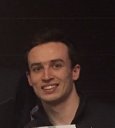
 Andrea Pilzer
· 3 previous affiliations
- Nvidia (United States)Since 2022
- Solutions Architect · Since 2022
- Aalto University2021–2022
- Postdoc · 2021–2022
- University of Trento2010–2020
- PhD student · 2016–2020
- MS student · 2014–2016
- Undergrad student · 2010–2014
Research Overview
Andrea Pilzer focuses on computer vision and deep learning, with specific emphasis on unsupervised depth estimation, uncertainty quantification, and video understanding. His trajectory spans early foundational work in self-supervised monocular and stereo depth prediction to more recent investigations into robust state estimation and generative modeling. Currently, he investigates scalable uncertainty estimation for pre-trained models and the mechanics of large-scale video generation and unlearning.
Research Trajectory
Andrea Pilzer’s research trajectory begins with early investigations into feature pooling and social media analytics. In Viraliency: Pooling Local Virality, he and his collaborators introduced a learned top-N average (LENA) pooling layer to automatically recognize the virality of images and videos. By learning the optimal size of the support area to be averaged, the method highlights latent visual concepts most likely to trigger rapid social spread, touching upon the broader area of Learning from Rare Signals in Extreme Class Imbalance.
Following this, his focus shifted significantly toward unsupervised and self-supervised methods for 3D vision, particularly depth estimation. To bypass the need for costly ground-truth annotations, he developed novel adversarial and generative frameworks. In Unsupervised Adversarial Depth Estimation Using Cycled Generative Networks, he proposed a deep generative network that predicts the correspondence field—or disparity map—between two image views in a calibrated stereo setting. This approach advanced the research direction of Adversarial Learning for Structurally Consistent Depth Estimation. He expanded on this paradigm in Refine and Distill: Exploiting Cycle-Inconsistency and Knowledge Distillation for Unsupervised Monocular Depth Estimation, which leverages cycle-inconsistency and student-teacher distillation to reconstruct depth maps from single images. This work contributed to the broader area of Cycle Consistency for Unsupervised Image Transformation. Extending these concepts to binocular settings, Progressive Fusion for Unsupervised Binocular Depth Estimation Using Cycled Networks introduced a multi-scale Progressive Fusion Network (PFN). By stacking this network to form a cycle, the model effectively combines information from both stereo views, aligning with work in Iterative Recurrent Refinement for Stereo Matching.
As his research matured, Pilzer increasingly addressed the robustness and generalization of computer vision systems in complex or out-of-distribution environments. He oversaw research on visual-inertial SLAM in A Look at Improving Robustness in Visual- inertial SLAM by Moment Matching, demonstrating that moment matching via the Unscented Kalman Filter mitigates linearization errors better than traditional Extended Kalman Filters, particularly when dealing with noisy data or incorrect feature associations. He also participated in developing techniques for Uncertainty-Guided Source-Free Domain Adaptation, enabling models to adapt to new domains without access to source data. Returning to stereo matching, Expansion of Visual Hints for Improved Generalization in Stereo Matching presented a 3D graph-based approach to expand sparse visual hints—such as those derived from visual-inertial odometry—into denser representations. This significantly boosted performance in out-of-distribution scenarios without requiring additional sensors. Around this time, he also helped synthesize broader trends in human-centered AI, co-editing a special issue detailed in Computer Vision in Human Analysis: From Face and Body to Clothes.
More recently, Pilzer’s work has emphasized uncertainty quantification and generative modeling. To make deep neural networks more reliable for real-world deployment, he introduced the Adaptable Bayesian Neural Network (ABNN) in Make Me a BNN: A Simple Strategy for Estimating Bayesian Uncertainty from Pre-trained Models. This scalable, post-hoc method transforms pre-trained models to estimate Bayesian uncertainty with minimal computational overhead while preserving their core predictive properties. In the domain of generative AI, he contributed to RADiff: Controllable Diffusion Models for Radio Astronomical Maps Generation, which addresses the scarcity of labeled data in radio astronomy by generating synthetic maps for automated source finding. This research intersects with areas such as Generative Modeling of Real-World Sensor Noise and the area of Generative Diffusion in Compressed Latent Spaces.
His latest collaborative efforts extend into efficient transformer architectures and advanced video understanding. In Ensembling Pruned Attention Heads For Uncertainty-Aware Efficient Transformers, he helped develop Hydra Ensembles, a method that prunes attention heads from a single pre-trained model to create diverse subnetworks. These are then merged back into a single efficient model, achieving ensemble-level uncertainty quantification and out-of-distribution detection at a fraction of the traditional computational cost. Addressing the safety of large-scale video generative models, he participated in Video Unlearning via Low-Rank Refusal Vector, which tackles the erasure of unsafe or copyrighted content learned from uncurated web datasets. Finally, Action-Guided Attention for Video Action Anticipation introduced a mechanism that uses past action predictions to filter visual history. By swapping pixel-level attention for high-level semantic guidance, the model avoids visual clutter and generalizes significantly better to unseen environments.
Current Directions
The most recent papers in the evidence address the efficiency, safety, and reliability of large-scale models, particularly in video generation and transformer architectures. Recent work investigates scalable uncertainty quantification—such as transforming pre-trained models into Bayesian networks or ensembling pruned attention heads to maintain robust out-of-distribution detection without the typical computational overhead. Additionally, current research explores advanced video understanding and generation, focusing on mechanisms like action-guided attention for anticipating future events in cluttered environments, as well as machine unlearning techniques to selectively erase harmful or copyrighted content from foundation models.
Profile updated
Loading new papers…
Other researchers whose papers cluster into the same research directions — a proxy for overlapping technical interests and shared intellectual neighborhoods.
See something wrong? Report a mistake