

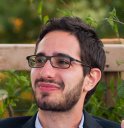
 Andrea Borghesi
· 1 previous affiliation
- University of BolognaSince 2019
- Associate Professor · Since 2025
- Assistant Professor · 2019–2025
- PhD student · 2014–2017
Research Overview
Andrea Borghesi focuses on energy-aware computing, anomaly detection in high-performance computing systems, and the intersection of machine learning with combinatorial optimization. His early work addressed power capping and workload scheduling in supercomputers using constraint programming. More recently, his research investigates unsupervised deep learning for fault detection, digital twin architectures, and artificial intelligence evaluation methodologies.
Research Trajectory
Borghesi’s early research (2014–2017) centered on energy efficiency and workload dispatching in high-performance computing (HPC) environments. Recognizing the significant power consumption and cooling costs associated with supercomputers, his initial work utilized Constraint Programming to optimize resource utilization and manage thermal constraints. He led the development of power capping approaches designed to maximize cooling efficiency by adapting to ambient conditions, as detailed in MS3: A Mediterranean-stile job scheduler for supercomputers - do less when it's too hot!. During this period, he also participated as a collaborator in broader European efforts to design and monitor energy-aware computing clusters, integrating custom hardware with system middleware to track power dissipation at scale.
Between 2018 and 2020, Borghesi’s focus shifted toward data-driven reliability and automated fault detection in supercomputers. Acknowledging that traditional supervised learning methods scale poorly in production HPC systems due to the lack of labeled anomaly data, he led research into unsupervised deep learning techniques. This transition is marked by Anomaly Detection using Autoencoders in High Performance Computing Systems, where he proposed training autoencoders to learn the normal, healthy behavior of computing nodes to identify deviations. He subsequently extended this methodology to online, edge-deployed anomaly detection, allowing models to run directly on computing nodes to process telemetry data in real time.
In the subsequent years (2021–2022), Borghesi expanded his research into broader industrial applications and the theoretical intersections of machine learning and optimization. He led the architectural design of edge-to-cloud platforms for virtualizing physical assets, demonstrated in IoTwins: Design and Implementation of a Platform for the Management of Digital Twins in Industrial Scenarios. Returning to HPC reliability, he co-authored RUAD: unsupervised anomaly detection in HPC systems, which further formalized data-driven methodologies to reduce the burden on system administrators without requiring human-labeled fault datasets. Concurrently, he participated in synthesizing approaches that combine predictive models with hard constraints, as explored in Machine Learning for Combinatorial Optimisation of Partially-Specified Problems: Regret Minimisation as a Unifying Lens.
Most recently, his collaborative work has expanded into novel application domains, including the methodological evaluation of AI in creative contexts. This is evidenced by his participation in Towards Symbiotic Creativity: A Methodological Approach to Compare Human and AI Robotic Dance Creations, which investigates common metrics for assessing both human and computational skills in robotic choreography.
Current Directions
The most recent work in the evidence points to a broadening of research interests from strict infrastructure optimization toward the evaluation of artificial intelligence in interactive and creative environments. While maintaining a foundation in machine learning and system constraints, recent investigations address the lack of common criteria for evaluating human and computational skills in symbiotic settings. This suggests an emerging focus on establishing objective performance metrics for human-AI interaction, complementing his historical emphasis on automated monitoring, digital twins, and data-driven reliability in complex systems.
Profile updated
Loading new papers…
Other researchers whose papers cluster into the same research directions — a proxy for overlapping technical interests and shared intellectual neighborhoods.
See something wrong? Report a mistake