

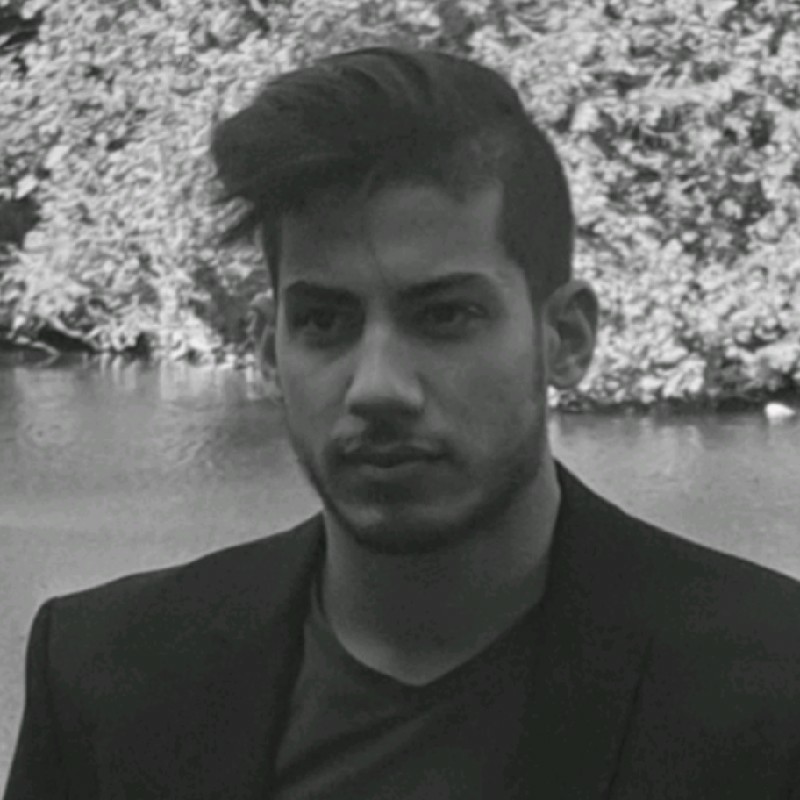
 Andre Kassis
· 5 previous affiliations
- Postdoc · Since 2026
- University of WaterlooCurrent
- Current
- PhD student · 2019–2026
- Pindrop Security2023–2024
- Researcher · 2023–2024
- Researcher · 2018–2019
- Intern · 2017–2018
- Undergrad student · 2014–2018
Research Overview
Andre Kassis focuses on the security and adversarial robustness of machine learning systems, particularly in the domains of biometric authentication and generative media. His early work addressed network security and quality of service estimation before shifting toward the vulnerabilities of voice verification systems. His most recent research investigates adversarial attacks against diffusion-based purification and defensive image watermarking, exposing fundamental flaws in contemporary AI security mechanisms.
Research Trajectory
The early trajectory of this research involved participation in collaborative projects addressing application security and network performance evaluation. In 2018, work on Deep Ahead-of-Threat Virtual Patching explored the use of supervised learning to generate data for virtual patching. Because finding all vulnerabilities in an application is an NP-complete problem, this research proposed a technique to deploy defenses in network and endpoint security tools before vulnerabilities could be actively exploited by attackers. The following year, research in the context of the SliceNet project led to Estimating client QoE from measured network QoS. This work addressed the provisioning of 5G network slices by developing a method to derive application-level Quality of Experience (QoE) directly from network-level Quality of Service (QoS) metrics, removing the need for applications or users to manually report performance data back to the provider.
Following these foundational projects in network and application evaluation, the focus shifted significantly toward adversarial machine learning, specifically targeting the security of audio and biometric systems. In 2021, he introduced Practical Attacks on Voice Spoofing Countermeasures, a study that demonstrated the vulnerability of modern voice authentication systems. By optimizing adversarial perturbations directly in the time domain using a novel joint loss function, the research achieved high black-box success rates while ensuring the alterations remained indistinguishable to human listeners and robust enough to survive telephony network distortions. This work contributed heavily to the research direction of Adversarial Robustness for Biometric Voice Authentication and advanced the broader area of Spoofing Aware Speaker Verification. Furthermore, by demonstrating that these perturbations could survive real-world transmission, the findings intersected with the area of Physical Robustness for Over the Air Audio Perturbations.
He continued to investigate the fragility of access control mechanisms in 2023 with Breaking Security-Critical Voice Authentication. This research challenged the assumption that pairing automatic speaker verification systems (ASVs) with spoofing countermeasures (CMs) creates an impregnable defense for security-critical operations like bank transactions. The work detailed how malicious actors could efficiently craft audio samples to defeat these combined defenses, providing the first practical attack specifically targeting spoofing countermeasures in this context.
Most recently, the scope of this adversarial research has expanded from audio biometrics to the security of generative AI and image processing models. In 2025, he published DiffBreak: Is Diffusion-Based Purification Robust?, which exposed a fundamental flaw in Diffusion-Based Purification (DBP). The research proved that adversarial attacks could effectively hijack the diffusion process to generate adversarial samples rather than clean ones. By introducing a module called DiffGrad to fix broken gradients and correct flawed evaluation protocols, the study demonstrated that the supposed robustness of DBP was largely an illusion, successfully reducing its robust accuracy to near zero using a novel low-frequency attack. That same year, he developed UnMarker: A Universal Attack on Defensive Image Watermarking. By analyzing the fundamental properties of robust watermarking, this work introduced a practical attack capable of removing watermarks from AI-generated images, demonstrating that current defensive watermarking techniques are insufficient against sophisticated deepfake threats.
Current Directions
The most recent papers in the evidence indicate a strong focus on the rigorous adversarial evaluation of defensive mechanisms in generative AI. Current work investigates the limitations of systems designed to protect or purify AI-generated media, specifically targeting diffusion models and image watermarking techniques. A major theme is exposing flawed evaluation protocols—such as broken gradients in purification defenses—and demonstrating that assumed robust protections can be systematically bypassed. By developing universal attacks and novel evaluation modules, this ongoing research aims to highlight the vulnerabilities in current deepfake mitigation strategies and intellectual property protections, urging the development of more fundamentally secure alternatives for generative media.
Profile updated
| Title | Venue | Year |
|---|---|---|
| DiffBreak: Is Diffusion-Based Purification Robust? | NeurIPS | 2025 |
| UnMarker: A Universal Attack on Defensive Image Watermarking | IEEE Symposium on Security and Privacy (sp) | 2025 |
| Breaking Security-Critical Voice Authentication | Sp | 2023 |
| Practical Attacks on Voice Spoofing Countermeasures | arXiv | 2021 |
| Estimating client QoE from measured network QoS | Systor | 2019 |
| Deep Ahead-of-Threat Virtual Patching | Iosec@raid | 2018 |
Loading new papers…
Other researchers whose papers cluster into the same research directions — a proxy for overlapping technical interests and shared intellectual neighborhoods.
See something wrong? Report a mistake