

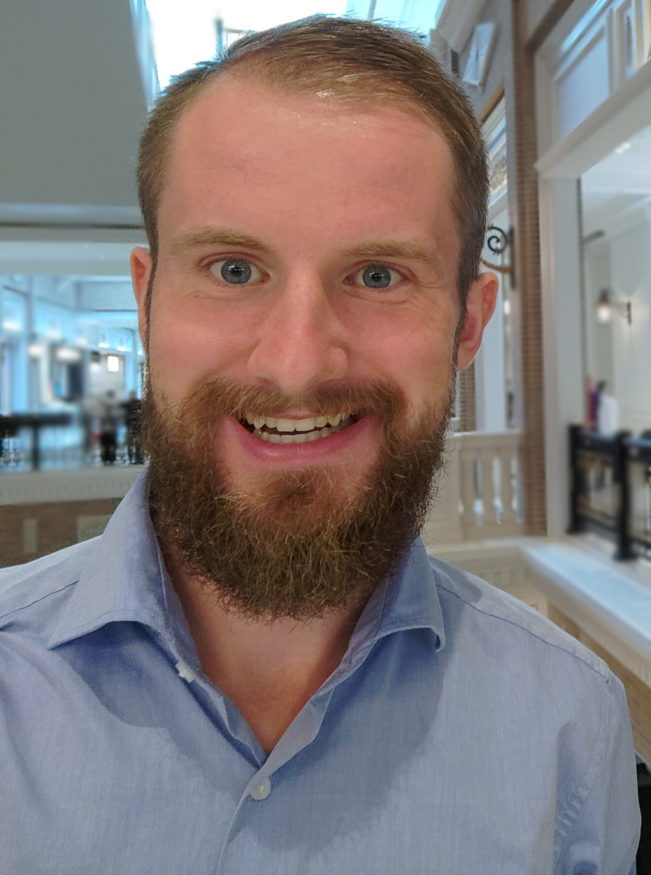
 André Artelt
· 3 previous affiliations
- Bielefeld UniversitySince 2017
- Postdoc · Since 2024
- Researcher · Since 2019
- PhD student · 2019–2023
- Master of Science - MS, Intelligent Systems · 2017–2019
- Visiting Research Scientist · 2022
- Schüco International KG2013–2019
- Werkstudent · 2013–2019
Research Overview
André Artelt focuses on explainable artificial intelligence, specifically the computation and evaluation of counterfactual explanations, as well as the detection and adaptation of concept drift in non-stationary data streams. His trajectory spans the formalization of plausible algorithmic recourse to the investigation of explanation robustness and fairness. His most recent work investigates the computational complexity of generating explanations and the influence of training data on model interpretability.
Research Trajectory
Artelt’s early research established foundational approaches to generating and evaluating counterfactual explanations in machine learning. In 2019, he provided a comprehensive overview of the field in On the computation of counterfactual explanations - A survey, reviewing model-specific optimization techniques designed to bypass the computational inefficiencies of black-box methods. This work contributed significantly to the research area of Feasible Counterfactual Explanations for Actionable Recourse. He subsequently expanded on this by addressing the plausibility of these explanations, ensuring they lie on the underlying data manifold—a theme central to the direction of Generating Plausible Counterfactuals on the Data Manifold. This concept was formalized in Convex Density Constraints for Computing Plausible Counterfactual Explanations, which investigated the use of density estimators to enforce plausibility constraints. Concurrently, he explored the challenges of non-stationary data streams, participating in the development of non-parametric drift detection methods in Towards Non-Parametric Drift Detection via Dynamic Adapting Window Independence Drift Detection (DAWIDD).
Between 2021 and 2022, his focus shifted toward the robustness, fairness, and human-centric evaluation of explainable AI. In Fairness and Robustness of Contrasting Explanations, he formalized the instability often found in counterfactuals, demonstrating that requiring explanations to be plausible significantly improves their robustness and mitigates individual unfairness. He continued to refine computational methods for specific architectures, as detailed in Efficient computation of counterfactual explanations and counterfactual metrics of prototype-based classifiers. Addressing group disparities, he introduced a model-agnostic algorithm in "Explain it in the Same Way!" - Model-Agnostic Group Fairness of Counterfactual Explanations to equalize the complexity of actionable steps across protected groups, advancing the broader area of Fairness through Equality of Effort and Recourse. He also collaborated on evaluating the practical benefits of these constraints for end-users, testing the objective and subjective usability of plausible counterfactuals through an iterative learning task in Keep Your Friends Close and Your Counterfactuals Closer: Improved Learning From Closest Rather Than Plausible Counterfactual Explanations in an Abstract Setting.
In 2023, Artelt bridged his interests in concept drift and interpretability. He proposed a model-agnostic, global adaptation method using autoencoders in Unsupervised Unlearning of Concept Drift with Autoencoders. He also tackled the open challenge of explaining non-static systems in Contrasting Explanations for Understanding and Regularizing Model Adaptations. Expanding the scope of counterfactuals beyond standard classification, he developed a framework for dimensionality reduction techniques in "Why Here and not There?": Diverse Contrasting Explanations of Dimensionality Reduction. This framework helps users understand why data points map to specific locations in reduced spaces, contributing to the research direction of Actionable Recourse through Counterfactual Explanations and the broader goal of Bridging the Gap Between Algorithmic and Human Interpretability. Additionally, he explored explanations for models that abstain from making predictions, introducing new methods in "I do not know! but why?" - Local model-agnostic example-based explanations of reject.
His most recent work investigates the vulnerabilities, underlying data dependencies, and fundamental computational limits of explainable AI systems. In The Effect of Data Poisoning on Counterfactual Explanations, he formalized how data poisoning can maliciously increase the cost of recourse for users. He further explored the relationship between training data and interpretability in Analyzing the Influence of Training Samples on Explanations, estimating how individual training samples cause specific explanations to be generated. Alongside these theoretical contributions, he led the development of applied tools, such as the EPyT-Flow Python package detailed in A Toolbox for Supporting Research on AI in Water Distribution Networks, which facilitates AI research in critical infrastructure scenarios like leak detection. Finally, in On the Hardness of Computing Counterfactual and Semi-factual Explanations in XAI, he analyzed the computational complexity of generating explanations, revealing that producing exact or even approximate counterfactuals is computationally hard for many common machine learning models.
Current Directions
The most recent papers in the evidence, spanning 2024 and 2025, indicate a strong focus on the security, data-dependency, and theoretical constraints of explainable AI. Current directions investigate how adversarial actions, such as data poisoning, can manipulate the cost of algorithmic recourse, and how specific training samples directly influence the generation of counterfactual explanations. Furthermore, recent analyses address the theoretical hardness of computing exact and approximate explanations, highlighting the practical and regulatory challenges of deploying transparent AI systems at scale.
Profile updated
Loading new papers…
Other researchers whose papers cluster into the same research directions — a proxy for overlapping technical interests and shared intellectual neighborhoods.
See something wrong? Report a mistake