

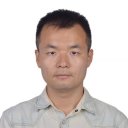
 Andong Wang
· 4 previous affiliations
- RIKENSince 2021
- Researcher · Since 2026
- Postdoc · 2021–2026
- Current
- Guangdong University of Technology2019–2021
- Postdoc · 2019–2021
- PhD student · 2012–2019
1 other author named Andong Wang: Andong Wang (1 paper)
Research Overview
Andong Wang focuses on high-dimensional data analysis, developing foundational methods in tensor decomposition and low-rank tensor recovery. His trajectory spans from theoretical guarantees for robust tensor principal component analysis to the geometric properties of tensor neural networks. Recently, his work investigates transfer learning in tensor regression and mechanisms for adversarial resilience in multimodal generative models.
Research Trajectory
Wang's early work established statistical and computational foundations in the area of Low Rank Tensor Recovery for High Dimensional Data. In 2017, he analyzed the problem of completing low-tubal-rank tensors from noisy observations, introducing an iterative singular tube thresholding (ISTT) algorithm and establishing near-optimal non-asymptotic upper bounds on the estimation error in Near-Optimal Noisy Low-Tubal-Rank Tensor Completion via Singular Tube Thresholding. Building on this foundation, he developed a least squares estimator for robust tensor decomposition based on the tubal nuclear norm (TNN), providing minimax near-optimal statistical guarantees in Robust tensor decomposition via t-SVD: Near-optimal statistical guarantee and scalable algorithms. Recognizing the computational bottlenecks of TNN due to the requirement of full singular value decompositions, he subsequently introduced a scalable tensor factorization approach to accelerate tensor robust principal component analysis in A faster tensor robust PCA via tensor factorization.
To address the orientation sensitivity of standard TNNs, Wang proposed orientation-invariant tubal nuclear norms (OITNN-O and OITNN-L) to capture multi-orientational spectral low-rankness for arbitrary K-way tensors in Robust Tensor Decomposition via Orientation Invariant Tubal Nuclear Norms. Expanding on spectral domain low-rankness, he explored convexized rank minimization using the $*_L$-spectral $k$-support norm in Tensor Recovery via $*_L$-Spectral $k$-Support Norm. This theoretical framework was applied to practical domains, such as recovering remote sensing data corrupted simultaneously by gross sparse outliers and small dense noise, utilizing an Alternating Direction Method of Multipliers (ADMM) approach in Guaranteed Robust Tensor Completion via ∗L-SVD with Applications to Remote Sensing Data.
Transitioning toward deep learning, Wang investigated the theoretical properties of Tensor Neural Networks (t-NNs). In Transformed Low-Rank Parameterization Can Help Robust Generalization for Tensor Neural Networks, he demonstrated that "transformed low-rankness" drives robust generalization, showing how adversarial training naturally induces this structural property. He then extended tensor theory to continuous domains to address combinatorial distribution shifts in multi-output regression, introducing Functional t-Singular Value Decomposition in Generalized Tensor Decomposition for Understanding Multi-Output Regression under Combinatorial Shifts.
In 2025, Wang applied tensor methods to large generative models. He framed text-to-image prompt optimization as a low-rank tensor estimation problem in STEPS: Sequential Probability Tensor Estimation for Text-to-Image Hard Prompt Search, utilizing Tensor Train (TT) decomposition and a memory-bounded sampling strategy to navigate the massive discrete search space of language. Concurrently, he advanced the research direction of Overcoming the Exponential Bottleneck in Tensor Decompositions by developing a transfer learning framework for tensor regression. Detailed in Low-Rank Tensor Transitions (LoRT) for Transferable Tensor Regression, this approach uses a novel low-rank fusion regularizer and a two-step refinement process to improve performance on data-scarce target tasks, while also offering a decentralized variant to protect data privacy. He also formalized the intrinsic geometry of multi-dimensional data by defining "t-manifolds"—spaces locally modeled on structured tensor modules—based on the t-product algebra in Towards a Geometric Understanding of Tensor Learning via the t-Product.
Wang's recent trajectory emphasizes robustness and refined structural sparsity. Contributing to the broader area of Mechanisms for Adversarial Resilience in Neural Networks, he collaborated on an efficient adversarial purification framework in Two Modalities Are Better Than One: Efficient Adversarial Purification via Multimodal Diffusion Models. This work uses multimodal diffusion models and class-agnostic prompts to clean adversarial images prior to classification. Returning to foundational tensor theory, he introduced the tensor $\ell_p$-Schatten-$q$ quasi-norm in Refining Dual Spectral Sparsity in Transformed Tensor Singular Values, decoupling the concentration of energy in frequency components from their low-rank nature to establish new estimation limits for tensor completion and image clustering.
Current Directions
The most recent papers in the evidence address the intersection of structural sparsity in high-dimensional data and the robustness of deep learning systems. One primary focus is the development of efficient adversarial purification techniques, utilizing multimodal diffusion models to neutralize adversarial perturbations with significantly fewer steps than prior methods. Alongside this applied robustness research, ongoing theoretical work investigates "dual spectral sparsity" in tensor singular values. By formalizing new mathematical tools like the tensor $\ell_p$-Schatten-$q$ quasi-norm, this direction seeks to decouple frequency energy concentration from low-rank structures, advancing the fundamental estimation limits for tensor completion and multi-dimensional data recovery.
Profile updated
Loading new papers…
Other researchers whose papers cluster into the same research directions — a proxy for overlapping technical interests and shared intellectual neighborhoods.
See something wrong? Report a mistake