

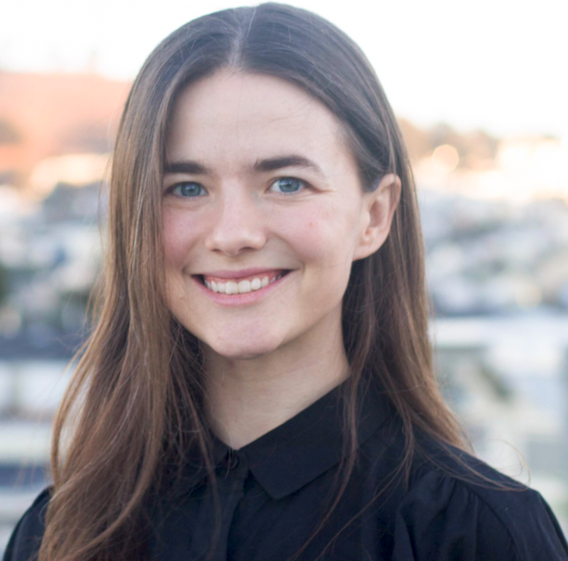
 Amy Pavel
· 6 previous affiliations
- University of California, BerkeleySince 2025
- Assistant Professor · Since 2025
- Current
- The University of Texas at Austin2022–2025
- Assistant Professor · 2022–2025
- Google (United States)2024–2025
- Visiting Faculty Researcher · 2024–2025
- Apple (United States)2019–2022
- Researcher · 2019–2022
- Carnegie Mellon University2019–2021
- Postdoc · 2019–2021
- PhD student · 2013–2019
Research Overview
Amy Pavel focuses on human-computer interaction, digital accessibility, and applied natural language processing. Her work initially explored multimedia navigation and interactive video formats before shifting toward developing systems that make visual content—such as images, presentations, and videos—accessible to blind and low-vision users. Her most recent research investigates long-form visual question answering and accessible human-robot interaction.
Research Trajectory
Pavel’s early research focused on improving how users navigate and consume multimedia content. In 2014, she introduced Video digests: a browsable, skimmable format for informational lecture videos, developing a system that segments long-form talks into a chapter structure using transcript-based interactions. This allows viewers to navigate by reading text summaries and clicking thumbnails rather than relying solely on timeline scrubbing.
By 2019, her focus expanded significantly into digital accessibility, particularly addressing the barriers blind and low-vision (BLV) users face when encountering visual media online. She collaborated on Making Memes Accessible, proposing semi-automatic methods to generate rich alternative text and audio macros by allowing authors to create templates with text placeholders. That same year, she directed the development of Twitter A11y: A Browser Extension to Describe Images, a platform-specific tool that automatically applied optical character recognition to screenshots of text and sourced descriptions from crowd workers for other images. Continuing this focus on social media, she contributed to Making GIFs Accessible in 2020, interviewing BLV users to understand the unique challenges of describing short, silent animations and evaluating how alternative text compares to original source audio.
Parallel to her work in accessibility, Pavel participated in natural language processing research concerning conversational agents. She was involved in Investigating Evaluation of Open-Domain Dialogue Systems With Human Generated Multiple References, which aligns with her broader interest in the research direction of The One to Many Mapping Problem in Dialogue Evaluation. She later guided work on Controlling Dialogue Generation with Semantic Exemplars, contributing to the area of Overcoming the Generic Response Bias in Dialogue Generation. Her NLP research also intersects with the broader area of Maintaining Global Coherence in Long Form Text Generation.
Returning to video and presentation accessibility, Pavel designed Rescribe: Authoring and Automatically Editing Audio Descriptions in 2020. The tool assists novice creators in drafting and fitting audio descriptions into the natural gaps of a video's existing audio track. In 2021, she oversaw two major projects addressing the accessibility of slide presentations. Say It All: Feedback for Improving Non-Visual Presentation Accessibility introduced a system that analyzes slide visuals against a presenter's verbal transcript to provide real-time and post-presentation feedback on insufficiently described elements. Complementing this, she led research on Slidecho: Flexible Non-Visual Exploration of Presentation Videos, which automatically extracts slide elements and aligns them with speech, providing BLV learners with audio notifications about slide changes and allowing them to pause videos to explore undescribed content on demand.
In recent years, Pavel has investigated the intersection of accessibility and large multimodal models. She directed the creation of Long-Form Answers to Visual Questions from Blind and Low Vision People (2024), a paper contributing directly to the research direction of Rhetorical and Functional Role Labeling of Text. This work introduced the VizWiz-LF dataset to train models to provide more informative answers while abstaining from hallucinating when image quality is poor. Her group expanded on this dataset in a 2025 paper of the same name, Long-Form Answers to Visual Questions from Blind and Low Vision People, collecting thousands of answers from human experts and vision-language models to formalize the functional roles of sentences in long-form visual question answering (LFVQA). Concurrently, she partnered with colleagues on Metrics for Fine-Grained Evaluation of Inline Audio Descriptions to assess the quality of audio descriptions generated by Multimodal Large Language Models (MLLMs), utilizing expert guidelines and human descriptions for hundreds of user-generated videos. Much of this recent work supports the broader research direction of Bridging the Simulation Gap in Visual Accessibility.
Most recently, Pavel has extended her accessibility research into human-robot interaction. She led an investigation into Designing Accessible Robot Communication for Blind People (2026), conducting in-person observational studies to understand the strategies and challenges BLV users face when monitoring autonomous robots in the home.
Current Directions
Recent work investigates the application and evaluation of large multimodal models for visual accessibility, as well as the accessibility of physical autonomous systems. A primary focus is on long-form visual question answering (LFVQA), where Pavel and her collaborators are developing datasets and functional metrics to ensure vision-language models provide safe, detailed, and contextually appropriate descriptions for blind and low-vision users, rather than hallucinating when faced with poor image quality. Additionally, her most recent research addresses human-robot interaction, exploring how to design accessible communication channels that allow blind users to independently monitor and verify the task execution of autonomous domestic robots.
Profile updated
Loading new papers…
Other researchers whose papers cluster into the same research directions — a proxy for overlapping technical interests and shared intellectual neighborhoods.
See something wrong? Report a mistake