

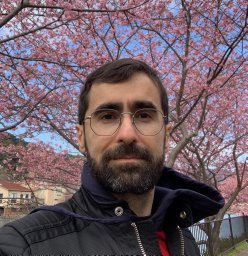
 Amir Rasouli
· 4 previous affiliations
- Huawei Technologies (China)Since 2019
- Principal Researcher · Since 2022
- Senior R&D Engineer · 2019–2024
- Senior Staff Engineer
- Huawei Technologies (Canada)Since 2024
- Manager · Since 2024
- Noah's Ark LaboratoryCurrent
- Current
- York University2012–2020
- PhD student · 2014–2020
- MS student · 2012–2015
Research Overview
Amir Rasouli focuses on behavior prediction, scene reasoning, and trajectory generation for autonomous driving and robotics. His trajectory spans from early work in visual search and pedestrian intention modeling to the development of large-scale datasets and robust representation learning techniques. Currently, his research addresses the safety, security, and adaptability of motion planning systems in complex, cluttered environments.
Research Trajectory
Amir Rasouli's early research explored how attention mechanisms could optimize robotic perception in unknown environments. In 2014, he detailed a method to minimize search costs by updating probability distributions based on visual cues in Visual Saliency Improves Autonomous Visual Search.
Shortly thereafter, his focus shifted toward the complex interactions between autonomous vehicles and human road users. Recognizing that safe urban driving requires understanding human intent, he introduced the Joint Attention in Autonomous Driving (JAAD) dataset in 2016. This work established a benchmark for modeling social cues between drivers and pedestrians, contributing significantly to the broader area of Non-Verbal Social Intelligence for Autonomous Vehicles. He expanded on this by addressing crosswalk scenarios in Are They Going to Cross? A Benchmark Dataset and Baseline for Pedestrian Crosswalk Behavior, which provided behavioral and contextual annotations to help vehicles interpret pedestrian intentions. This line of inquiry culminated in the release of PIE: A Large-Scale Dataset and Models for Pedestrian Intention Estimation and Trajectory Prediction, a comprehensive resource that advanced the research direction of Intent Aware Trajectory Prediction for Autonomous Agents. To synthesize the growing body of literature in this domain, he also published a comprehensive review, Autonomous Vehicles That Interact With Pedestrians: A Survey of Theory and Practice, which categorized the demographic, environmental, and dynamic factors influencing pedestrian behavior.
As the field matured, Rasouli increasingly emphasized rigorous evaluation and simulation. He participated in organizing community challenges, such as the one detailed in Driving SMARTS Competition at NeurIPS 2022: Insights and Outcome. His work on evaluation methodologies continued with Diving Deeper Into Pedestrian Behavior Understanding: Intention Estimation, Action Prediction, and Event Risk Assessment, which proposed new metrics to assess different aspects of model performance across existing datasets. Addressing the limitations of traditional distance-based metrics, he and his collaborators introduced CRITERIA: a New Benchmarking Paradigm for Evaluating Trajectory Prediction Models for Autonomous Driving, designed to better measure the admissibility and diversity of generated trajectories across varied driving scenarios.
In recent years, while serving as a senior staff engineer at Noah's Ark Laboratory, Rasouli's research has tackled the robustness and security of trajectory prediction models. To address the challenge of rare but critical driving events, his team developed TrACT: A Training Dynamics Aware Contrastive Learning Framework for Long-tail Trajectory Prediction, which leverages contextual information to improve performance on infrequent scenarios. He also investigated vulnerabilities in these systems, demonstrating how naturalistic data poisoning could compromise safety in Adversarial Backdoor Attack by Naturalistic Data Poisoning on Trajectory Prediction in Autonomous Driving.
To further enhance model reliability, Rasouli has explored advanced representation learning techniques. In DySeT: A Dynamic Masked Self-distillation Approach for Robust Trajectory Prediction, he introduced a method to selectively mask informative aspects of driving scenes, aiding the broader effort of Generalizing Trajectory Intelligence Across Geographic Domains. Similarly, he applied causal inference to separate invariant and spurious features in CaDeT: A Causal Disentanglement Approach for Robust Trajectory Prediction in Autonomous Driving, improving out-of-distribution generalization for motion planning.
Most recently, his focus has expanded to sophisticated simulation platforms and generative policies for collision avoidance. He contributed to a major upgrade of an open-source simulator in Getting SMARTER for Motion Planning in Autonomous Driving Systems, revealing gaps in current models' ability to balance safety and comfort. In the realm of robotic navigation, he helped develop CAPE: Context-Aware Diffusion Policy Via Proximal Mode Expansion for Collision Avoidance, a framework allowing diffusion models to find safe paths in cluttered environments. Additionally, he addressed visual distractors in robotic manipulation with Don't Get Distracted: Improving Robotic Perception Robustness via In-Context Visual Scene Editing, proposing a scalable strategy to synthesize diverse environmental conditions without requiring new physical demonstrations.
Continuing this line of work in dynamic manipulation and generative control, Rasouli has overseen the creation of new robotic benchmarks and flow-matching techniques. In Coupled Guidance for Flow Matching, his team introduced a geometrically grounded guidance formulation that preserves coupling distributions, stabilizing guided generation across image synthesis and robotic manipulation tasks. To systematically assess policy resilience under realistic physical interactions, Rasouli led the development of RoboDyna: A Benchmark for Evaluating Robotic Manipulation under Physically Grounded Dynamics, which evaluates physical reasoning and action across both synchronous and asynchronous execution regimes. Expanding further on safety in cluttered indoor environments, his group introduced RoboPRO: A Perturbation-Resilient and Obstacle-Aware Benchmark for Robotic Manipulation, formalizing safety-aware contact metrics and testing manipulation policies against dense operational clutter and contextual perturbations.
Current Directions
The most recent papers in the evidence indicate a strong focus on the robustness of perception, generative control, and manipulation benchmarks in dynamic, cluttered environments. Recent work investigates the use of generative models, such as diffusion and flow-matching policies, to enable stable trajectory steering and collision avoidance. Additionally, there is an emphasis on improving the resilience of visuomotor policies against visual distractors through programmatic, in-context scene editing. This is complemented by ongoing efforts to scale and refine interactive driving simulators, providing rigorous benchmarks that test the ability of autonomous systems to simultaneously maintain safety, efficiency, and human-like comfort.
Profile updated
Loading new papers…
Other researchers whose papers cluster into the same research directions — a proxy for overlapping technical interests and shared intellectual neighborhoods.
See something wrong? Report a mistake