

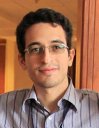
 Amin Ansari
· 4 previous affiliations
- Qualcomm (United States)Since 2013
- Researcher · Since 2013
- NSF Computing Innovation Postdoctoral Fellow · 2011–2013
- University of Michigan2007–2011
- Graduate Research Assistant · 2007–2011
- Doctor of Philosophy - PhD, Computer Science and Engineering · 2007–2008
- Sharif University of Technology2006–2007
- Research Assistant · 2006–2007
Research Overview
Amin Ansari focuses on the intersection of computer architecture, hardware resilience, and computer vision for autonomous perception. His work has evolved from developing fault-tolerant multicore systems and parallel architectures for signal processing to designing deep learning models for 3D scene understanding. Currently based at Qualcomm, his research addresses the challenges of robust perception in dynamic environments, leveraging techniques such as self-supervised learning and 3D Gaussian Splatting to improve the accuracy and efficiency of depth and occupancy prediction.
Research Trajectory
The early phase of Ansari’s research, spanning approximately 2008 to 2010, was primarily concerned with the reliability and scalability of hardware systems. During this period, the semiconductor industry faced significant challenges related to process variation, transistor wearout, and increasing defect densities in emerging manufacturing technologies. Ansari’s work addressed these issues by proposing architectural solutions that allowed processors to maintain functionality and performance despite the presence of hardware faults.
A central theme in this early work was the management of complexity in system verification. As hardware components multiplied, the difficulty of ensuring system correctness grew exponentially. Ansari’s research touched upon the problem of Scaling Formal Verification Against State Space Explosion, where the number of possible system states makes exhaustive checking computationally infeasible. This context informed his contributions to formal methods, including the application of Liveness Verification under Fairness Constraints, which are essential for proving that a system will eventually reach a desired state or terminate correctly.
In 2008, Ansari developed a Flexible FPGA-based parallel architecture for identification of repetitive sequences in interleaved pulse trains. This work addressed a specific problem in signal processing: the need to extract meaningful patterns from complex, overlapping pulse streams in real-time. By leveraging the parallelism of Field-Programmable Gate Arrays (FPGAs), the proposed architecture provided a scalable and adaptable solution for high-speed sequence identification, demonstrating an early interest in hardware-accelerated signal analysis.
By 2009, his focus shifted toward the resilience of cache architectures and multicore processors. He proposed ZerehCache: armoring cache architectures in high defect density technologies, which introduced techniques to protect on-chip memories from the high failure rates expected in future fabrication processes. This research was critical for enabling reliable operation at ultra-low voltages, where traditional cache designs often fail due to increased sensitivity to noise and manufacturing defects.
Ansari further extended this line of inquiry into the management of faulty processor cores. In 2010, he introduced Necromancer: enhancing system throughput by animating dead cores. The "Necromancer" approach challenged the conventional practice of disabling cores that failed post-manufacturing tests. Instead, it proposed using these "dead" cores to execute simpler tasks or assist functional cores, thereby reclaiming lost throughput and improving the overall efficiency of chip multiprocessors (CMPs). This work emphasized the importance of architectural flexibility in the face of hardware degradation.
During the same period, Ansari contributed to the development of reconfigurable fabrics for resilient computing. He was a key contributor to research on StageWeb: Interweaving pipeline stages into a wearout and variation tolerant CMP fabric. StageWeb proposed a fine-grained approach to fault tolerance by allowing individual pipeline stages to be interweaved and reconfigured across different cores. This method provided a more robust defense against wearout and process variation than traditional core-level redundancy, as it allowed the system to bypass specific faulty components while keeping the rest of the processor functional.
Current Directions
Following a period of less visible activity in the available research corpus, Ansari’s recent work, beginning around 2022, marks a significant transition toward computer vision and deep learning. This shift reflects the growing importance of AI-driven perception in autonomous systems, where the goal is to reconstruct 3D environments from 2D sensor data.
A major challenge in this domain is the ill-posed nature of depth estimation, particularly when relying on a single camera. Ansari’s recent research engages with the problem of Metric Scaling of Affine Invariant Monocular Depth, where the objective is to recover absolute physical distances from images that only provide relative depth information. This work is foundational for enabling autonomous vehicles and robots to navigate safely using monocular vision.
In 2022, Ansari participated in the development of X-Distill: Improving Self-Supervised Monocular Depth via Cross-Task Distillation. This research addressed the limitations of self-supervised depth training by introducing a cross-task knowledge distillation framework. By utilizing a pre-trained semantic segmentation network as a "teacher," the model transfers high-level semantic knowledge to the depth estimation "student." To bridge the gap between these two different visual tasks, the team introduced a small translation network that maps predicted depth to semantic categories, allowing for more effective supervision and improved depth accuracy without the need for extensive ground-truth labels.
Most recently, in 2025, Ansari contributed to research on ODG: Occupancy Prediction Using Dual Gaussians. This work advances the state of the art in 3D occupancy prediction, a critical task for autonomous driving that involves identifying which parts of a 3D space are occupied by static or dynamic objects. The ODG framework utilizes a hierarchical, dual-query architecture that separately models static backgrounds and dynamic agents. By incorporating 3D Gaussian Splatting for multi-stage rendering supervision, the model achieves high-fidelity occupancy results while maintaining the inference efficiency required for real-time applications.
The trajectory of Ansari’s work demonstrates a consistent focus on system robustness and efficiency, moving from the hardware level to the algorithmic level. While his early career was defined by making hardware resilient to physical defects, his current research focuses on making perception systems resilient to the complexities and uncertainties of the physical world. This evolution highlights the increasing convergence of computer architecture and artificial intelligence in the pursuit of autonomous machine intelligence.
Profile updated
Loading new papers…
Other researchers whose papers cluster into the same research directions — a proxy for overlapping technical interests and shared intellectual neighborhoods.
See something wrong? Report a mistake