

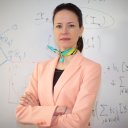
 Amanda Prorok
· 1 previous affiliation
- University of CambridgeSince 2017
- Full Professor · Since 2017
Research Overview
Amanda Prorok focuses on multi-agent systems, graph neural networks, and reinforcement learning for complex robotic coordination. Her trajectory spans foundational work in resilient task assignment and memory-augmented learning architectures to the co-design of physical environments and control policies. Her current research investigates behavioral diversity, scalable pathfinding, and policy verification in decentralized multi-robot networks.
Research Trajectory
Prorok’s early work addresses the robustness of robotic networks under uncertainty. In Resilient Assignment Using Redundant Robots on Transport Networks with Uncertain Travel Time (2018), she introduced a method to mitigate travel time noise by intentionally deploying redundant robots. By leveraging the mathematical property of supermodularity, this work developed a greedy algorithm for near-optimal assignments, contributing to the broader research direction of Coordination Strategies for Heterogeneous Multi-Agent Systems. Expanding into reinforcement learning (RL) architectures, her group developed Graph Convolutional Memory for Deep Reinforcement Learning (2021), a hybrid memory model that structures past experiences as a graph using topological priors. This approach achieved high performance in partially observable environments while requiring significantly fewer parameters than standard recurrent models.
In 2022, her research expanded across multi-robot communication, combinatorial optimization, and environment design. She co-authored A Critical Review of Communications in Multi-robot Systems, which advocated for the co-design of robotic control algorithms and network protocols rather than treating communication as a static, black-box constraint. This co-design philosophy also emerged in physical spaces; Environment Optimization for Multi-Agent Navigation proposed treating the environment layout as a tunable variable, using RL to optimize obstacle positions to prevent deadlocks and maximize efficiency. This work advanced the area of Motion Planning Beyond the Static Environment Assumption. Concurrently, her lab tackled routing logistics in Graph Neural Network Guided Local Search for the Traveling Salesperson Problem, presenting a hybrid data-driven approach that predicts edge inclusion regret to accelerate solutions. This contributed to research directions such as Overcoming the Label Generation Bottleneck in Neural Optimization and Line Graph Transformations for Edge Centric Learning.
Methodological improvements to graph and sequence models continued in 2023. Generalised f-Mean Aggregation for Graph Neural Networks introduced GenAgg, a learnable aggregation operator that unifies standard aggregators within a single framework to improve task-specific feature combination. To address the lack of standardized evaluation for memory-dependent RL, her team released POPGym: Benchmarking Partially Observable Reinforcement Learning, providing a diverse suite of environments and memory baselines that move beyond computationally expensive 3D visual navigation.
In 2024, Prorok’s focus on multi-agent reinforcement learning (MARL) and sequence processing deepened. Recurrent Reinforcement Learning with Memoroids reformulated efficient sequence models as associative operations, enabling Tape-Based Batching to train agents on variable-length episodes without padding inefficiencies, advancing work in Parallelizing Recurrent Models via Linear State Transitions. Addressing multi-agent strategy, Controlling Behavioral Diversity in Multi-Agent Reinforcement Learning introduced Diversity Control (DiCo) to explicitly constrain and quantify behavioral diversity, a key contribution to the area of Overcoming the Homogeneity Trap in Shared Multi-Agent Learning. She also collaborated on BenchMARL: Benchmarking Multi-Agent Reinforcement Learning, a modular library designed to improve reproducibility and decouple algorithms from environments in MARL research.
The interplay between agents and their environments remained a central theme in 2025. Co-Optimizing Reconfigurable Environments and Policies for Decentralized Multiagent Navigation further developed the simultaneous tuning of physical spaces and navigation strategies. In ReCoDe: Reinforcement Learning-based Dynamic Constraint Design for Multi-Agent Coordination, her lab combined optimization-based control with MARL by allowing agents to dynamically learn new constraints, balancing safety with strategic flexibility through bottlenecks. Additionally, Efficient Model-Based Reinforcement Learning Through Optimistic Thompson Sampling introduced HOT-GP, utilizing Gaussian Processes to model joint uncertainty in rewards and transitions for highly sample-efficient exploration in sparse-reward tasks.
Prorok’s 2026 publications scale these coordination frameworks while introducing novel security mechanisms. When Is Diversity Rewarded in Cooperative Multi-Agent Learning? provided a mathematical framework to predict when behavioral diversity is optimal based on reward curvature, introducing the HetGPS algorithm to design environments that incentivize specialized roles. Scaling Multi-Agent Environment Co-Design with Diffusion Models leveraged guided diffusion models to jointly optimize policies and environments, handling hard physical constraints via projected guidance. For dense multi-agent pathfinding, Graph Attention-Guided Search for Dense Multi-Agent Pathfinding integrated a learned graph-attention heuristic into a search-based algorithm to outperform purely search-based or learning-based methods. Bridging discrete search and continuous dynamics, Concrete multi-agent path planning enabling kinodynamically aggressive maneuvers demonstrated guaranteed coordination for large robot teams executing aggressive maneuvers. Finally, Remotely Detectable Robot Policy Watermarking introduced CoNoCo, a technique that embeds a spectral signature into a robot's exploration noise, allowing the remote verification of proprietary control policies without access to internal logs.
Current Directions
The most recent papers in the evidence indicate a strong focus on scaling multi-agent coordination and formalizing the relationship between agents and their environments. Recent work investigates the use of generative models, specifically diffusion, to co-design physical environments and multi-agent policies simultaneously, ensuring that hard physical constraints are respected during the generation process. Another major theme is the integration of learned neural heuristics with classical search algorithms to solve dense, kinodynamically constrained pathfinding problems for large robot teams. Additionally, current research addresses the security and verification of embodied AI, exploring techniques to watermark robot control policies through remotely detectable exploration noise, ensuring policy ownership can be verified purely through observational data.
Profile updated
Loading new papers…
Other researchers whose papers cluster into the same research directions — a proxy for overlapping technical interests and shared intellectual neighborhoods.
See something wrong? Report a mistake