

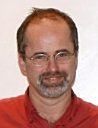
 Allan Douglas Jepson
· 2 previous affiliations
- University of TorontoSince 1982
- Emeritus · Since 2021
- Current
- Professor · 1982–2021
- Samsung (South Korea)2018–2022
- Chief Scientist · 2018–2022
Research Overview
Allan Douglas Jepson focuses on the intersection of computer vision, applied mathematics, and machine learning, with a primary emphasis on the mathematical modeling of image motion, shape reconstruction, and probabilistic inference. His research trajectory spans over three decades, evolving from physics-based models of light and early visual filters to sophisticated layered representations of optical flow, spectral clustering techniques, and more recently, deep learning-based approaches to video understanding and 3D representation. Currently a Professor Emeritus at the University of Toronto, his work continues to address fundamental problems in high-precision optimization and the temporal analysis of instructional video data.
Research Trajectory
Jepson’s early research in the late 1980s was grounded in the physics of image formation and the development of early visual primitives. In The Use of Color in Highlight Identification, he addressed the problem of specular reflections by analyzing color shifts in a "color constant" space, demonstrating that the transition from matte surfaces to highlights creates distinct geometric structures in color space. During this period, he also contributed to the design of linear filters for early vision. In Hierarchical Construction of Orientation and Velocity Selective Filters, he participated in the development of a hierarchical parallel-processing scheme for extracting orientation and velocity information, emphasizing the use of spatio-temporal neighborhoods to create mechanisms sensitive to narrow ranges of image motion.
By the mid-1990s, Jepson’s focus shifted toward more robust and flexible methods for estimating image motion, particularly in scenarios involving transparency and multiple moving objects. A significant contribution during this phase was the development of layered motion models. In Skin and Bones: Multi-layer, Locally Affine, Optical Flow and Regularization with Transparency, he introduced a framework that combined local affine motion estimates (the "bones") with spatial smoothness constraints (the "skin") to enforce continuity across neighboring patches. This work was instrumental in bridging the gap between local dense computations and global parameterized flow models. He further explored the learning of these parameters in collaborative work such as Learning Parameterized Models of Image Motion, which utilized principal component analysis to represent complex motions through a linear combination of basis flow fields.
The early 2000s marked a transition into spectral methods and probabilistic tracking. Jepson introduced the EIGENCUTS algorithm in Half-Lives of EigenFlows for Spectral Clustering, which moved beyond traditional piecewise constant assumptions in spectral clustering by treating eigenvectors as "eigenflows" in a Markov chain. This approach allowed for the automatic identification of stable clusters by measuring the sensitivity of their "halflives" to edge perturbations. Simultaneously, he addressed the challenges of visual tracking in non-linear dynamical systems. In Variational Mixture Smoothing for Non-Linear Dynamical Systems, he contributed to the development of joint state smoothed density estimates, specifically targeting weakly identifiable models where multimodality is persistent, such as in monocular 3D human tracking. This period also included work on Multi-scale Phase-based Local Features, which evaluated the robustness of local feature detectors and extractors under image deformations.
In the latter part of his career and into his emeritus status, Jepson has integrated deep learning with classical probabilistic and geometric constraints. He has explored the use of semidefinite programming for surface reconstruction in Semidefinite Programming Heuristics for Surface Reconstruction Ambiguities and participated in large-scale benchmarking efforts for image enhancement, such as the AIM 2020 Challenge on Efficient Super-Resolution: Methods and Results. His most recent work focuses on the intersection of planning, 3D representation, and high-precision optimization, maintaining a focus on computational efficiency and theoretical rigor.
Current Directions
Jepson’s recent research directions involve the application of probabilistic modeling to complex video understanding tasks and the development of efficient 3D representations. A primary focus is Overcoming the Temporal Annotation Bottleneck in Video Learning, where the goal is to identify event boundaries in untrimmed videos without the need for dense, manual timestamp annotations. This work is closely linked to the challenge of Scaling Reasoning to Long-Horizon Sequential Decision Making, particularly in the context of instructional videos where an agent must plan a sequence of actions to reach a goal state.
In addition to video planning, Jepson has contributed to the development of novel 3D shape representations. In Probabilistic Directed Distance Fields for Ray-Based Shape Representations, he participated in the design of a 5D ray-based representation that enables differentiable rendering with significantly reduced computational overhead compared to traditional implicit methods. His most recent work, Efficient and Accurate Optimal Transport with Mirror Descent and Conjugate Gradients, addresses the numerical challenges of solving discrete optimal transport problems with high precision, utilizing mirror descent and GPU-parallel nonlinear conjugate gradients to outperform traditional Sinkhorn iterations.
Representative Work
The Use of Color in Highlight Identification (1987)
In The Use of Color in Highlight Identification, Jepson introduced a physics-based method for the automatic identification of specular reflections in digital images. The research addressed the fundamental problem of distinguishing between an object's matte surface and its highlights, which often complicate computer vision tasks like shape-from-shading or object recognition. By mapping image data into a "color constant" space, the paper demonstrated that the transition from matte to highlight creates a distinct "dog leg" geometric structure. This observation allowed for the development of a reliable algorithm to flag glare based on color shifts, providing a robust alternative to intensity-based methods that often fail in complex lighting environments.
Skin and Bones: Multi-layer, Locally Affine, Optical Flow and Regularization with Transparency (1996)
As the senior author of Skin and Bones: Multi-layer, Locally Affine, Optical Flow and Regularization with Transparency, Jepson presented a novel framework for estimating optical flow that balanced local flexibility with global robustness. The "Skin and Bones" model treated local image patches as rigid "bones" governed by affine motion parameters, while a flexible "skin" enforced spatial smoothness across these patches. To handle the complexities of real-world scenes, such as transparency and occlusion, the method employed a layered representation, allowing multiple motions to be estimated within a single local patch. This approach provided a significant advancement in the regularization of layered motion, offering a more nuanced treatment of motion discontinuities than previous dense flow techniques.
Half-Lives of EigenFlows for Spectral Clustering (2002)
In Half-Lives of EigenFlows for Spectral Clustering, Jepson introduced the EIGENCUTS algorithm, a significant refinement of spectral clustering techniques. The paper challenged the standard "piecewise constant" assumption of eigenvectors, which often leads to poor clustering in the presence of noise or complex data structures. By reinterpreting eigenvectors as "eigenflows" within a Markov chain framework, Jepson developed a method to measure the stability of clusters based on the "halflives" of these flows. The algorithm identifies bottleneck edges—connections that, if removed, would most significantly impact the stability of the flows—and prunes them to reveal the underlying cluster structure. This work provided a more theoretically grounded approach to determining the number of clusters and their boundaries in unsupervised learning.
Variational Mixture Smoothing for Non-Linear Dynamical Systems (2004)
Jepson’s work on Variational Mixture Smoothing for Non-Linear Dynamical Systems addressed the problem of computing joint state smoothed density estimates in a Bayesian setting. The research focused on visual tracking problems characterized by persistent multimodality, where traditional methods like iterated Kalman smoothers are inapplicable and sample-based particle smoothers face exponential computational costs. The proposed variational mixture smoothing algorithm allowed for the efficient localization of probable joint state modes in high-dimensional trajectories. This was particularly relevant for monocular 3D human tracking, where the inherent ambiguity of the 2D-to-3D projection necessitates the maintenance of multiple hypothesis trajectories over time.
P3IV: Probabilistic Procedure Planning from Instructional Videos with Weak Supervision (2022)
As senior author of P3IV: Probabilistic Procedure Planning from Instructional Videos with Weak Supervision, Jepson explored the problem of procedure planning, where an agent must generate a sequence of actions to transform an environment from a start state to a goal state. Unlike previous methods that required expensive, precisely localized temporal annotations of every step in a video, this work proposed a weakly supervised approach using natural language instructions. The model utilized a transformer architecture equipped with a memory module to learn from instructional videos, effectively mapping linguistic cues to visual states. This research contributes to the broader goal of enabling AI agents to reason over long-term sequences and perform complex tasks by observing human behavior.
Efficient and Accurate Optimal Transport with Mirror Descent and Conjugate Gradients (2025)
In Efficient and Accurate Optimal Transport with Mirror Descent and Conjugate Gradients, Jepson and his collaborators proposed Mirror Descent Optimal Transport (MDOT), a method for solving discrete optimal transport problems with high precision. The framework unifies temperature annealing in entropic-regularized optimal transport with mirror descent techniques. By solving the resulting sequence of dual problems using a GPU-parallel nonlinear conjugate gradients algorithm, the method achieves high-precision solutions more efficiently than traditional Sinkhorn iterations, especially under conditions of weak regularization. This work reflects Jepson’s continued focus on the intersection of applied mathematics and efficient computational methods for large-scale optimization problems.
Profile updated
Loading new papers…
Other researchers whose papers cluster into the same research directions — a proxy for overlapping technical interests and shared intellectual neighborhoods.
See something wrong? Report a mistake