

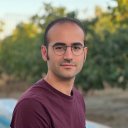
 Alireza Modirshanechi
· 7 previous affiliations
- Helmholtz MunichSince 2024
- Postdoctoral Researcher · Since 2024
- Current
- Postdoc · Since 2024
- Current
- Postdoctoral Researcher · Since 2024
- Teaching Assistant · 2018–2024
- Sharif University of Technology2014–2018
- Research Assistant · 2016–2018
- Undergrad student · 2014–2018
- Teaching Assistant · 2015
- Exceptional Talents Development Center2013–2017
- Advanced Physics Teacher · 2013–2017
Research Overview
Alireza Modirshanechi focuses on computational neuroscience, cognitive modeling, and the mechanisms of human decision-making. His trajectory spans from fitting biologically realistic spiking network models to developing surprise-based learning algorithms for volatile environments. Most recently, his work addresses the application of large-scale foundation models to predict and simulate human cognitive behavior across diverse experimental settings.
Research Trajectory
In 2021, Modirshanechi contributed to computational neuroscience methods, specifically addressing the challenge of fitting network models to neural activity. He participated in the development of Fitting summary statistics of neural data with a differentiable spiking network simulator, which augmented traditional log-likelihood approaches with terms measuring the dissimilarity between simulated and recorded activity. This work intersects with several broader research areas, including the direction of Reconstructing Network Topology from System Dynamics and the area of Neural Connectivity Inference under Partial Observability. By relying on back-propagation through stochastically simulated spike trains, the methodology also advanced work in the research direction of Surrogate Gradient Learning for Spiking Neural Networks and the broader field of Reduced Order Modeling of Biophysical Neuron Dynamics.
Concurrently, his research explored how agents adapt to nonstationary stochastic environments. In Learning in Volatile Environments With the Bayes Factor Surprise, he and his collaborators demonstrated that exact Bayesian inference in a hierarchical model creates a surprise-modulated trade-off between retaining old observations and integrating new ones. The team introduced the "Bayes Factor Surprise," a probability ratio testing prior beliefs against current beliefs, and derived novel surprise-based algorithms to modulate the rate of adaptation to environmental changes.
Building on these theoretical foundations of surprise and reinforcement learning, Modirshanechi participated in empirical studies of human cognition. The 2022 study Brain signals of a Surprise-Actor-Critic model: Evidence for multiple learning modules in human decision making utilized a novel sequential learning task to dissociate model-free from model-based signals. The research provided evidence that human behavior is well-explained by an Actor-Critic framework, identifying neural signatures of a surprise-modulated algorithm and demonstrating the presence of temporal-difference, policy gradient, and surprise signals in the human brain.
More recently, his collaborative efforts have scaled to massive computational models of psychology. He was part of a large consortium that developed A foundation model to predict and capture human cognition. This 2025 project introduced Centaur, a computational model fine-tuned on a massive dataset of human behavioral choices, designed to predict and simulate human behavior across a wide array of experimental settings expressible in natural language.
Current Directions
The most recent work in Modirshanechi's evidence points toward the integration of large language models and cognitive science. Recent collaborative efforts investigate the use of foundation models to establish unified computational theories of cognition. By leveraging massive datasets of trial-by-trial human choices, this direction addresses the open problem of creating generalized models capable of predicting human behavior across diverse, natural-language-specified psychological experiments.
Profile updated
Loading new papers…
Other researchers whose papers cluster into the same research directions — a proxy for overlapping technical interests and shared intellectual neighborhoods.
See something wrong? Report a mistake