

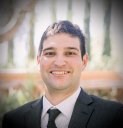
 Ali Younis
· 4 previous affiliations
Research Overview
Ali Younis focuses on 3D perception and computer vision for real-world understanding, with a specific emphasis on differentiable Bayesian filtering and particle-based non-parametric belief propagation. His work addresses the challenges of state estimation in unstructured environments, integrating deep learning with classical probabilistic methods to improve robot localization, human mesh reconstruction, and 3D vision. By developing end-to-end differentiable algorithms, he enables the optimization of complex perception systems that can handle multimodal uncertainty and temporal dynamics in robotics and autonomous systems.
Research Trajectory
The evolution of Younis’s research reflects a transition from securing the infrastructure of edge computing and the Internet of Things (IoT) toward developing the fundamental probabilistic algorithms required for autonomous 3D perception.
Between 2018 and 2020, Younis’s work was primarily situated in the domain of systems security, specifically focusing on the vulnerabilities of smart home ecosystems. During this period, he contributed to the development of systems designed to mitigate the risks posed by compromised devices and cloud servers. This work emphasized the restriction of network access and the creation of secure runtime environments for local control, ensuring that smart home functionality remained resilient even under intermittent internet connectivity or infrastructure breaches.
Following this period, Younis shifted his focus toward the intersection of machine learning and probabilistic graphical models during his doctoral studies at the University of California, Irvine. This phase of his research addressed the limitations of amortized inference in deep generative models. While variational autoencoders (VAEs) are effective for density estimation, they typically struggle with test-time queries involving arbitrary sets of missing features. Younis co-developed algorithms to enable query-adaptive inference, allowing these models to perform more flexible and accurate imputation by optimizing latent representations directly through the generative decoder.
From 2023 onward, Younis’s work has concentrated on Scaling Particle Filters to High Dimensional State Spaces. His primary contribution in this area involves overcoming the "non-differentiable resampling" hurdle that has historically prevented the end-to-end training of particle filters within deep learning pipelines. By introducing mixture density representations and novel importance-sampling gradient estimators, he has enabled the development of fully differentiable sequential Monte Carlo methods. These methods allow for the joint learning of dynamics and observation models, significantly improving the performance of long-range tracking and localization in complex, ambiguous environments. Most recently, his work has extended these filtering techniques into the domain of bidirectional smoothing, providing a framework for retrospective state estimation that resolves spatial ambiguities more effectively than causal filtering alone.
Current Directions
Younis’s current research is defined by the integration of neural networks with sequential Monte Carlo methods to solve high-dimensional perception tasks. A central theme is Differentiable Resampling for End-to-End Particle Filtering, which seeks to make the discrete resampling step of particle filters compatible with gradient-based optimization. This allows for the training of state estimation models that are robust to the "chaos" of real-world environments, where traditional constant-velocity or constant-acceleration models often fail.
Another significant area of focus is Bidirectional Smoothing for Retrospective State Estimation. While standard filtering is limited by its causal nature—relying only on past and current observations—smoothing allows a system to refine its understanding of the past using future data. Younis’s development of differentiable "two-filter" smoothers enables state-of-the-art accuracy in tasks like city-scale vehicle localization, where sensor noise and environmental symmetry can lead to multiple plausible state hypotheses that only become clear over time.
Furthermore, his work addresses the Sensor Noise Robustness for Sim-to-Real Transfer by creating Data-Driven Motion Models for State Estimation. By replacing hand-coded physics equations with learned dynamics, these models can better capture the nuances of physical hardware and unstructured environments. This is particularly relevant for robotics applications where sensors provide noisy, incomplete data and the underlying system dynamics are difficult to model analytically.
Representative Work
Differentiable Particle Filtering and Smoothing
Younis has introduced several frameworks that bridge the gap between classical Bayesian filtering and modern deep learning. In Differentiable and Stable Long-Range Tracking of Multiple Posterior Modes, he presented the Mixture Density Particle Filter (MDPF). This work addresses the instability inherent in training particle filters over long sequences by utilizing a mixture density approach to represent the posterior. This allows the model to track multiple hypotheses (modes) simultaneously, which is critical for applications like robot localization where a single observation may be consistent with several different locations.
Building on this, Younis developed the Mixture Density Particle Smoother (MDPS), detailed in Learning to be Smooth: An End-to-End Differentiable Particle Smoother. This represents the first fully differentiable, end-to-end learnable "two-filter" particle smoother. By integrating forward and backward particle streams through deep neural networks, the MDPS achieves superior accuracy in complex tasks such as city-scale vehicle localization. The framework allows the system to resolve spatial ambiguities that typically cause standard filters to fail, providing a more robust solution for retrospective state estimation.
Variational Inference and Generative Models
In the area of deep generative models, Younis contributed to the development of more flexible inference techniques. In A decoder suffices for query-adaptive variational inference, he addressed the limitations of amortized inference in VAEs. Standard VAEs require all data dimensions to be observed at test time, making them ill-suited for imputation tasks with arbitrary missing features. The proposed Query-Adaptive Variational Inference (QAVI) algorithm allows for the analytical marginalization of missing features and the optimization of latent representations directly via the generative decoder, outperforming existing imputation methods in both cost and effectiveness.
IoT and Edge Security
Younis’s early research focused on the security of the growing smart home ecosystem. In Vigilia: Securing Smart Home Edge Computing, he participated in the design of a system that restricts the network access of IoT devices to reduce their attack surface. This work involved creating an open implementation of smart home programming models to enforce fine-grained access control policies.
This was extended in Securing Smart Home Edge Devices against Compromised Cloud Servers, where Younis contributed to the FIDELIUS system. FIDELIUS was designed to protect smart home systems even when the central cloud servers they rely on are compromised. The system supports secure storage and local control, ensuring that privacy and security are maintained during intermittent internet access or server-side breaches. This work highlighted the importance of moving security primitives to the edge of the network to protect user data and device integrity.
Profile updated
Loading new papers…
Other researchers whose papers cluster into the same research directions — a proxy for overlapping technical interests and shared intellectual neighborhoods.
See something wrong? Report a mistake