

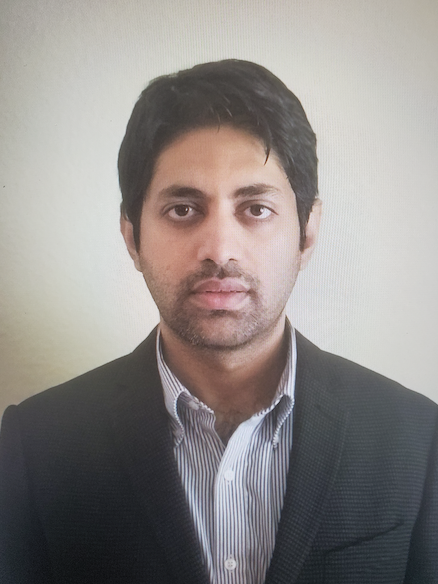
 Ali Anwar
· 1 previous affiliation
- University of MinnesotaSince 2022
- Assistant Professor · Since 2022
1 other author named Ali Anwar: Ali Anwar (IMEC · University of Antwerp · 1 paper)
Research Overview
Ali Anwar focuses on the intersection of distributed systems and machine learning, designing scalable architectures to manage vast volumes of data efficiently. His early work addressed high-performance storage and cloud infrastructure before evolving into privacy-preserving and heterogeneous federated learning. Currently, his research emphasizes optimizing large language model reasoning, enhancing AI safety, and building robust systems for distributed machine learning.
Research Trajectory
The early phase of Anwar's research concentrated on optimizing cloud infrastructure and high-performance computing (HPC) storage systems. He analyzed production workloads to improve container management in Improving Docker Registry Design Based on Production Workload Analysis. To address the specific needs of HPC applications, he developed bespoKV: application tailored scale-out key-value stores, an adaptive framework that decouples the control plane for distributed management from the data plane, enabling scalable and fault-tolerant key-value services.
By 2019, his focus expanded into distributed machine learning, specifically the broader research direction of Collaborative Learning Across Private Data Silos. He participated in the development of A Hybrid Approach to Privacy-Preserving Federated Learning, which addressed vulnerabilities in secure multiparty computation and differential privacy, contributing to work in the area of The Privacy-Utility Trade-off in Differentially Private Learning. Investigating the robustness of these systems, he contributed to the area of Distinguishing Malicious Updates from Benign Data Heterogeneity, exploring how varying data distributions impact model training in Curse or Redemption? How Data Heterogeneity Affects the Robustness of Federated Learning. To tackle the persistent challenges of straggling clients and communication bottlenecks, he helped design FedAT: a high-performance and communication-efficient federated learning system with asynchronous tiers. This system combined synchronous intra-tier training with asynchronous cross-tier updates, advancing the direction of Asynchronous Optimization for Heterogeneous Federated Learning and the related area of Personalized Federated Learning for Heterogeneous Data.
Building on this foundation, his subsequent work continued to refine federated learning infrastructure. His group introduced FLOAT: Federated Learning Optimizations with Automated Tuning to handle dynamic system resources and mitigate client selection biases. Recognizing that non-training workloads—such as scheduling, personalization, and debugging—create significant overhead, they also developed FLStore: Efficient Federated Learning Storage for non-training workloads to reduce the latency and costs associated with metadata storage.
More recently, Anwar's research has heavily integrated large language models (LLMs), both by optimizing their underlying systems and by applying them to complex operational tasks. Contributing to the research direction of Integrating Orthogonal Model Compression Techniques, he explored privacy-preserving caching strategies in MeanCache: User-Centric Semantic Caching for LLM Web Services to reduce computational costs. He also investigated dynamic model acceleration in Probe Pruning: Accelerating LLMs through Dynamic Pruning via Model-Probing. Applying generative AI back to systems management, his team designed LADs: Leveraging LLMs for AI-Driven DevOps, a framework that automates cloud configuration and self-heals runtime errors.
A significant portion of his recent trajectory addresses the safety, alignment, and reasoning efficiency of generative models. To navigate the trade-offs between competing human values, his lab developed MAP: Multi-Human-Value Alignment Palette, a framework that calculates optimal reward weights for user-specified target levels. They also introduced Beyond Expectations: Quantile-Guided Alignment for Risk-Calibrated Language Models to mitigate rare catastrophic failures by targeting specific performance percentiles rather than average outcomes. Extending these safety considerations to physical systems, he oversaw Safety Aware Task Planning via Large Language Models in Robotics, which integrates a dedicated safety agent into multi-LLM robotic workflows.
To scale inference-time compute efficiently, he participated in Accelerating LLM Reasoning via Early Rejection with Partial Reward Modeling, a method that prunes dead-end reasoning paths mid-generation. Building on the need for efficient logic, his group proposed Retrieval-of-Thought: Efficient Reasoning via Reusing Thoughts, which organizes prior reasoning steps into a dynamic graph to significantly reduce output tokens and latency for large reasoning models.
Current Directions
The most recent papers in the evidence investigate the efficiency, safety, and alignment of large language models. A major focus is scaling inference-time compute for complex reasoning tasks, developing methods to prune unproductive reasoning paths and reuse prior computational "thoughts" to reduce latency and token generation costs. Concurrently, his research addresses AI safety and alignment by designing frameworks that balance multiple competing human values and mitigate rare, catastrophic tail-risk failures. He also continues to bridge systems and machine learning, building user-centric semantic caching and dynamic pruning techniques to accelerate LLM web services, and applying generative models to automate cloud infrastructure deployment.
Profile updated
Loading new papers…
Other researchers whose papers cluster into the same research directions — a proxy for overlapping technical interests and shared intellectual neighborhoods.
See something wrong? Report a mistake