

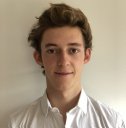
 Alexandre AGM Duval
· 6 previous affiliations
- EntalpicSince 2024
- Co-Founder & CS(cience)O · Since 2024
- Amazon (United States)2023–2024
- Applied Scientist · 2023–2024
- Visiting Researcher · 2022–2024
- PhD student · 2021–2024
- Research Intern · 2020
- CentraleSupélec2019–2024
- Doctor of Philosophy - PhD, Graph Machine Learning · 2021–2024
- Master of Science - MS, Artificial Intelligence · 2019–2020
- Student Researcher · 2020
Research Overview
Alexandre AGM Duval focuses on graph machine learning and its application to computational materials science, specifically targeting the accelerated discovery of electrocatalysts. His trajectory bridges foundational work in graph neural network architectures with large-scale generative modeling for atomistic systems. Currently, he investigates scalable equivariant networks and robust benchmarking frameworks to advance inverse materials design.
Research Trajectory
Duval’s early research explored cognitive science and spatial representation, examining frameworks for spatial reorientation in The representation selection problem: Why we should favor the geometric-module framework of spatial reorientation over the view-matching framework (2019). His focus subsequently shifted toward graph machine learning, specifically addressing the expressive power of graph neural networks (GNNs). To capture complex topological features, he developed novel pooling operators. In Higher-order Clustering and Pooling for Graph Neural Networks (2022), he introduced HoscPool, a differentiable operator grounded in motif spectral clustering that leverages higher-order connectivity patterns like triangles and cycles to overcome the limitations of traditional edge-based pooling in graph classification.
Building on his expertise in graph representation learning, Duval transitioned into computational materials science, aiming to accelerate the discovery of new catalysts for the energy transition. A major challenge in modeling 3D atomic systems is enforcing physical symmetries efficiently. He addressed this in FAENet: Frame Averaging Equivariant GNN for Materials Modeling (2023), utilizing Stochastic Frame Averaging to enforce symmetries through data transformations rather than rigid architectures. This work contributed significantly to the area of Stochastic Sampling for Continuous Group Equivariance and the broader direction of SE(3) Equivariance via Local Frame Scalarization, achieving high accuracy on large-scale datasets while maintaining computational efficiency.
To further bridge the gap between machine learning and practical electrocatalyst design, he developed PhAST: Physics-Aware, Scalable, and Task-Specific GNNs for Accelerated Catalyst Design (2024). This work focused on creating scalable neural surrogate models capable of efficiently predicting materials properties from massive datasets like the Open Catalyst Project (OC20), a necessary step for discovering materials that can drive lower-carbon electrochemical reactions. Recognizing the rapid proliferation of modeling techniques in this space, he also led an empirical study, Improving Molecular Modeling with Geometric GNNs: an Empirical Study (2024), which evaluated the impact of canonicalization methods, graph creation strategies, and auxiliary tasks to guide the selection of optimal components for molecular modeling.
A recurring theme in Duval's trajectory is the critical need for robust data infrastructure to train transferable machine learning interatomic potentials. He guided the creation of LeMat-Traj: A Scalable and Unified Dataset of Materials Trajectories for Atomistic Modeling (2025), which consolidated over 120 million atomic configurations from density functional theory (DFT) calculations to overcome the fragmentation of existing resources. He similarly led efforts to aggregate and de-duplicate static crystal structures in LeMat-Bulk: aggregating, and de-duplicating quantum chemistry materials databases (2025), introducing a novel hashing method to harmonize heterogeneous computational materials databases.
As a co-founder of Entalpic, Duval's research has increasingly emphasized generative AI for inverse materials design. He participated in developing Catalyst GFlowNet for electrocatalyst design: A hydrogen evolution reaction case study (2025), a framework that leverages GFlowNets to propose efficient and affordable catalysts, successfully rediscovering platinum as a top candidate for hydrogen energy storage. This generative approach intersects with the research direction of Navigating the Stability Novelty Frontier in Generative Chemistry and touches upon challenges in the area of Preventing Reward Hacking in Generative Molecular Design. To ensure these generative models are evaluated rigorously, he introduced LeMat-GenBench: Bridging the gap between crystal generation and materials discovery (2025), establishing standardized metrics and tasks for unconditional and conditional crystal generation, thereby advancing work in Navigating Infinite Chemical Space for Materials Discovery.
Concurrently, Duval has investigated the physical validity of machine learning predictions. In Adsorption energies are necessary but not sufficient to identify good catalysts (2025), he and his collaborators demonstrated that inherent uncertainties in DFT calculations can lead to the misclassification of materials, highlighting the need for more selective screening metrics like thermodynamic stability. This research directly addresses challenges in the area of Reliability and Error Propagation in Atomistic Simulations.
In his most recent work, Duval continues to refine the architectures underlying atomistic simulations. He contributed to TriForces: Augmenting Atomistic GNNs for Transferable Representations (2026), a model-agnostic framework that factorizes representations into composition, structure, and interaction streams, significantly reducing energy prediction errors and enabling independent searches based on chemistry and geometry. He also collaborated on Efficient Cross-Functional Learning for Atomistic Modeling of Materials (2026), which proposed a delta-learning approach to upgrade low-accuracy atomistic foundation models to high-fidelity simulations with minimal computational overhead.
Current Directions
The most recent papers in the evidence indicate a dual focus on scaling atomistic foundation models and establishing rigorous evaluation frameworks for generative materials design. Duval investigates efficient architectural modifications, such as factorizing representations into distinct streams for composition and structure, to improve the transferability and accuracy of graph neural networks without prohibitive computational costs. Concurrently, his work addresses the critical need for standardization in inverse design, developing comprehensive benchmarks for crystal generation and probing the limits of thermodynamic screening metrics. By harmonizing massive quantum chemistry databases and refining cross-functional learning techniques, his current research aims to bridge the gap between theoretical crystal generation and the practical, reliable discovery of novel catalysts.
Profile updated
Loading new papers…
Other researchers whose papers cluster into the same research directions — a proxy for overlapping technical interests and shared intellectual neighborhoods.
See something wrong? Report a mistake