

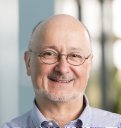
 Alexander Waibel
3 previous affiliations
- Carnegie Mellon University1979–2026
- Full Professor · 1991–2026
- PhD student · 1979–1986
- Karlsruhe Institute of Technology1991–2025
- Full Professor · 1991–2025
- Undergrad student · 1976–1979
Research Overview
Alexander Waibel focuses on spoken language translation, multilingual neural machine translation, and human-computer interaction. His trajectory spans from early work on ambient intelligence and acoustic modeling to extensive contributions in low-latency simultaneous speech translation and cross-lingual transfer for low-resource languages. Recently, his focus includes evaluating large language models on complex, multimodal scientific reasoning tasks.
Research Trajectory
Alexander Waibel’s early work in the evidence explored human-centric computing and the cognitive demands of modern technology. In Computers in the Human Interaction Loop (2010), he examined how ambient intelligence could be designed to reduce technological distraction, allowing users to focus on meaningful human dialog rather than machine operation.
By 2016, his research heavily emphasized core speech and language processing. His lab investigated foundational acoustic modeling techniques in An empirical exploration of CTC acoustic models. Concurrently, he advanced the area of Grounding Language Models with Dictionary Definitions by developing methods for Integrating Encyclopedic Knowledge into Neural Language Models, which sought to enrich neural architectures with structured semantic information.
In 2017, his focus expanded to address the complexities of multilingual neural machine translation (NMT). He tackled zero-shot translation challenges in Effective Strategies in Zero-Shot Neural Machine Translation, contributing to the broader research direction of Specializing Multilingual Models by Eliminating Lexical Redundancy. That same year, his group presented KIT's Multilingual Neural Machine Translation systems for IWSLT 2017. This system integrated techniques from the research areas of Language Adaptive Fine-Tuning for Underrepresented Languages and Phonetic Loop Data Augmentation for Spoken Language Tasks to improve translation performance across diverse and low-resource language pairs. The development of robust translation pipelines continued with The IWSLT 2019 KIT Speech Translation System, which addressed challenges in the research direction of Bridging the Formatting Gap in Speech Translation while continuing to leverage phonetic data augmentation strategies.
Moving into the 2020s, Waibel’s work increasingly leveraged foundation models and addressed the strict constraints of real-time processing. He explored the efficient adaptation of these architectures in Adaptive multilingual speech recognition with pretrained models (2022) and further refined these approaches for translation tasks in Effective combination of pretrained models - KIT@IWSLT2022. A major technical focus emerged around simultaneous translation; in CUNI-KIT System for Simultaneous Speech Translation Task at IWSLT 2022, his team introduced an onlinization strategy that adapted existing offline models for simultaneous streaming. This approach allowed a single multilingual model to achieve near-offline quality with significantly reduced latency. Recognizing the need for rigorous assessment in such real-time systems, he subsequently developed comprehensive metrics in End-to-End Evaluation for Low-Latency Simultaneous Speech Translation (2023), balancing translation quality against crucial latency constraints to enable fair architectural comparisons.
Most recently, his research has expanded to include the evaluation of modern generative models. In 2024, he participated in developing SciEx: Benchmarking Large Language Models on Scientific Exams with Human Expert Grading and Automatic Grading, a multilingual and multi-modal benchmark based on university computer science exams designed to probe the scientific reasoning capabilities of large language models.
Current Directions
The most recent papers in the evidence indicate a dual focus on the rigorous evaluation of real-time translation systems and the benchmarking of large language models. Recent work investigates end-to-end frameworks for assessing low-latency simultaneous speech translation, ensuring that streaming systems are evaluated fairly on both linguistic quality and temporal delay. Additionally, his recent collaborative efforts address the capacity of large language models to perform complex, multi-modal scientific reasoning, utilizing multilingual university-level examinations to probe their capabilities in specialized academic domains.
Profile updated
| Title | Venue | Year |
|---|---|---|
| MUSCAT: MUltilingual, SCientific ConversATion Benchmark | arXiv | 2026 |
| Do What I Say: A Spoken Prompt Dataset for Instruction-Following | arXiv | 2026 |
| Speech-to-SOAP: End-to-End Summarization of Medical Dialogues: KIT@BeTraC 2026 | arXiv | 2026 |
| KIT’s Offline Speech Translation and Instruction Following Submission for IWSLT 2025 | Repository Kitopen (karlsruhe Institute of Technology) | 2026 |
| From Speech to Summary: A Comprehensive Survey of Speech Summarization | Repository Kitopen (karlsruhe Institute of Technology) | 2026 |
| The Role of Disfluencies in Speech Translation | arXiv | 2026 |
| Beyond Transcripts: A Renewed Perspective on Audio Chaptering | ACL | 2026 |
| From Speech to Interaction: Analyzing Multimodal Systems in Cocktail-Party Scenarios | arXiv | 2026 |
| Adding Robust Code-Switching Capabilities to High Performance Multilingual ASR | arXiv | 2026 |
| Multilingual Long-Form Speech Instruction Following: KIT's Submission to IWSLT 2026 | arXiv | 2026 |
Loading new papers…
Other researchers whose papers cluster into the same research directions — a proxy for overlapping technical interests and shared intellectual neighborhoods.
See something wrong? Report a mistake