

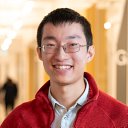
 Alexander Tong
· 8 previous affiliations
- Principal Researcher · Since 2025
- Principal Investigator · Since 2025
- Duke University2025
- Assistant Professor · 2025
- Université de Montréal2022–2025
- Postdoctoral Fellow · 2022–2025
- Postdoctoral Fellow · 2022–2025
- Visiting Researcher · 2022
- Dreamfold2022–2024
- Co-Founder + CTO · 2022–2024
- Yale University2017–2021
- PhD student · 2017–2021
- Tufts University2013–2017
- Master’s Degree, Computer Science · 2016–2017
- Undergrad student · 2013–2017
Research Overview
Alexander Tong focuses on generative modeling, optimal transport, and geometric deep learning, with applications to molecular biology and population dynamics. His trajectory spans the development of simulation-free flow matching techniques and scalable sampling methods for complex energy landscapes. Currently, his work addresses the computational bottlenecks of continuous-time generative models and the design of efficient algorithms for protein and molecular generation.
Research Trajectory
As a principal investigator at Aithyra and co-founder of Dreamfold, Alexander Tong’s research has consistently targeted the intersection of machine learning and the physical sciences, focusing on the efficiency and scalability of generative models. In 2024, he addressed fundamental challenges in modeling stochastic and irregularly sampled time series with Trajectory Flow Matching with Applications to Clinical Time Series Modeling. This work contributed to the area of Simulation Free Flow Matching by bypassing the need for backpropagation through stochastic differential equation (SDE) dynamics, representing a key step in the broader direction of Mitigating Computational Latency in Neural Differential Equation Solvers. Extending these principles to 3D rigid motions, his group developed SE(3)-Stochastic Flow Matching for Protein Backbone Generation, which utilizes Riemannian optimal transport to map arbitrary source distributions to complex protein structures.
In 2025, his focus expanded to complex energy landscapes and statistical physics. In Progressive Inference-Time Annealing of Diffusion Models for Sampling from Boltzmann Densities, he introduced a Feynman-Kac approach to sample from multi-modal Boltzmann distributions, significantly reducing the energy evaluations required compared to traditional molecular dynamics. Continuing this theme, he presented Scalable Equilibrium Sampling with Sequential Boltzmann Generators (alongside a related workshop presentation, Scalable Equilibrium Sampling with Sequential Boltzmann Generators), which replaced rigid equivariant flows with a highly efficient Transformer-based normalizing flow. This work advanced the research direction of Escaping Metastable States in Complex Energy Landscapes by achieving highly effective sampling for peptides in Cartesian coordinates. Concurrently, he explored the physical realities of biological systems in Curly Flow Matching for Learning Non-gradient Field Dynamics. By solving a Schrödinger bridge problem with a non-zero drift reference process, this research captured periodic behaviors like cell cycles and ocean currents, contributing to the broader area of Unbalanced Transport for Population Dynamics.
Recent work in 2026 has increasingly focused on algorithmic acceleration and the integration of structural priors. To address the computational bottleneck of stochastic conditional sampling, he developed Stochastic Few-step Models, which maps conditional SDEs to deterministic ordinary differential equations (ODEs) with matching marginals. In the domain of discrete generation, Planner Aware Path Learning in Diffusion Language Models Training introduced a modification to the training loss that aligns learning with inference-time generation paths, improving performance across protein, text, and code modalities.
Returning to molecular configurations, he proposed Autoregressive Boltzmann Generators (also detailed in a concurrent workshop track, Autoregressive Boltzmann Generators), a framework that shifts away from continuous normalizing flows in favor of an autoregressive transformer architecture to reduce energy errors and enable mid-generation physical checks. To further resolve challenges in the research area concerning The Expressivity Bottleneck of Invertible Neural Networks, his group introduced FALCON: Few-step Accurate Likelihoods for Continuous Flows, utilizing a cycle-consistency objective to achieve rapid, accurate likelihood calculations. Finally, Topological Flow Matching integrated the geometric shape of data domains—such as graphs and simplicial complexes—directly into the generative process via a Laplacian-derived drift, improving performance on structured scientific datasets.
Current Directions
The most recent papers in the evidence indicate a strong focus on accelerating generative models and integrating complex structural priors for scientific applications. Current work investigates methods to overcome the computational bottlenecks of continuous-time models, such as mapping conditional stochastic differential equations to deterministic ordinary differential equations for fast sampling, and enforcing cycle-consistency to achieve accurate likelihoods in very few steps. Additionally, recent research explores the integration of topological features into flow matching to better model data on graphs and simplicial complexes, as well as the use of autoregressive transformer architectures to improve the sampling of molecular configurations at thermodynamic equilibrium.
Profile updated
Loading new papers…
Other researchers whose papers cluster into the same research directions — a proxy for overlapping technical interests and shared intellectual neighborhoods.
See something wrong? Report a mistake