

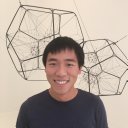
 Alex X. Lee
· 2 previous affiliations
- Google (United Kingdom)Since 2019
- Research Scientist · Since 2019
- PhD student · 2013–2019
Research Overview
Alex X. Lee focuses on robotic manipulation, deep reinforcement learning, and representation learning from high-dimensional sensory inputs. His trajectory spans early work in learning from demonstration for deformable objects to the development of sample-efficient reinforcement learning algorithms using latent world models. More recently, his research addresses sim-to-real transfer and the training of multi-embodiment generalist agents for complex physical tasks.
Research Trajectory
Alex X. Lee’s early research focused on enabling robots to manipulate complex, non-rigid objects through learning from demonstration. Traditional methods for transferring demonstrated trajectories often assumed that the training and testing environments were structurally identical, an assumption that fails in cluttered, real-world settings. In Learning from multiple demonstrations using trajectory-aware non-rigid registration with applications to deformable object manipulation, Lee and his collaborators addressed this limitation. As first author, he helped develop a trajectory-aware non-rigid registration method that utilized multiple demonstrations to focus the registration process on task-relevant points, allowing the system to handle significant clutter and distractor objects effectively.
By 2017, Lee’s focus expanded to incorporate deep reinforcement learning (RL) for vision-based control. A major challenge in visual servoing—moving a robot based on camera input—was the reliance on manually designed features and analytical dynamics models, which limited generalization. In Learning Visual Servoing with Deep Features and Fitted Q-Iteration, Lee demonstrated how learned visual features and predictive dynamics models could be combined with reinforcement learning. By utilizing a specialized version of Fitted Q-Iteration alongside pre-trained deep features, the proposed system could learn to follow novel targets using highly limited training data, significantly improving sample efficiency over standard deep RL approaches.
Moving into 2018 and 2019, Lee’s work increasingly addressed the inherent uncertainty and high dimensionality of real-world environments. Predicting future states from raw video observations is notoriously difficult; naive models often average possible futures into a single, blurry prediction. As first author of Stochastic Adversarial Video Prediction, Lee tackled this by combining latent variational variables—which explicitly model underlying stochasticity—with adversarial training to generate sharp, plausible future video frames.
This interest in stochasticity and latent representations naturally extended into his reinforcement learning research. High-dimensional observation spaces force RL policies to simultaneously solve representation learning and task learning. In Stochastic Latent Actor-Critic: Deep Reinforcement Learning with a Latent Variable Model, Lee proposed the SLAC algorithm, which decoupled these two problems. By explicitly learning latent representations to model the environment, SLAC provided a sample-efficient and high-performing method for complex continuous control tasks directly from image inputs. This work contributed significantly to the research direction of Stochastic Latent World Models for Robust Control and the broader area of Beyond the Deterministic Transition Assumption in Reinforcement Learning. It also provided tools to mitigate the challenge of Compounding Error in Model Based Reinforcement Learning, where inaccuracies in learned world models typically degrade long-horizon planning.
In 2021, Lee applied these advanced RL techniques to highly complex physical manipulation tasks, bridging the gap between simulation and reality. As first author of Beyond Pick-and-Place: Tackling Robotic Stacking of Diverse Shapes, he investigated robotic stacking using objects with complex geometries that required strategies far beyond simple pick-and-place routines. The proposed approach combined reinforcement learning with vision-based interactive policy distillation and simulation-to-reality transfer, enabling the learned policies to handle multiple object combinations in the real world. This research aligns with themes such as Zero Shot Robotic Manipulation of Novel Object Geometries and the area of Privileged Information Distillation for Sim-to-Real Policy Transfer, as well as the related direction of Asymmetric Actor Critic Learning, where agents leverage perfect simulated data during training to operate effectively under partial observability in reality.
Current Directions
The most recent papers in the evidence indicate a focus on scaling robot learning through multi-embodiment, multi-task generalist agents. Participating as a co-author in large-scale collaborative efforts, Lee's recent work investigates how heterogeneous robotic experience can be leveraged to master novel skills across entirely different physical systems.
This direction is exemplified by his contributions to RoboCat: A Self-Improving Generalist Agent for Robotic Manipulation, published in 2023. The research explores the use of visual goal-conditioned decision transformers capable of consuming action-labelled visual experience from a wide variety of simulated and real robotic arms. By training on diverse datasets spanning different observation spaces and action spaces, the resulting models demonstrate the ability to generalize to new tasks and embodiments. This reflects a broader methodological shift in the field from training specialized, task-specific reinforcement learning algorithms toward developing foundation models for physical control, emphasizing cross-embodiment generalization and continuous self-improvement in unstructured environments.
Profile updated
Loading new papers…
Other researchers whose papers cluster into the same research directions — a proxy for overlapping technical interests and shared intellectual neighborhoods.
See something wrong? Report a mistake