

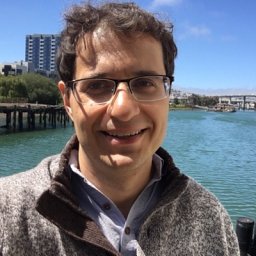
 Alex Olshevsky
· 4 previous affiliations
- Boston UniversitySince 2016
- Professor · Since 2025
- Associate Professor · 2019–2025
- Assistant Professor · 2016–2019
- Assistant Professor · 2012–2016
- Princeton University2010–2011
- Postdoctoral Scholar · 2010–2011
- Doctor of Philosophy (Ph.D.), Electrical Engineering and Computer Science · 2004–2006
Research Overview
Alex Olshevsky focuses on distributed optimization, network control systems, and the theoretical foundations of reinforcement learning. His early trajectory established fundamental limits and convergence guarantees for decentralized consensus and multi-agent optimization over dynamic networks. More recently, his work addresses the sample complexity and convergence properties of temporal difference learning with neural network function approximation.
Research Trajectory
Olshevsky’s early work investigated the fundamental limits of multi-agent agreement and computational complexity. In 2009, he established lower bounds on worst-case convergence times for distributed consensus methods and provided polynomial-time averaging algorithms in Convergence Speed in Distributed Consensus and Averaging. Concurrently, he contributed to the broader area of Distributed Coordination over Quantized Communication Channels by analyzing how limited precision affects convergence speed in dynamic networks in On Distributed Averaging Algorithms and Quantization Effects. This analysis also advanced the research direction of Robust Decentralized Optimization in Dynamic Network Topologies. Alongside network consensus, he explored core computational complexity in linear algebra, demonstrating in Matrix p-Norms Are NP-Hard to Approximate If p!=q1, 2, INFINITY that approximating matrix p-norms to arbitrary relative precision is NP-hard for most rational values of p.
Moving into the mid-2010s, his focus expanded to network controllability and directed communication topologies. In Minimal Controllability Problems, he proved the NP-hardness of finding a minimal set of variables to actuate for system controllability, while offering a polynomial-time greedy heuristic to approximate the solution. Around this time, he made significant contributions to the area of How Network Topology Governs Decentralized Learning Convergence. With collaborators, he developed the "subgradient-push" algorithm in Distributed Optimization Over Time-Varying Directed Graphs, enabling networks of nodes to minimize convex functions over time-varying directed graphs without knowing the full network sequence. This work helped establish the research direction of Gradient Tracking for Decentralized Optimization. He subsequently extended this framework in Stochastic Gradient-Push for Strongly Convex Functions on Time-Varying Directed Graphs, achieving faster convergence rates for strongly convex functions using noisy gradient information.
Between 2017 and 2019, Olshevsky refined the theoretical guarantees for both distributed optimization and control systems. He introduced a protocol for average consensus that scales linearly with the number of nodes in Linear Time Average Consensus and Distributed Optimization on Fixed Graphs. Addressing the challenges of directed and changing networks, he co-developed the DIGing and Push-DIGing algorithms in Achieving Geometric Convergence for Distributed Optimization Over Time-Varying Graphs, securing geometric convergence rates and advancing the field of Distributed Optimization over Directed Networks. He also investigated the performance gap between distributed and centralized machine learning algorithms, introducing the concept of "asymptotic network independence" in Asymptotic Network Independence in Distributed Optimization for Machine Learning to show conditions under which network structure becomes irrelevant to long-term convergence.
In parallel, his work in control theory challenged existing assumptions. In On (Non)Supermodularity of Average Control Energy, he provided counterexamples demonstrating that average control energy is not always supermodular with respect to actuated variables, correcting prior claims in the literature. He further explored actuator strategies in On A Relaxation of Time-Varying Actuator Placement, showing that a fractional relaxation of the problem yields optimal binary solutions under certain conditions. He also proved fundamental computational limits in decentralized control, establishing the inapproximability of the discrete Witsenhausen problem in On the Inapproximability of the Discrete Witsenhausen Problem.
In recent years, his research has pivoted toward the theoretical foundations of reinforcement learning. Overseeing this new direction, he investigated temporal difference (TD) learning methods. In Closing the Gap Between SVRG and TD-SVRG with Gradient Splitting, his team reinterpreted TD learning as a form of gradient splitting, matching the optimal convergence rates of standard variance-reduced optimization algorithms. He also provided a rigorous convergence analysis for approximate policy evaluation using neural networks in On the Performance of Temporal Difference Learning With Neural Networks. Most recently, in Bridging the Gap Between Average and Discounted TD Learning, he led work introducing an algorithm that elevates the theoretical efficiency of average-reward reinforcement learning to match discounted-reward settings, a key advancement in the area of The Non-Linear Function Approximation Gap in Reinforcement Learning.
Current Directions
The most recent papers in the evidence indicate a strong focus on the theoretical underpinnings of reinforcement learning, particularly temporal difference learning and function approximation. Recent work investigates the convergence properties of Neural TD Learning, establishing rigorous approximation bounds when policies are evaluated using neural networks of finite width. Additionally, this research addresses long-standing efficiency gaps in average-reward reinforcement learning, utilizing techniques like gradient splitting and dual-trajectory sampling to achieve optimal sample complexity and guaranteed convergence to unique solutions.
Profile updated
| Title | Venue | Year |
|---|---|---|
| Interpretable gradient descent for the Kalman gain | Syst. Control. Lett | 2026 |
| Bridging the Gap Between Average and Discounted TD Learning | ICML | 2026 |
| Network Epidemic Control via Model Predictive Control | IEEE Control. Syst. Lett | 2026 |
| Data Deletion Can Help in Adaptive RL | arXiv | 2026 |
| MDP Geometry, Normalization and Reward Balancing Solvers | Ewrl | 2025 |
| One-Shot Averaging for Distributed TD (λ) Under Markov Sampling | IEEE Control Systems Letters | 2024 |
| Closing the gap between SVRG and TD-SVRG with Gradient Splitting | TMLR | 2024 |
| Tree Search for Simultaneous Move Games via Equilibrium Approximation | arXiv | 2024 |
| On the Performance of Temporal Difference Learning With Neural Networks | ICLR | 2023 |
| Convergence of Actor-Critic with Multi-Layer Neural Networks | NeurIPS | 2023 |
Loading new papers…
Other researchers whose papers cluster into the same research directions — a proxy for overlapping technical interests and shared intellectual neighborhoods.
See something wrong? Report a mistake