

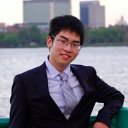
 Alex Gu
5 previous affiliations
- Math Inc2025–2026
- Founding Researcher · 2025–2026
- Research Scientist Intern, FAIR CodeGen · 2025
- E14 Fund2024–2025
- VC Fellow · 2024–2025
- Amazon (United States)2024–2025
- Applied Scientist Intern · 2024–2025
- PhD student · 2022
- MS student · 2021–2022
- Bachelors, Computer Science and Engineering · 2018–2021
Research Overview
Alex Gu focuses on improving the capabilities of artificial intelligence systems in programming and formal mathematics. His work spans the evaluation of language models for code generation, the development of neurosymbolic reasoning techniques, and the interpretability of complex neural networks. Recently, his research investigates automated theorem proving and the simplification of formal proofs using large language models.
Research Trajectory
Early in his trajectory, Gu addressed fundamental challenges in robust machine learning and model interpretability. He developed MORBiT, a single-loop gradient descent-ascent algorithm for optimizing non-smooth min-max multi-objective problems, in Min-Max Multi-objective Bilevel Optimization with Applications in Robust Machine Learning. He also investigated the stability of feature attribution methods in Certified Interpretability Robustness for Class Activation Mapping. This interest in model transparency extended into collaborative work analyzing how practitioners resolve conflicting explanations in The Disagreement Problem in Explainable Machine Learning: A Practitioner’s Perspective. This work contributes to the broader research areas of The Reliability Gap in Explaining Complex Neural Networks and The Disagreement Problem in Feature Attribution.
Concurrently, Gu began exploring the intersection of language models, code, and formal logic. He investigated the cross-lingual capabilities of code representations in Language Agnostic Code Embeddings, demonstrating that these embeddings contain both syntax-specific and language-agnostic components. Bridging natural language and formal reasoning, he contributed to LINC: A Neurosymbolic Approach for Logical Reasoning by Combining Language Models with First-Order Logic Provers, a method that offloads complex deductive steps to symbolic solvers to improve performance over standard chain-of-thought prompting. He also participated in the development of machine learning-based theorem proving tools through LeanDojo: Theorem Proving with Retrieval-Augmented Language Models, which introduced an open-source toolkit and a retrieval-augmented model for the Lean proof assistant.
A major theme in Gu’s subsequent work centers on the evaluation and limitations of code language models. He introduced CRUXEval: A Benchmark for Code Reasoning, Understanding and Execution, a suite of Python programs designed to test whether models can accurately predict code execution outcomes. The results revealed a significant gap between writing code and understanding its behavior, highlighting the research direction of Decoupling Code Generation from Program Comprehension. Further exploring this understanding gap, he analyzed how models fail to identify or repair subtle errors in their own outputs in The Counterfeit Conundrum: Can Code Language Models Grasp the Nuances of Their Incorrect Generations?. Alongside these targeted evaluations, he participated in large-scale model development, contributing to the open-access code model StarCoder 2 and The Stack v2: The Next Generation.
As a PhD student at MIT and founding research lead at Math, Inc., Gu has increasingly focused on dynamic evaluation methodologies to address benchmark saturation and contamination. He collaborated on LiveCodeBench: Holistic and Contamination Free Evaluation of Large Language Models for Code, a continuously updated benchmark utilizing fresh problems from competitive programming platforms. This effort advances the area of Shifting from Static Benchmarks to Dynamic Evaluation. He also outlined broader bottlenecks in the field in Position: Future Research and Challenges Remain Towards AI for Software Engineering. Continuing to push the boundaries of evaluation, he contributed to Beyond Problem Solving: UOJ-Bench for Evaluating Code Generation, Hacking, and Repair in Competitive Programming, which touches on the broader area of Multi-turn Iterative Code Generation and Refinement. Additionally, he investigated the strategic planning limitations of frontier models in Investigating Advanced Reasoning of Large Language Models via Black-Box Environment Interaction, revealing that while models excel at pattern matching, they struggle to adapt exploration based on real-time feedback.
Most recently, Gu has returned to formal verification with ProofOptimizer: Training Language Models to Simplify Proofs without Human Demonstrations. By combining expert iteration, reinforcement learning, and a symbolic linter, this work demonstrates how AI-generated Lean proofs can be significantly compressed and made more readable, contributing to the broader area of Recursive Subgoal Decomposition for Automated Formal Verification.
Current Directions
The most recent papers in the evidence address the dynamic evaluation of reasoning and the automation of formal verification. A primary focus is developing contamination-free benchmarks that test language models on execution, hacking, and repair rather than static code generation, revealing critical gaps in strategic planning and environment interaction. Concurrently, work in formal mathematics explores training language models to simplify and optimize machine-generated proofs in environments like Lean, utilizing reinforcement learning and symbolic linters to improve proof readability without relying on human demonstrations.
Profile updated
Loading new papers…
Other researchers whose papers cluster into the same research directions — a proxy for overlapping technical interests and shared intellectual neighborhoods.
See something wrong? Report a mistake