

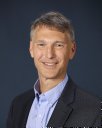
 Alex Aiken
· 4 previous affiliations
- Stanford UniversitySince 2003
- Full Professor · Since 2003
- Current
- SLAC National Accelerator LaboratorySince 2017
- Division Director · Since 2017
- Nvidia (United States)Since 2019
- Visiting Professor · Since 2019
- University of California, Berkeley2001–2003
- Full Professor · 2001–2003
Research Overview
Alex Aiken focuses on programming language design, compiler optimization, and high-performance computing systems. His foundational work spans program analysis, statistical bug isolation, and task-based parallel programming for heterogeneous architectures. Recently, his research investigates the intersection of large language models and formal methods, exploring automated program verification and agent-driven GPU kernel optimization.
Research Trajectory
Alex Aiken’s early research established core techniques in program analysis and language design for performance. In the late 1990s, he formalized methods for analyzing complex software, detailed in Introduction to Set Constraint-Based Program Analysis. Concurrently, he addressed the challenges of parallel computing with Titanium: A High Performance Java Dialect, an extension of Java designed to support high-performance scientific computing by introducing multidimensional arrays and an explicitly parallel execution model.
In the 2000s, his focus expanded to software engineering tools and reliability at scale. He developed MOSS : A system for detecting software plagiarism, a widely adopted tool that measures software similarity to identify potential plagiarism in programming classes. He also advanced techniques for identifying the root causes of software failures in production environments. The work on Scalable statistical bug isolation introduced a framework for gathering sparse, randomized execution traces from deployed software, using statistical models to pinpoint the predictors of crashes without incurring prohibitive runtime overhead.
Moving into the 2010s, Aiken’s work increasingly targeted compiler optimization and the programming models required for modern, heterogeneous supercomputers. He explored search-based optimization techniques in Stochastic superoptimization, demonstrating how randomized search algorithms could discover highly optimized machine code sequences. To address the growing complexity of memory hierarchies in high-performance computing (HPC), he and his collaborators developed the Legion programming system ecosystem. This effort included Regent: a high-productivity programming language for HPC with logical regions, which provided a high-level abstraction for reasoning about data partitioning and movement across distributed, heterogeneous machines.
By the late 2010s, his optimization research intersected with the rapid rise of deep learning. The introduction of TASO: optimizing deep learning computation with automatic generation of graph substitutions provided a system that automatically discovered and verified graph-level transformations to accelerate neural network execution. Alongside this systems work, he continued to advance formal program analysis, exploring how to prove that two distinct implementations compute the same result in Semantic program alignment for equivalence checking.
In recent years, Aiken’s trajectory has heavily incorporated large language models (LLMs) into both program verification and HPC optimization. In the domain of formal methods, his group has advanced the research direction of Semantic Alignment for Machine Verifiable Logic. To evaluate whether modern AI models truly grasp code behavior, he co-developed EquiBench: Benchmarking Large Language Models’ Understanding of Program Semantics via Equivalence Checking, which revealed that current LLMs often rely on superficial syntax rather than deep semantic reasoning. To bridge this gap, his research has produced specialized models and frameworks. VeriCoder: Enhancing LLM-Based RTL Code Generation through Functional Correctness Validation introduced an open-source model for Register Transfer Level code generation fine-tuned on a massive dataset validated by automated unit testing. Building on this momentum, Quokka: Accelerating Program Verification with LLMs via Invariant Synthesis demonstrated how LLMs can automatically synthesize loop invariants, significantly improving the performance of automated program provers on complex verification benchmarks.
Simultaneously, Aiken has applied LLMs and formal logic to the highly specialized domain of GPU kernel tuning, contributing to the broader area of Agentic GPU Kernel Optimization. His work on Improving Parallel Program Performance with LLM Optimizers via Agent-System Interfaces introduced a domain-specific language and feedback mechanism that allows LLMs to write and optimize complex mapper code for HPC systems, outperforming expert-written code. This agent-driven approach was further expanded in Astra: A Multi-Agent System for GPU Kernel Performance Optimization, which utilizes specialized LLM agents for coding, testing, and profiling to accelerate existing CUDA kernels. For the lowest-level hardware optimizations, he collaborated on Optimal Software Pipelining and Warp Specialization for Tensor Core GPUs, a system named Twill that uses SMT solvers to automatically generate mathematically optimal execution schedules for modern NVIDIA architectures.
Finally, Aiken continues to push the boundaries of traditional scientific computing. The recent paper Task-Based Programming for Adaptive Mesh Refinement in Compressible Flow Simulations applies modern task-based paradigms to fluid dynamics, intersecting with the research areas of Operator Fusion for Memory-Bound Deep Learning and Balancing Task Granularity and Management Overhead to efficiently simulate high-speed flows on supercomputers.
Current Directions
Based on his most recent publications, Aiken’s current research agenda is heavily focused on integrating artificial intelligence with formal methods and systems programming. One major direction involves leveraging large language models to automate the most difficult aspects of software verification, such as invariant synthesis and equivalence checking. Rather than relying on LLMs merely for syntactic code generation, his group is developing frameworks that enforce functional correctness and semantic understanding, particularly for hardware description languages and complex algorithmic logic.
A second major theme is the use of multi-agent LLM systems and formal logic solvers to automate high-performance computing optimizations. His recent work demonstrates how AI agents, equipped with domain-specific interfaces and iterative execution feedback, can navigate the massive search spaces of GPU kernel scheduling, software pipelining, and memory management. By combining the generative capabilities of LLMs with the rigorous guarantees of SMT solvers and task-based runtime systems, Aiken is working toward a future where compilers can automatically discover and prove the optimality of execution strategies for the world's most complex heterogeneous supercomputers.
Profile updated
Loading new papers…
Other researchers whose papers cluster into the same research directions — a proxy for overlapping technical interests and shared intellectual neighborhoods.
See something wrong? Report a mistake