

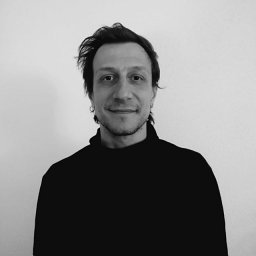
 Alberto Cazzaniga
· 8 previous affiliations
- AREA Science ParkSince 2020
- Researcher · Since 2022
- Postdoctoral Researcher · 2020–2022
- Master in High Performance Computing, Data Science, High Performance Computing · 2019–2020
- Master in High Performance Computing, Data Science, High Performance Computing · 2019–2020
- Istituto Officina dei Materiali2019–2020
- Research Assistant · 2019–2020
- National Research Council2018–2020
- Postdoc · 2018–2020
- Stellenbosch University2016–2018
- Claude Leon Postdoctoral Fellow · 2017–2018
- Postdoc · 2016–2018
- Researcher and Teaching Assistant · 2016
- University of Oxford2011–2015
- Stipendiary Lecturer in Pure Mathematics · 2015
- PhD student · 2011–2015
Research Overview
Alberto Cazzaniga focuses on the geometry of neural representations, the interpretability of large transformer models, and the application of artificial intelligence to the life sciences. Drawing on a background in algebraic geometry, his trajectory spans from early work in pure mathematics to analyzing how semantic structures emerge across neural network layers. His current research investigates multimodal attention mechanisms, protein structure prediction, and the safety of language models.
Research Trajectory
Cazzaniga's early academic background is rooted in pure mathematics. His initial research focused on algebraic geometry, specifically computing generating series for refined invariants in geometric models, as detailed in On some computations of refined Donaldson-Thomas invariants.
Transitioning to machine learning, he began applying geometric and topological methods to understand the internal mechanisms of deep neural networks. He investigated how semantic structures emerge across the layers of self-supervised models in The geometry of hidden representations of large transformer models, analyzing intrinsic dimension and neighbor composition to compare models trained on protein sequences and images. Building on this foundation, he explored how models process tasks differently under in-context learning versus supervised fine-tuning in The Representation Landscape of Few-Shot Learning and Fine-Tuning in Large Language Models. This work contributes to the broader research direction of The Expansion and Compression of Neural Representation Geometry. He also collaborated on identifying structural properties within network activations, participating in the study Persistent Topological Features in Large Language Models, which intersects with areas such as Representational Trajectories across Neural Network Layers and Topological Signatures of Neural Network Activations.
As a researcher at AREA Science Park, Cazzaniga has extensively applied artificial intelligence to the life sciences, particularly in analyzing protein structures. He developed methods for the Unsupervised Domain Classification of AlphaFold2-Predicted Protein Structures, leveraging the massive scale of predicted protein databases. He further investigated how evolutionary signals drive conformational changes, introducing a refined clustering strategy in Evolutionary constraints guide AlphaFold2 prediction of alternative conformations and inform rational mutation design. He provided a comprehensive overview of these intersections between machine learning and biology in AI and data science research in life science, system biology and medicine, advancing work in the area of Protein Architecture as a Persistent Evolutionary Signature.
Expanding his methodological applications to the physical sciences, he designed physics-informed synthetic data pipelines to enhance scanning tunneling microscopy. This approach, detailed in Generative Image Restoration and Super-Resolution using Physics-Informed Synthetic Data for Scanning Tunneling Microscopy, accelerates image acquisition and removes instrumental artifacts using generative flow-matching and diffusion models.
A significant portion of his recent trajectory focuses on the interpretability and control of multimodal vision-language models. He identified a critical bottleneck in how native multimodal models process global image semantics through a single token in The Narrow Gate: Localized Image-Text Communication in Native Multimodal Models. He also addressed knowledge conflicts—instances where visual input contradicts learned knowledge—in When seeing Overrides Knowing: Disentangling Knowledge Conflicts in Vision-Language Models, contributing to the research direction of Projecting Intermediate Transformer States to the Vocabulary Space. To further control model behavior, he introduced a sparse signal recovery method in Head Pursuit: Probing Attention Specialization in Multimodal Transformers, allowing for the precise suppression or enhancement of targeted concepts by intervening on specialized attention heads.
Finally, Cazzaniga has participated in collaborative evaluations of language model safety and alignment. He contributed to investigations of political sensitivity and censorship in Are LLMs Good Safety Agents or a Propaganda Engine?, and helped develop frameworks to detect vulnerabilities to historical revisionism in Preserving Historical Truth: Detecting Historical Revisionism in Large Language Models.
Current Directions
The most recent papers in the evidence indicate a dual focus on the mechanistic interpretability of multimodal transformers and the rigorous evaluation of language model safety. Recent work investigates how specific attention heads and token bottlenecks mediate complex behaviors in vision-language models, enabling targeted interventions without retraining. Concurrently, ongoing collaborative efforts address the societal implications of deployed models, focusing on distinguishing genuine safety guardrails from ideological bias and ensuring robustness against historical misinformation.
Profile updated
Loading new papers…
Other researchers whose papers cluster into the same research directions — a proxy for overlapping technical interests and shared intellectual neighborhoods.
See something wrong? Report a mistake