

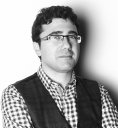
 Albert Ali Salah
· 5 previous affiliations
- Utrecht UniversitySince 2019
- Full Professor · Since 2019
- Nagoya University2017–2018
- Associate Professor · 2017–2018
- Boğaziçi University2011–2017
- Assistant Professor · 2011–2017
- University of Amsterdam2009–2011
- Assistant Professor · 2009–2011
- Centrum Wiskunde & Informatica2007–2009
- Post Doc · 2007–2009
Research Overview
Albert Ali Salah focuses on affective computing, multimodal pattern recognition, and the analysis of large-scale mobility data for social impact. His trajectory spans from foundational work in facial feature extraction to robust emotion recognition in unconstrained environments. Most recently, he investigates advanced video understanding architectures and the use of digital proxies to model human displacement.
Research Trajectory
Albert Ali Salah’s early research concentrated on visual pattern recognition and the optimization of computational resources for image analysis. He developed a serial model inspired by primate selective attention to efficiently process relevant image regions in A Selective Attention-Based Method for Visual Pattern Recognition with Application to Handwritten Digit Recognition and Face Recognition. Building on this foundation in density estimation and clustering, he introduced an adaptive algorithm for semiparametric density estimation in Incremental Mixtures of Factor Analysers. This modeling expertise naturally extended to face registration, where he proposed methods for coarse and fine-scale facial feature analysis to improve automatic landmarking in Robust facial landmarking for registration.
In the 2010s, his focus expanded significantly into affective computing and facial expression analysis. He investigated the fine-grained dynamics of eyelids and lips to distinguish genuine from posed expressions in Are You Really Smiling at Me? Spontaneous versus Posed Enjoyment Smiles, contributing to the broader research area of Feature Selection via Minimum Redundancy Maximum Relevance. Continuing to refine feature extraction techniques, he explored random discriminative projections for specialized tasks in Random Discriminative Projection Based Feature Selection with Application to Conflict Recognition. Recognizing the limitations of controlled laboratory data, his research group later addressed the challenges of unconstrained environments, proposing transfer learning and score fusion strategies to handle large variances in pose, illumination, and noise in Video-based emotion recognition in the wild using deep transfer learning and score fusion.
Parallel to his work in computer vision, he initiated a major research track leveraging large-scale digital proxies for social impact and humanitarian aid. He led the Data for Refugees: The D4R Challenge on Mobility of Syrian Refugees in Turkey, a project that provided anonymized mobile call detail records to the scientific community to study refugee integration, health, and mobility. He also participated in international efforts to utilize similar digital traces during global health crises, outlining strategies for government and public health authorities in Mobile phone data for informing public health actions across the COVID-19 pandemic life cycle.
Returning to advanced spatiotemporal modeling in recent years, his work tackles complex video understanding and generative architectures. He led the development of efficient hybrid networks for continuous sign language recognition, capturing moving trajectories and dynamically correlated regions in TCNet: Continuous Sign Language Recognition from Trajectories and Correlated Regions. Addressing the limitations of linear-time architectures for visual sequences, he introduced structural improvements to Mamba models in Snakes and Ladders: Two Steps Up for VideoMamba. With collaborators, he also explored the integration of vision-language models to supervise vision transformers for action recognition in Enhancing Video Transformers for Action Understanding with VLM-aided Training. In the domain of generative AI, he introduced techniques to accelerate the training of diffusion models by correcting accumulated denoising errors in Compensation Sampling for Improved Convergence in Diffusion Models.
Simultaneously, his affective computing and mobility research has continued to mature. He oversaw a comprehensive survey on automated animal affective computing in Going Deeper than Tracking: A Survey of Computer-Vision Based Recognition of Animal Pain and Emotions, which intersects with the direction of Localized Anatomical Prioritization for Facial Expression Recognition. He also examined the integration of emotion recognition into assisted living systems under new regulatory frameworks in Affective Computing in Active Assisted Living, contributing to the area of Acoustic Primacy for Emotional Intensity and Social Signals. In his mobility research, he supervised studies utilizing international mobile airtime top-ups as a real-time proxy for migrant presence in Analyzing international airtime top-up transfers for migration and mobility. Most recently, he guided the development of an activity space approach to track disaster-induced displacement following the 2023 earthquakes in A novel activity space approach to discover displacement patterns via mobile phone data: an analysis of the 2023 Türkiye-Syria earthquakes, advancing the research direction of Demographic Bias in Digital Trace Mobility Data.
Current Directions
Recent work investigates two primary streams: advanced spatiotemporal modeling for video and the application of digital proxies to human mobility. In computer vision, the most recent papers in the evidence address the efficiency and accuracy of video understanding, exploring novel architectures like VideoMamba, hybrid networks for continuous sign language recognition, and the use of vision-language models to train video transformers. He is also actively researching sampling techniques to accelerate the convergence of diffusion models.
In parallel, his work on human mobility focuses on extracting high-resolution spatial patterns from mobile phone data and international airtime transfers. This research aims to accurately model disaster-induced displacement and migration, providing critical, real-time insights into population movements during crises while navigating the demographic biases inherent in digital trace data. Additionally, he continues to explore the ethical and practical deployment of affective computing systems in specialized environments, such as active assisted living.
Profile updated
Loading new papers…
Other researchers whose papers cluster into the same research directions — a proxy for overlapping technical interests and shared intellectual neighborhoods.
See something wrong? Report a mistake