

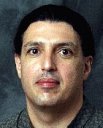
 Akram Aldroubi
· 1 previous affiliation
- Vanderbilt UniversitySince 1998
- Full Professor · Since 1998
Research Overview
Akram Aldroubi focuses on harmonic analysis, functional analysis, and sampling theory, with a particular emphasis on the mathematical foundations of signal and image processing. His work bridges theoretical developments in wavelet and frame theory with practical applications in biomathematics, environmental monitoring, and high-dimensional data analysis. His current research investigates the recovery of signals and sources within evolving systems, a field known as dynamical sampling.
Research Trajectory
The evolution of Aldroubi’s research began in the early 1990s with a focus on the mathematical properties of splines and their utility in multiresolution signal representation. During this period, he contributed to the development of efficient algorithms for continuous signal representation and interpolation. This work established the use of B-splines as a basis for digital signal processing, moving beyond traditional discrete methods to more flexible continuous models. His research in this era frequently addressed the stability and convergence of spline-based filters and their implementation through recursive filtering techniques.
By the late 1990s, Aldroubi began applying these mathematical frameworks to complex biological and medical imaging problems. This transition involved utilizing segmentation and computational techniques to improve the analysis of medical data, such as gated SPECT images. This period marked an expansion from pure harmonic analysis into biomathematics, where the goal was to extract functional parameters from noisy, low-resolution biological signals.
In the 2010s, his work shifted toward the challenges of high-dimensional data and the recovery of structured information from corrupted or irregularly sampled measurements. He participated in research regarding Subspace Clustering for High-Dimensional Data, which addresses scenarios where data points lie near a union of low-dimensional subspaces rather than a single linear space. This period also saw an increased focus on Robust Subspace Clustering for Corrupted High Dimensional Data, developing methods to handle outliers and noise in large-scale datasets.
Concurrently, Aldroubi began developing the theory of Spatiotemporal Tradeoffs in Dynamical Sampling. This area represents a significant departure from classical Shannon-Nyquist sampling, which assumes a static signal. Instead, dynamical sampling considers signals that evolve over time according to an operator (such as a heat equation or a wave equation). His work in this domain explores how spatial and temporal samples can be traded off to reconstruct the initial state or the driving parameters of a system. This trajectory has led to recent investigations into Signal Subspace Projection for Robust Data Recovery and the control of complex systems.
Current Directions
Aldroubi’s recent work continues to refine the theory of dynamical sampling, specifically focusing on the stability of source recovery in infinite-dimensional Hilbert spaces. He is investigating the conditions under which a source term in a dynamical system can be recovered from space-time measurements, even when the initial state of the system is unknown. This has direct implications for environmental monitoring, such as tracking the source of pollutants in a moving medium.
Additionally, he has explored the intersection of sampling theory and modern machine learning. This includes participation in research on Discretizing Continuous Features for Robust and Interpretable Models, which seeks to bridge continuous data with discrete logical reasoning, and recent collaborative work on optimal transport plans. His current focus remains grounded in Spectral Analysis and Control of Non-Diagonalizable Systems, extending the reach of frame theory to more general operator-theoretic settings.
Representative Work
Fast B-spline Transforms for Continuous Image Representation and Interpolation This work describes efficient algorithms for the continuous representation of discrete signals using B-splines. It establishes that both direct and indirect spline transforms can be implemented as space-invariant linear filters. The paper introduces fast computational algorithms based on recursive implementations, providing a foundation for spline-based multiresolution analysis in image processing.
Recursive Regularization Filters: Design, Properties, and Applications This research addresses least-squares approximation problems regularized with high-pass kernels. It introduces a family of discrete regularization filters (R-filters) that are stable, symmetric, and low-pass. The paper provides decomposition theorems for the z-transform of these systems, allowing for efficient implementation through successive causal and anti-causal recursive filtering.
Cardinal spline filters: Stability and convergence to the ideal sinc interpolator In this study, Aldroubi examines the stability of cardinal spline filters and their behavior as the spline order increases. The work demonstrates the mathematical conditions under which these spline-based interpolators converge to the ideal sinc interpolator, bridging the gap between polynomial spline theory and classical Shannon sampling theory.
The L2-Polynomial Spline Pyramid This paper derives general methods for the L2-approximation of signals using polynomial splines. It introduces a multiresolution representation known as the spline pyramid, which is generated through repeated application of reduction and expansion functions. This hierarchical data structure allows for signal analysis at multiple scales while maintaining a rigorous L2-norm minimality.
Segmentation of gated TI-SPECT images and computation of ejection fraction: A different approach Applying signal processing techniques to nuclear cardiology, this work presents a method for segmenting gated Thallium-201 Single Photon Emission Computed Tomography (SPECT) images. The approach allows for more accurate computation of the ejection fraction, demonstrating the utility of advanced mathematical segmentation in clinical diagnostics.
Frames for Source Recovery in Dynamical Systems This recent work addresses the problem of recovering a source term in a dynamical system described by a linear operator in a Hilbert space. By using time-space sampling measurements, the research establishes necessary and sufficient conditions for the stable recovery of the source, independent of the unknown initial state. This has significant applications in environmental monitoring and system identification.
Profile updated
Loading new papers…
Other researchers whose papers cluster into the same research directions — a proxy for overlapping technical interests and shared intellectual neighborhoods.
See something wrong? Report a mistake