

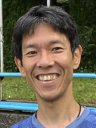
 Akisato Kimura
· 4 previous affiliations
- NTT (Japan)Since 2000
- Executive Research Scientist · Since 2000
- Executive Research Scientist, Research Planning Section · 2025–2026
- Head of Media Information Laboratory · 2022–2025
- Nagoya UniversitySince 2024
- Visiting Professor · Since 2024
- University of Cambridge2017–2018
- Visiting Industrial Fellow · 2017–2018
- Tokyo Institute of Technology1997–2007
- PhD student · 2005–2007
- Graduate Student · 1998–2000
- B. Eng student · 1997–1998
1 other author named Akisato Kimura: Akisato Kimura (3 papers)
Research Overview
Akisato Kimura focuses on machine learning methodologies, dimensionality reduction, and few-shot learning. His early work explored semi-supervised learning and component analysis, later expanding into social media curation and knowledge distillation. His most recent research addresses efficient clustering algorithms and multimodal depth estimation.
Research Trajectory
Kimura’s early research concentrated on improving foundational statistical methods for data analysis. In 2010, he introduced a semi-supervised variant of Canonical Correlation Analysis (CCA) in SemiCCA: Efficient Semi-supervised Learning of Canonical Correlations, designed to mitigate overfitting when paired samples are limited by incorporating additional unpaired data. He subsequently participated in the TRECVID semantic indexing task, contributing to the broader area of Multi-Model Consensus for Robust Feature Selection with the collaborative evaluation TRECVID 2011 Semantic Indexing Task By NTT-SL-ZJU. Continuing his focus on foundational models, he developed a generic framework for component analysis based on a novel Generalized Pairwise Expression (GPE). This framework, which unified standard methods, regularization techniques, and semi-supervised extensions, was detailed in the preprint Designing various component analysis at will and its formal conference publication Designing various component analysis at will.
Between 2013 and 2014, Kimura’s focus shifted toward multimedia analysis and the exploitation of socially curated content. He proposed methods to discover image contexts based on how users manually filter and group content on social platforms in Image context discovery from socially curated contents. Expanding on this, he oversaw research integrating socially-generated side information into dimensionality reduction techniques, ensuring that images with similar contextual metadata remained close in the embedding space, as presented in Exploiting socially-generated side information in dimensionality reduction. He further investigated the human-in-the-loop phenomenon of social curation as a sensor for real-world events in Creating Stories from Socially Curated Microblog Messages.
By 2018, his research evolved to address the challenges of training neural networks with highly constrained data. He developed techniques for training models from scratch using very few labeled examples by adversarially optimizing "pseudo-examples." This work, detailed in Few-shot learning of neural networks from scratch by pseudo example optimization, advanced research directions such as Synthetic Data Distillation for Heterogeneous Federated Learning and Knowledge Distillation in Low Data Regimes. He expanded on this distillation approach in Imitation networks: Few-shot learning of neural networks from scratch, demonstrating how knowledge could be transferred from robust reference models like Gaussian Processes to target networks. This contribution intersected with the area of Selective Knowledge Distillation via Predictive Uncertainty and the broader field of Scaling Gaussian Processes Beyond Cubic Complexity.
Moving into the 2020s, Kimura explored multimodal sensing and efficient data representation. He guided research on acoustic feature fusion for indoor depth estimation, proposing a novel bilinear model with dense co-attention in Co-Attention-Guided Bilinear Model for Echo-Based Depth Estimation. He also collaborated on scalable graph analytics, contributing to Efficient Network Representation Learning via Cluster Similarity, which reduces the computational complexity of proximity matrix factorization by leveraging similarities between clusters. Most recently, he directed work on Efficient Algorithm for K-Multiple-Means, developing methods to capture non-spherical cluster structures by iteratively updating similarity matrices in bipartite graphs.
Current Directions
The most recent papers in the evidence address the computational efficiency of machine learning algorithms and the modeling of complex data structures. A primary focus is on overcoming the scalability limits of traditional representation learning and clustering techniques, particularly for large-scale networks and non-spherical data distributions. By shifting from node-level proximities to cluster-level similarities, and by extending traditional K-means frameworks, this work seeks to make large-scale graph analytics more tractable. Alongside these algorithmic improvements, recent investigations also explore applied perception problems, specifically utilizing acoustic echoes and co-attention mechanisms for geometric depth estimation in indoor environments.
Profile updated
| Title | Venue | Year |
|---|---|---|
| IPCD: Intrinsic Point-Cloud Decomposition | WACV | 2026 |
| Universal Human Pose Representation for Multi-Modal Active Sensing | Openreview | 2026 |
| Permutree Process | Openreview | 2024 |
| Efficient Algorithm for K-Multiple-Means | Proc. ACM Manag. Data | 2024 |
| Efficient Network Representation Learning via Cluster Similarity | Dasfaa | 2023 |
| Nonparametric Relational Models with Superrectangulation | AISTATS | 2022 |
| Fast Binary Network Hashing via Graph Clustering | IEEE Big Data | 2022 |
| Co-Attention-Guided Bilinear Model for Echo-Based Depth Estimation | ICASSP | 2022 |
| Permuton-induced Chinese Restaurant Process | NeurIPS | 2021 |
| Deep Reinforcement Image Matching with Self-Termination | ICIP | 2021 |
Loading new papers…
Other researchers whose papers cluster into the same research directions — a proxy for overlapping technical interests and shared intellectual neighborhoods.
See something wrong? Report a mistake